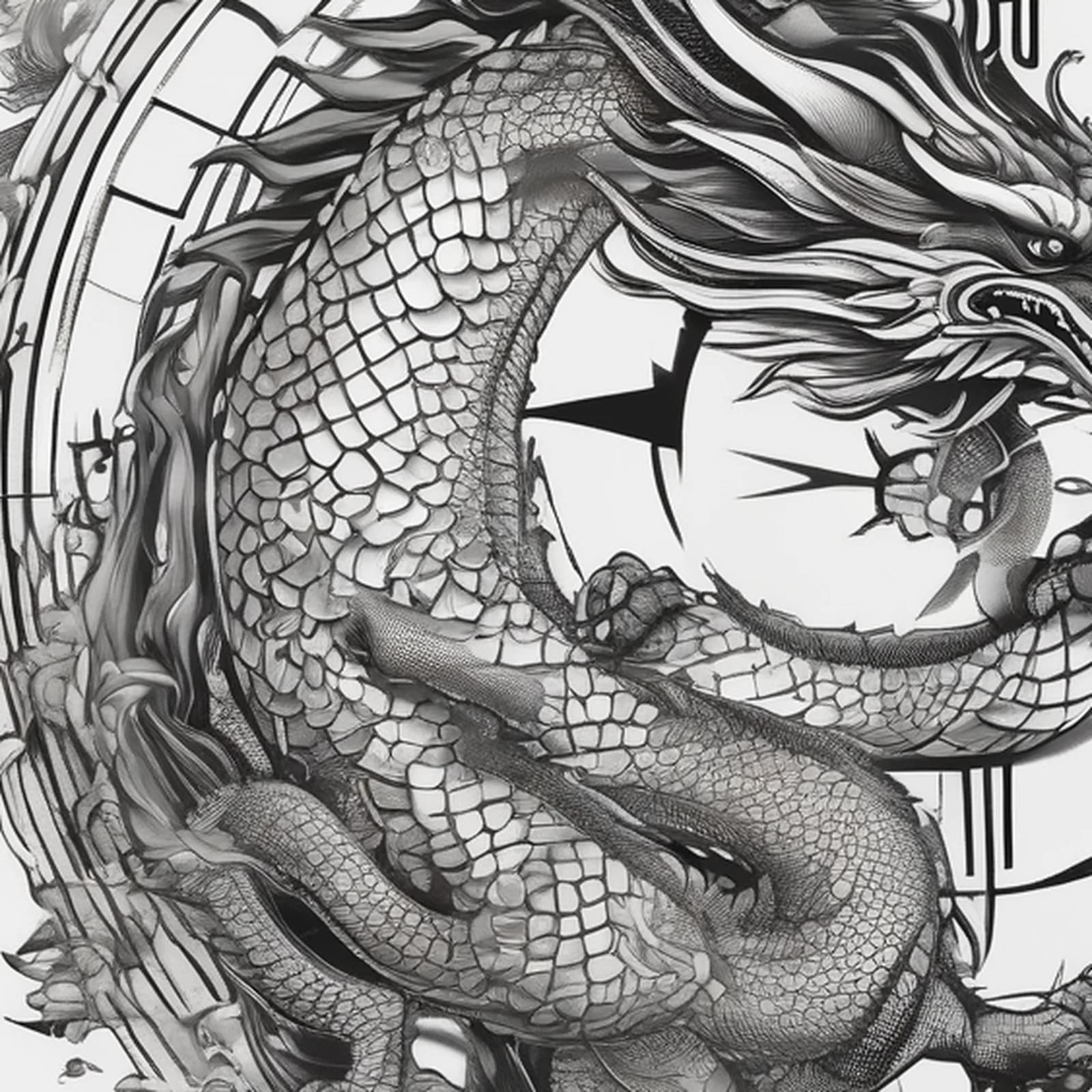
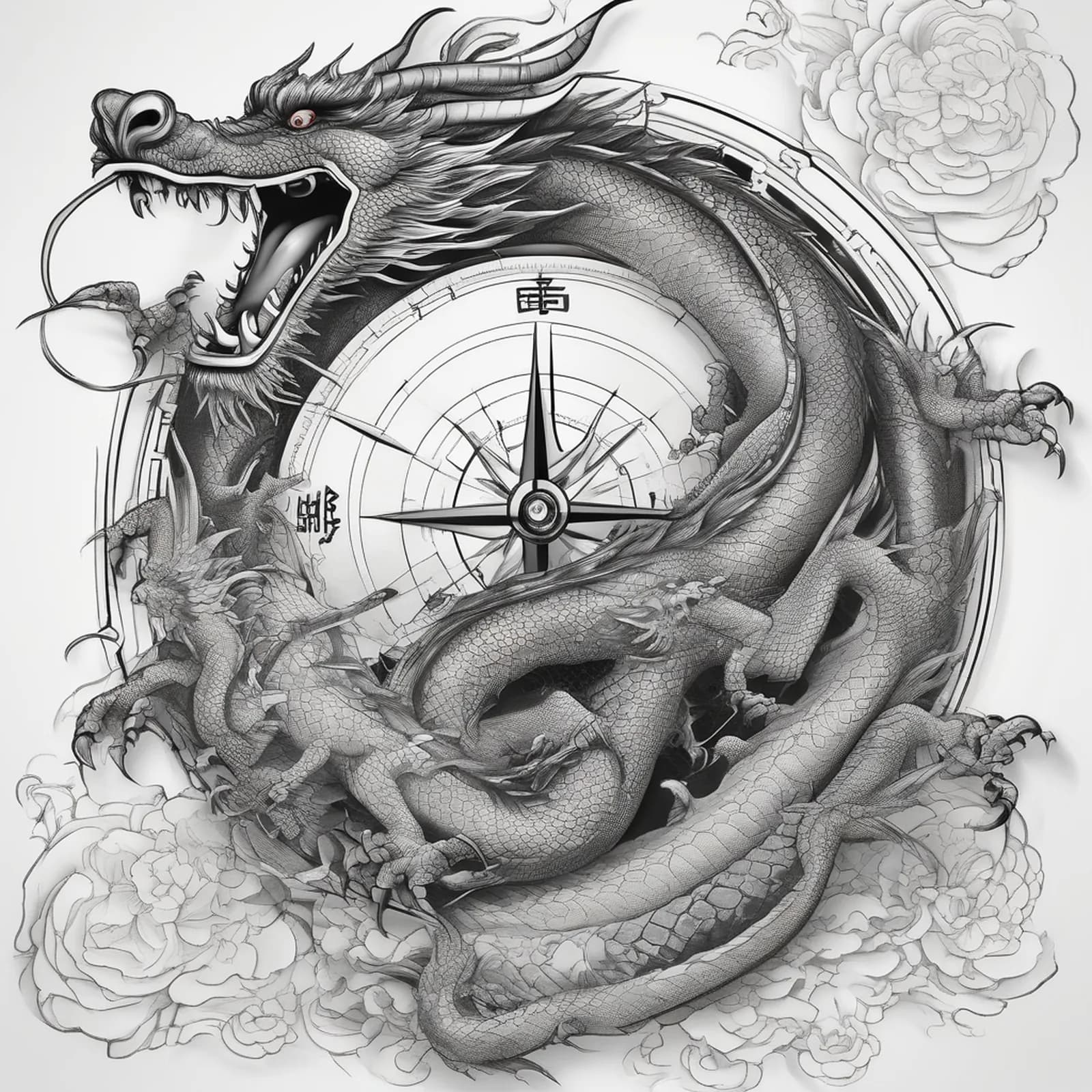
Digital erstelltes Design-Visual. Dein Tattoo wird vom Künstler gezeichnet und an deinen Körper angepasst.
Kompass und Drache Tattoo – Orientales Rückenbild
Jedes Motiv wird individuell kalkuliert – der Preis hängt von Größe, Detail und der Anzahl der Sitzungen ab. Sag uns, was du möchtest, und wir nennen dir einen All-inclusive-Preis.
Über dieses Design
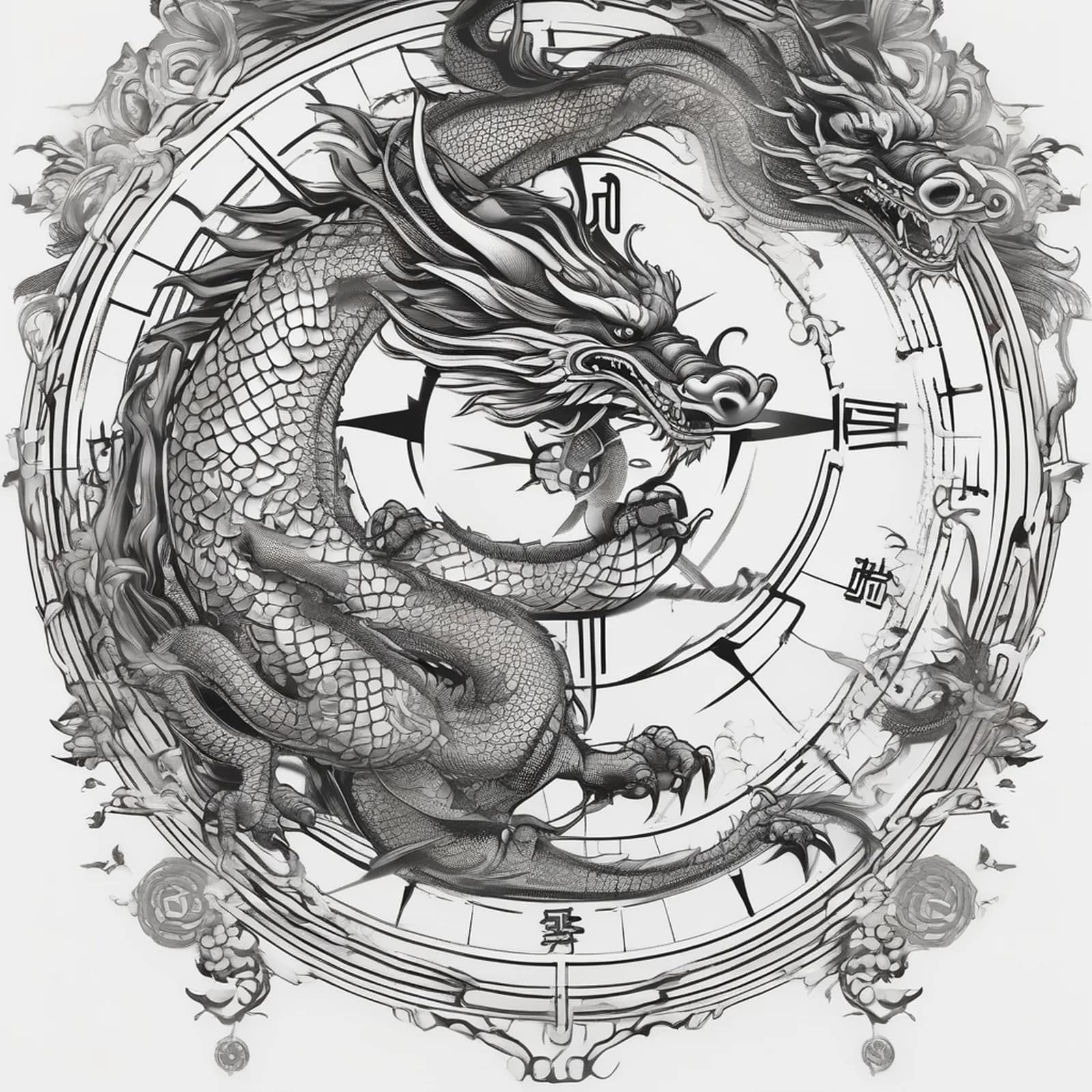
Dieses orientalisch geprägte Tattoo im Format von 40–70 cm verbindet die präzise Geometrie des Kompasses mit der geschmeidigen Kraft der gewundenen Schlange, in traditioneller orientalischer Tinte umgesetzt. Der Kompass ist an der Basis des Rückgrats zentriert, dessen äußeres Ringsegment feine, kontinuierliche Linien aufweist, die den spiralförmigen Weg der Schlange nachahmen. Die gewundene Schlange beginnt am linken Schulterblatt, windet sich im Uhrzeigersinn über den oberen Rücken und endet mit dem Kopf nach vorn nahe dem rechten Schulterblatt. Das Design ist nicht symmetrisch, aber rhythmisch ausgewogen, wobei jedes Element das andere verstärkt – eine Reise, die in Tinte festgehalten ist.
Was das Motiv zeigt
Der Kompass ist mit exakter Präzision gezeichnet, sein Mittelpunkt ist mit dem Steißbein ausgerichtet, und die vier Himmelsrichtungen sind durch subtile, stilisierte Symbole markiert. Die gewundene Schlange folgt der natürlichen Kurve von Rückgrat und Schulterblättern, wobei ihr Körper aus geschichteten, fließenden Linien besteht, die unterschiedliche Dicke aufweisen, um Muskeln und Schuppen zu suggerieren. Die Augen der Schlange sind in scharfem Kontrast dargestellt, mit dichter Schattierung, um Tiefe zu erzeugen. Negative Flächen zwischen den Windungen und den Strahlen des Kompasses leiten den Blick in einer kontinuierlichen Spirale, was das Thema von Richtung und Rückkehr unterstreicht.
Bedeutung & Symbolik
In der ostasiatischen Tradition symbolisiert der Kompass ethische und spirituelle Orientierung, tief verwurzelt in daoistischen Prinzipien von Gleichgewicht und Ausrichtung. Die gewundene Schlange, besonders im Uhrzeigersinn, spiegelt den Begriff der Qi-Energie wider, die sich sammelt und sich auf eine Transformation vorbereitet. Zusammen repräsentieren sie ein Leben, das von innerem Zweck und Widerstandsfähigkeit geleitet wird. Die gewundene Form der Schlange spiegelt die Geduld und Bereitschaft wider. Die vier Himmelsrichtungen des Kompasses sind inspiriert von der alten chinesischen Kosmologie, in der Richtung mit elementaren Kräften und kosmischem Ordnung verbunden ist. Dieses Design stützt sich auf authentische kulturelle Motive, bei denen Natur, Kosmos und persönliche Reise untrennbar miteinander verbunden sind – ein tief persönliches Symbol für Orientierung, Stärke und Transformation.
Für wen dieses Motiv ist
Dieses Tattoo ist für Menschen, die tiefe Symbolik schätzen und bereit sind, sich langfristig zu engagieren. Es eignet sich für Personen mit einem starken Sinn für Richtung, die sich mit sichtbaren, großflächigen Kunstwerken wohlfühlen und die Geduld aufbringen, einen mehrfach durchgeführten Prozess zu meistern. Es ist nicht für Anfänger oder Menschen geeignet, die eine unauffällige Platzierung suchen. Vermeiden Sie es, wenn Ihr Arbeitsumfeld nur geringe Sichtbarkeit des oberen Rückens zulässt oder wenn Sie ein pflegeleichtes Design bevorzugen.
Wie es am Körper sitzt
Platziert am oberen Rücken folgt das Design der natürlichen Krümmung des Rückgrats und der Neigung der Schulterblätter. Die Windung der Schlange passt sich der Bewegung des Körpers an, sodass sie auch beim Hochheben der Arme fließend bleibt. Der Kompass sitzt zentral und ist durch die Wirbelsäule stabilisiert. Bei Bewegung dehnt sich die Haut, die Linien bleiben aber intakt, ohne zu ziehen oder zu verzerren. Die Komposition umschließt elegant den breitesten Punkt des Körpers und wirkt somit ausgewogen und dynamisch.
Wie die Sitzungen ablaufen
Über fünf Sitzungen (insgesamt 20 Stunden) entwickelt sich die Arbeit in Phasen: Sitzung 1 legt die Umrisse des Kompasses und die Grundlage des Drachen fest; Sitzung 2 fügt die ersten Windungen des Drachen und Schattierungen hinzu; Sitzung 3 vervollständigt die oberen Windungen und verfeinert den Kompass; Sitzung 4 bearbeitet feine Details und tiefe Schattierungen; Sitzung 5 setzt die letzten Texturen und sorgt für gleichmäßige Abdeckung. Jede Sitzung ist 7 bis 10 Tage auseinandergelegt, um Heilung zu ermöglichen und Überreizung zu vermeiden.
Umsetzung auf einer Istanbul-Reise
Mit fünf Sitzungen über sieben Nächte in Istanbul können Sie dieses Werk in einer durchgehenden Reise abschließen. Studios in Kadikoy und Beyoglu sind leicht von beiden Flughäfen IST und SAW erreichbar. Die zweikontinentale Lage der Stadt spiegelt die Thematik von Richtung und Dualität wider. Die Heilung während der Reise ist gut möglich – lockere Kleidung, keine direkte Sonneneinstrahlung und kein Schwimmen während der 14-tägigen Oberflächenheilung machen diese Reise praktisch und sicher. Die Abstände zwischen den Sitzungen passen zur kulturellen Rhythmik der Stadt und lassen Zeit zum Ausruhen und Reflektieren.
Nachsorge für dieses Motiv
Nach jeder Sitzung halten Sie die Stelle sauber und trocken. Verwenden Sie das bereitgestellte Salbenmittel für die ersten 14 Tage – keine Sonne, keine Pools, keine Saunen. Bei Ihrer Rückreise tragen Sie lockere Kleidung, um das Tattoo zu schützen. Vermeiden Sie enge Sicherheitsgurte und halten Sie die Stelle bedeckt. Die vollständige Heilung dauert 12 Wochen; in dieser Zeit sollten Sie starkes Schwitzen und direkte Sonneneinstrahlung vermeiden, um die Klarheit und Tiefe der Tinte zu bewahren.
Größen, Platzierungen und Varianten
Kleinere Versionen (20–30 cm) eignen sich gut für den unteren Rücken oder als Seitentätowierung. Farbige Behandlungen mit Gold und Schwarz verstärken den orientalischen Look, besonders am Kompass und den Augen des Drachen. Dieses Design passt gut zu einem kleinen Lotus- oder Wellenmotiv an der Seite. Für eine modernere Variante empfiehlt sich minimalistische Linienarbeit. Der Kompass kann auch in ein Rosenmuster umgewandelt werden für Menschen, die florale Symbolik schätzen.
Häufige Fragen
Wie sieht eine orientalische Kompass- und gewundene Drachen-Tätowierung am Rücken aus?
Der Kompass ist zentral am unteren Rücken angeordnet, dessen äußere Ringlinie aus feinen, durchgehenden Linien besteht, die den Windungspfad des Drachen nachahmen. Der gewundene Drache beginnt am linken Schulterblatt, windet sich im Uhrzeigersinn über den oberen Rücken und endet mit dem Kopf nach vorne nahe dem rechten Schulterblatt. Das Design ist nicht symmetrisch, aber rhythmisch ausgewogen, wobei jedes Element das andere verstärkt – eine Reise, die in Tinte festgehalten ist.
Was symbolisiert ein gewundener Drache in der orientalischen Tattookunst?
In der traditionellen orientalischen Kunst steht ein gewundener Drache für Schutz, Transformation und innere Stärke. Er wird oft als Schutzgeist oder ausgleichende Kraft gesehen. Die Windung symbolisiert Geduld und Vorbereitung – Energie, die in Bereitschaft gehalten wird. Zusammen mit einem Kompass spiegelt er eine Reise wider, die sowohl von innerer Kraft als auch von Richtung geleitet wird.
Wie altert eine große Kompass- und Drachen-Tätowierung am Rücken im Laufe der Zeit?
Bei richtiger Pflege behält dieses orientalische Werk aufgrund der Verwendung traditioneller Tinte und gleichmäßiger Linienarbeit seine Klarheit. Die Form des gewundenen Drachen bleibt scharf, und die Struktur des Kompasses behält ihre Form. Die Schattierung verblassen allmählich und bewahren dabei Tiefe. Die Vermeidung von Sonne und die Anwendung von Salbe während der Heilung sichern die Integrität des Designs über Jahrzehnte hinweg.
Warum eine 5-Sitzungs-Planung für eine Kompass- und Drachen-Tätowierung am Rücken wählen?
Die Größe und Detailgenauigkeit erfordern eine sorgfältige Abstimmung. Fünf Sitzungen ermöglichen präzises Umreißen, mehrschichtige Schattierung und finale Feinabstimmung, ohne die Haut zu überlasten. Diese Verteilung sorgt für gleichmäßige Heilung und minimiert Narbenbildung. Sie entspricht auch dem Heilungszeitraum – jede Sitzung liegt 7 bis 10 Tage auseinander, um optimale Erholung zu gewährleisten.
Darf ich nach der Rücken-Tätowierung schwimmen oder fliegen?
Nein, kein Schwimmen in den ersten 14 Tagen – vermeiden Sie Pools, Meere und Saunen. Bei Ihrer Rückreise tragen Sie lockere Kleidung, um das Tattoo zu schützen. Halten Sie es bedeckt und vermeiden Sie direkte Sonneneinstrahlung. Das Design ist für Reisen stabil, sobald die Oberflächenheilung abgeschlossen ist, aber die vollständige Heilung dauert 12 Wochen.
Wie vergleicht sich Istanbul mit Westeuropa für diese Tätowierung?
Das All-inclusive-Paket in Istanbul kostet den gleichen Preis wie ein All-inclusive-Paket – bis zu 70 % weniger als in einer westeuropäischen Studio. Sie erhalten Studio-Zugang, Unterkunft und Reiseorganisation in einem. Mit direkten Flügen aus großen Städten können Sie fünf Sitzungen innerhalb von sieben Nächten abschließen und gleichzeitig die einzigartige kulturelle Atmosphäre der Stadt genießen.