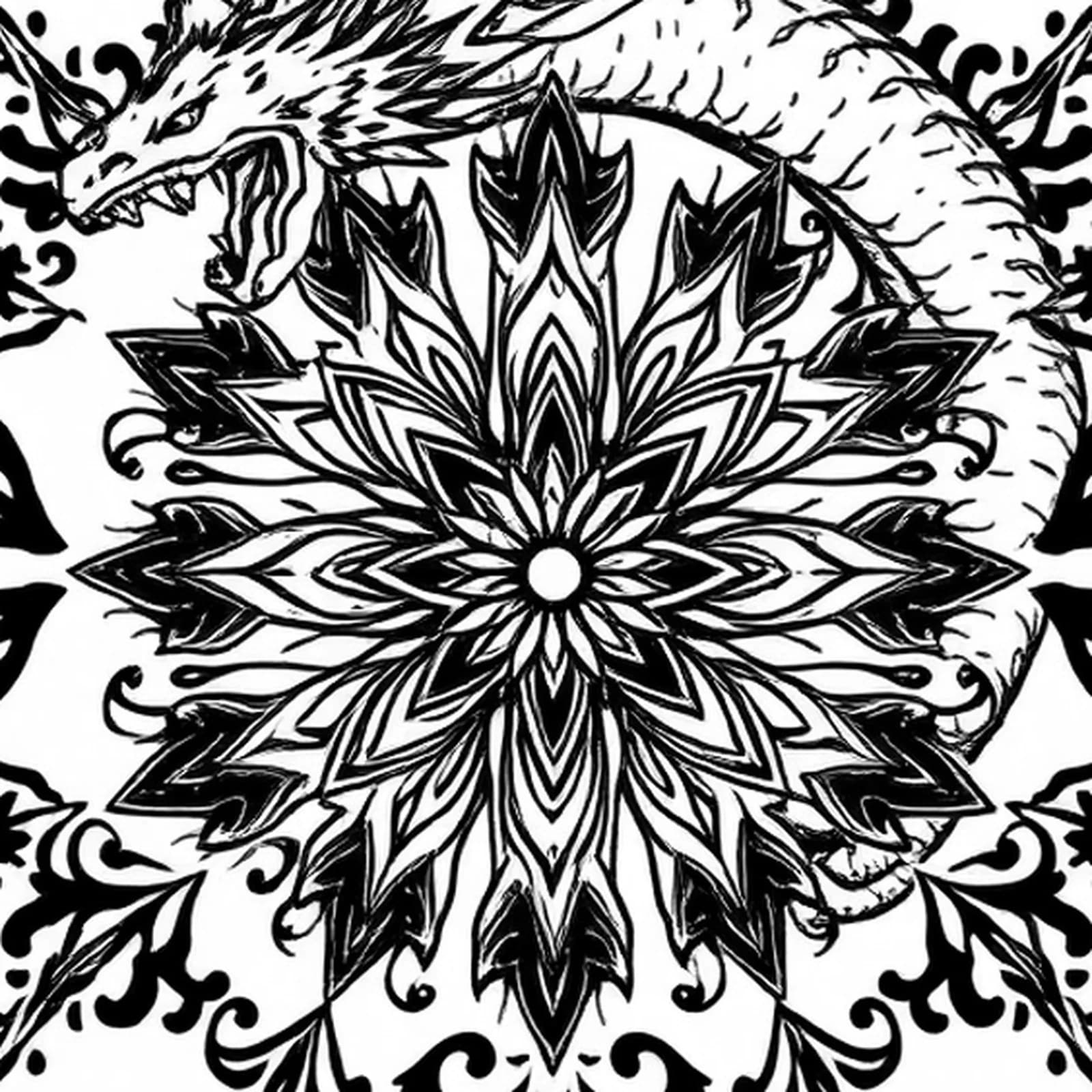
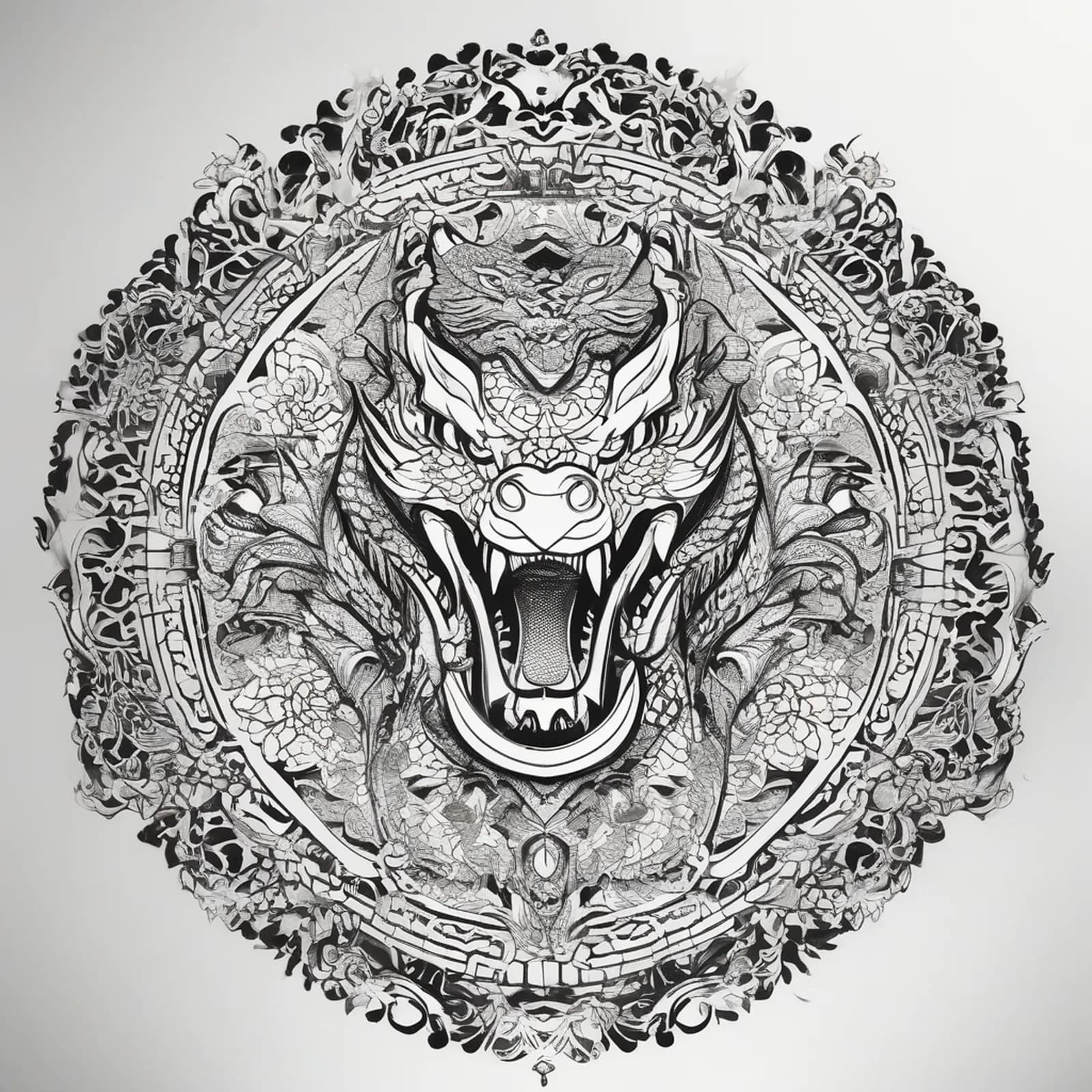
Digitally created design visual. Your tattoo is drawn and adapted to your body by the artist.
Dragon and Mandala Shoulder: Ornamental Art on the Move
Every piece is quoted individually — the price depends on size, detail and how many sessions it needs. Tell us what you want included and we come back with one all-inclusive figure.
About this design
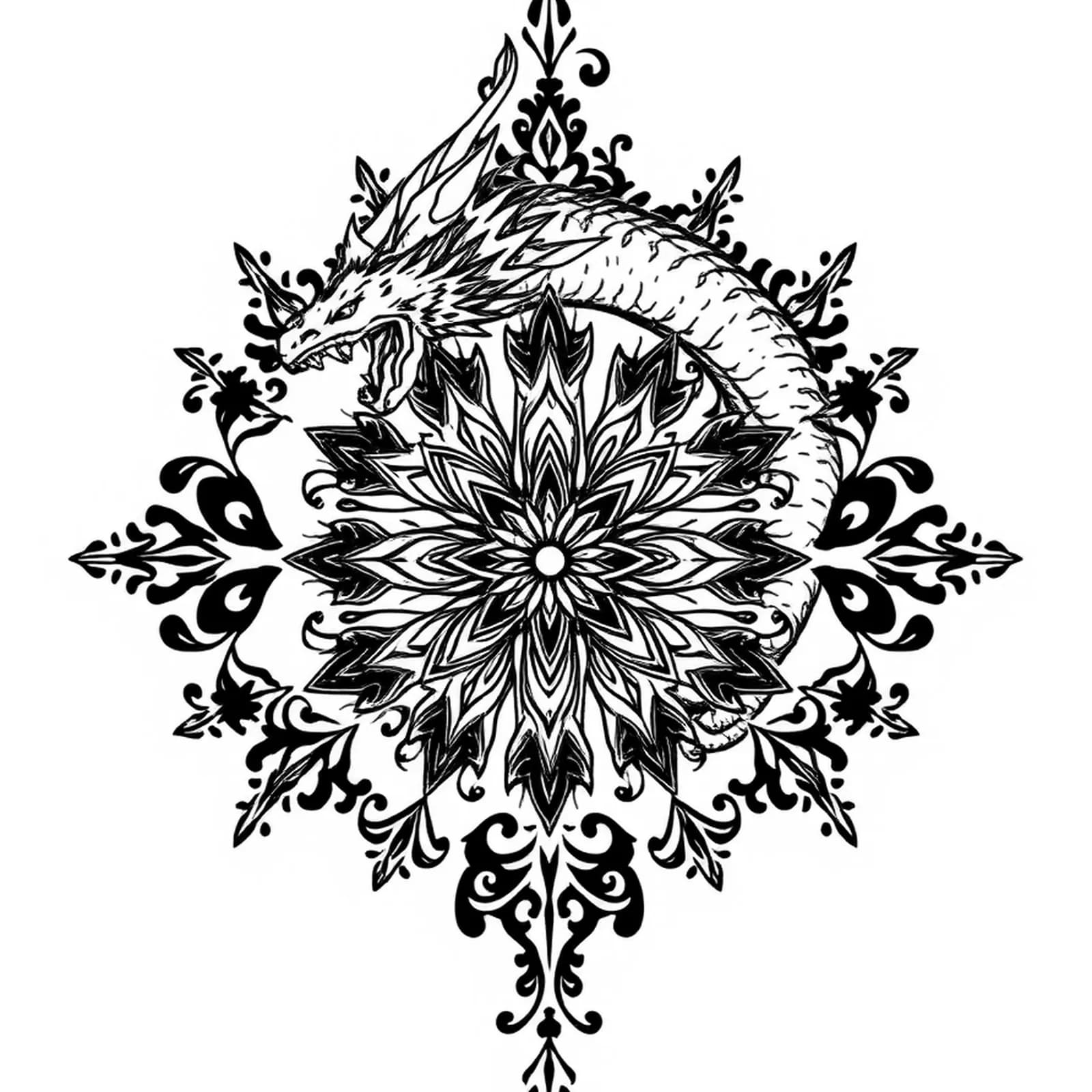
This shoulder piece merges the ancient symmetry of a mandala with the powerful, serpentine form of a dragon, rendered in ornamental style. The design wraps around the upper arm and shoulder blade, using intricate line work and balanced negative space to create rhythm without overwhelming the form. It’s not just a tattoo—it’s a narrative of harmony and transformation, visible when you raise your arm or turn your shoulder. Perfect for those who want depth, meaning, and a striking visual presence without the permanence of a full sleeve.
What's in the drawing
The mandala centers at the base of the neck, its concentric circles formed by interlocking dragon scales and stylized flame motifs. The dragon emerges from the mandala’s outer ring, its body coiling upward along the deltoid, with each segment defined by sharp, even lines and subtle internal shading. The tail loops back into the mandala’s core, completing the cycle. Negative space is used strategically—between the dragon’s claws and the mandala’s petals—to guide the eye in a continuous spiral. The line weight remains consistent, reinforcing the ornamental precision. No single element dominates; each part contributes to the whole.
Meaning & symbolism
The mandala symbolizes wholeness, balance, and the cyclical nature of existence, drawing from ancient Buddhist and Hindu traditions. The dragon, rooted in East Asian symbolism, represents power, protection, and transformation—particularly in Chinese and Japanese cultures. In this fusion, the dragon is not a conqueror but a guardian of the mandala’s center, suggesting inner strength serving harmony. The circular structure reflects the journey inward and outward, a reminder that power and peace are not opposites but parts of a unified path. This design speaks to the integration of force and stillness, movement and balance.
Who this piece is for
This piece suits those with a deep appreciation for symbolic art and who value craftsmanship over boldness. It’s ideal for someone seeking a meaningful, visually rich tattoo that doesn’t require full sleeve coverage. It’s not for first-timers seeking a simple design or those who prefer minimalism. It’s visible in sleeveless tops and low-cut shirts, so it works well in both casual and professional settings, especially when covered by a loose layer on the flight home.
How it sits on the body
The shoulder is a dynamic canvas—curved, mobile, and exposed. This design follows the natural contour of the deltoid and scapula, allowing the dragon’s body to flow with muscle movement. When the arm is raised, the dragon’s spine lifts, creating a subtle shift in form. The mandala sits at the neck’s base, staying stable even during motion. The wrap is intentional: the design begins at the shoulder blade and flows forward, avoiding tension points and ensuring the lines remain clear and defined as the skin stretches.
How the sessions work
Session 1 (3.5 hours): outlines the mandala center and the dragon’s head and first coils. Session 2 (3.5 hours): completes the body and tail, integrates the inner details. Session 3 (3 hours): final shading, line refinement, and cleanup. Between sessions, the area is monitored for healing signs. The spacing allows for tissue recovery without delaying progress, making the 3-session plan ideal for this size and complexity.
Getting it done on an Istanbul trip
With a 3-session plan and a trip length of 4 nights, Istanbul offers the perfect balance of healing time and schedule flexibility. The city’s central location between Europe and Asia makes travel easy—direct flights from London, Berlin, and Vienna take under 4 hours. Studios in Kadikoy and Galata are within reach of your accommodation, and the shoulder is easy to cover on a flight home. No sea or pool exposure is needed during healing, and loose clothing protects the area while you explore the Bosphorus.
Aftercare for this piece
Keep the shoulder covered during flights and avoid direct sun for 14 days. Use a fragrance-free ointment twice daily and avoid scratching. The area should remain dry and protected. Loose shirts or a light scarf can shield it on your journey home. Avoid tight fabric or friction until fully healed. Healing is complete in 12 weeks, but the first 14 days are crucial—no swimming, no soaking, and no sun exposure.
Sizes, placements and variations
Smaller versions (15–25 cm) work well on the upper arm or behind the ear. Larger pieces (40+ cm) can extend into the upper back or side. In color, gold and deep red accents enhance the mandala’s spiritual tone. This design pairs well with a small lotus or phoenix motif on the opposite shoulder, creating a balanced, dual-symbolic statement. Blackwork remains the most striking choice for this ornamental style.
Frequently asked questions
How does an ornamental dragon and mandala design look on the shoulder?
The design wraps from the shoulder blade to the upper arm, following the body’s curve. The mandala sits at the neck’s base, while the dragon coils upward, its form aligned with muscle movement. The ornamental style ensures every line and shape contributes to the whole, creating rhythm without clutter.
What does a mandala shoulder tattoo symbolize in this context?
Here, the mandala represents inner balance and the cyclical nature of life. The dragon, emerging from its center, symbolizes protective strength and transformation. Together, they reflect harmony between power and stillness—a personal journey of integration and self-mastery.
How does a blackwork dragon mandala age on the shoulder?
Blackwork maintains sharpness over time, especially on the shoulder where friction is minimal. The consistent line weight and clean negative space help prevent fading. With proper aftercare, the design retains its ornamental clarity for decades. The precision of the ornamental style ensures that even after years, the symmetry and flow remain intact, preserving the piece’s original impact.
Can a dragon mandala tattoo be done in multiple sessions?
Yes—this 25–40 cm design is best split into three sessions. The first outlines the mandala and dragon’s start, the second completes the body, and the third refines shading and detail. This pacing ensures healing between sessions and preserves precision, making it ideal for a complex, large-scale ornamental piece.
Is it safe to fly home after getting a shoulder tattoo in Istanbul?
Yes, as long as the area is covered with loose clothing and protected from sun and friction. Avoid direct sun and swimming during healing. The shoulder is easy to cover on a flight, and the 14-day surface healing period allows safe travel after the first session. No sea or pool exposure is needed, and the area remains protected with a light scarf or shirt.
Why choose Istanbul for a dragon mandala shoulder tattoo?
Istanbul offers a 3-session plan over 4 nights, with direct flights from major European cities. Studios in Kadikoy and Galata are accessible, and the shoulder is easily covered during travel. The all-inclusive package saves up to 70% compared to western Europe, making it both affordable and convenient. The city’s dual-continent location adds a symbolic resonance to the mandala’s circular design.