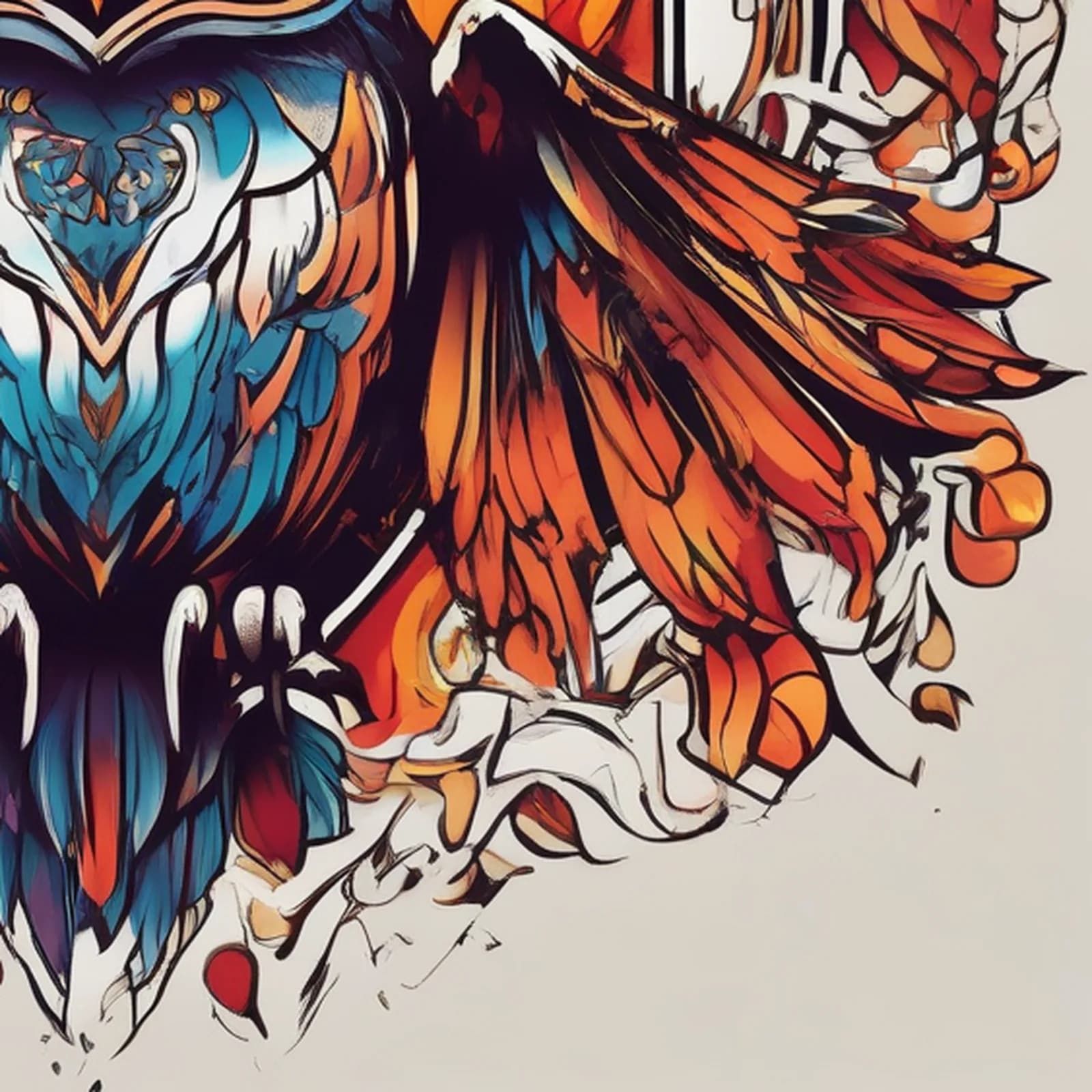
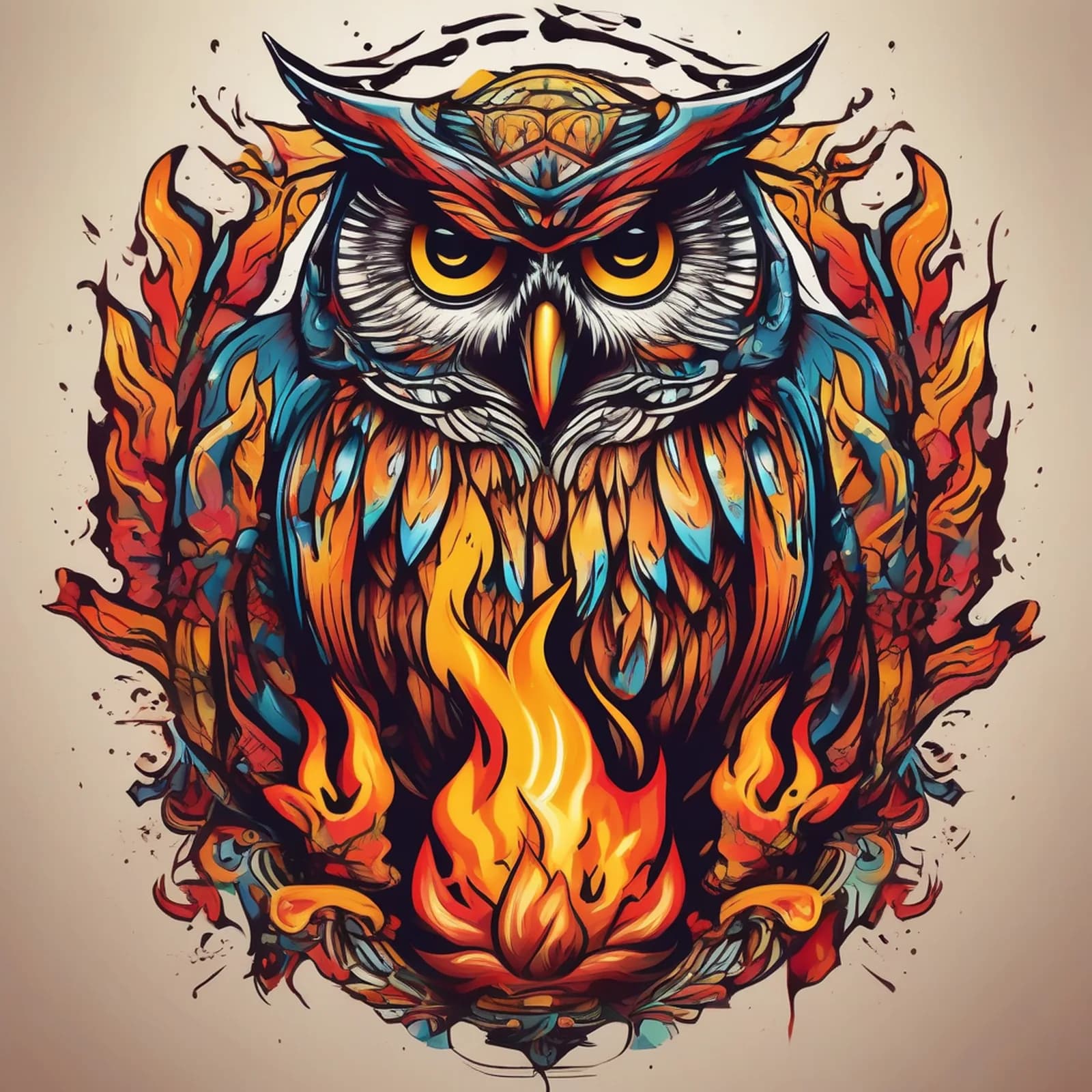
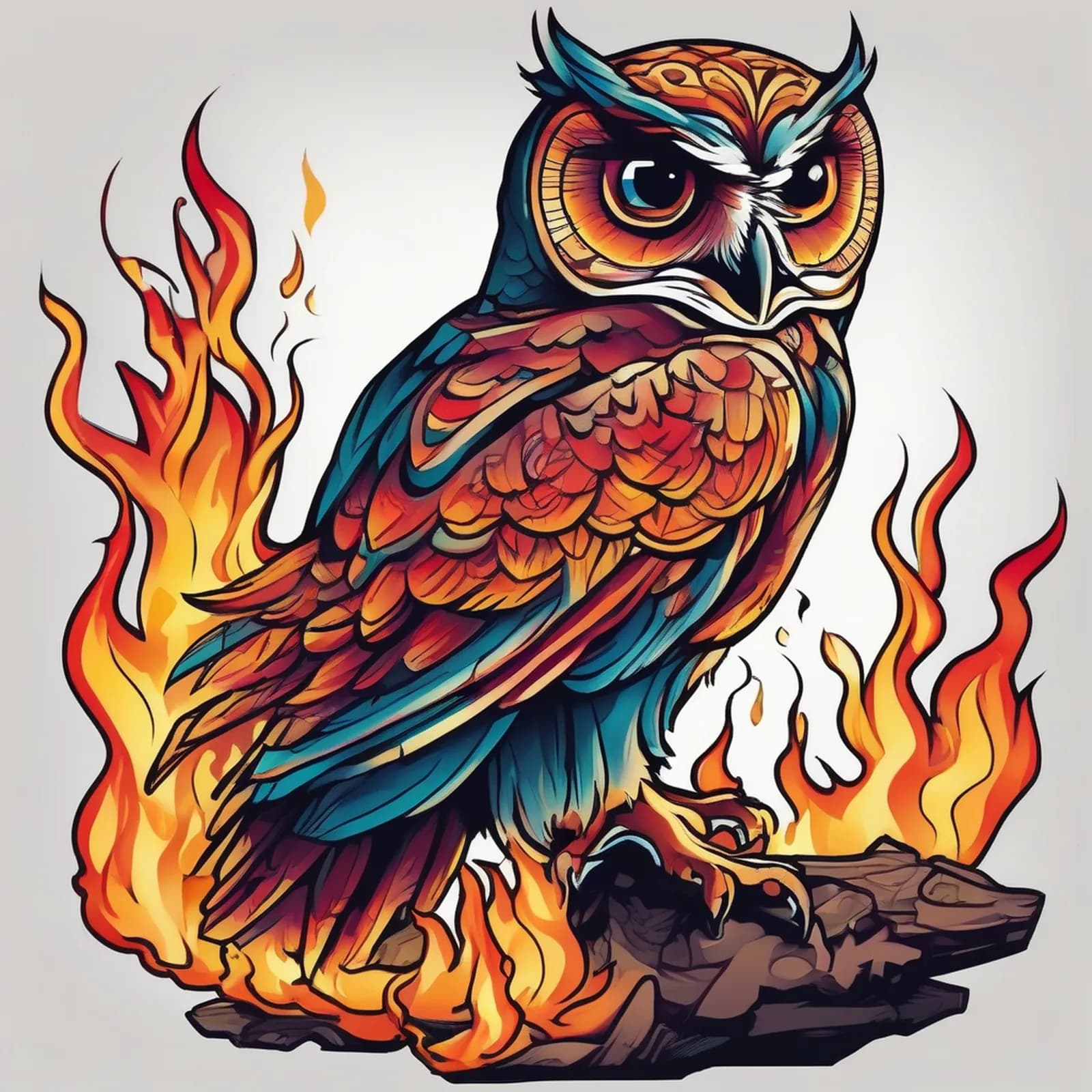
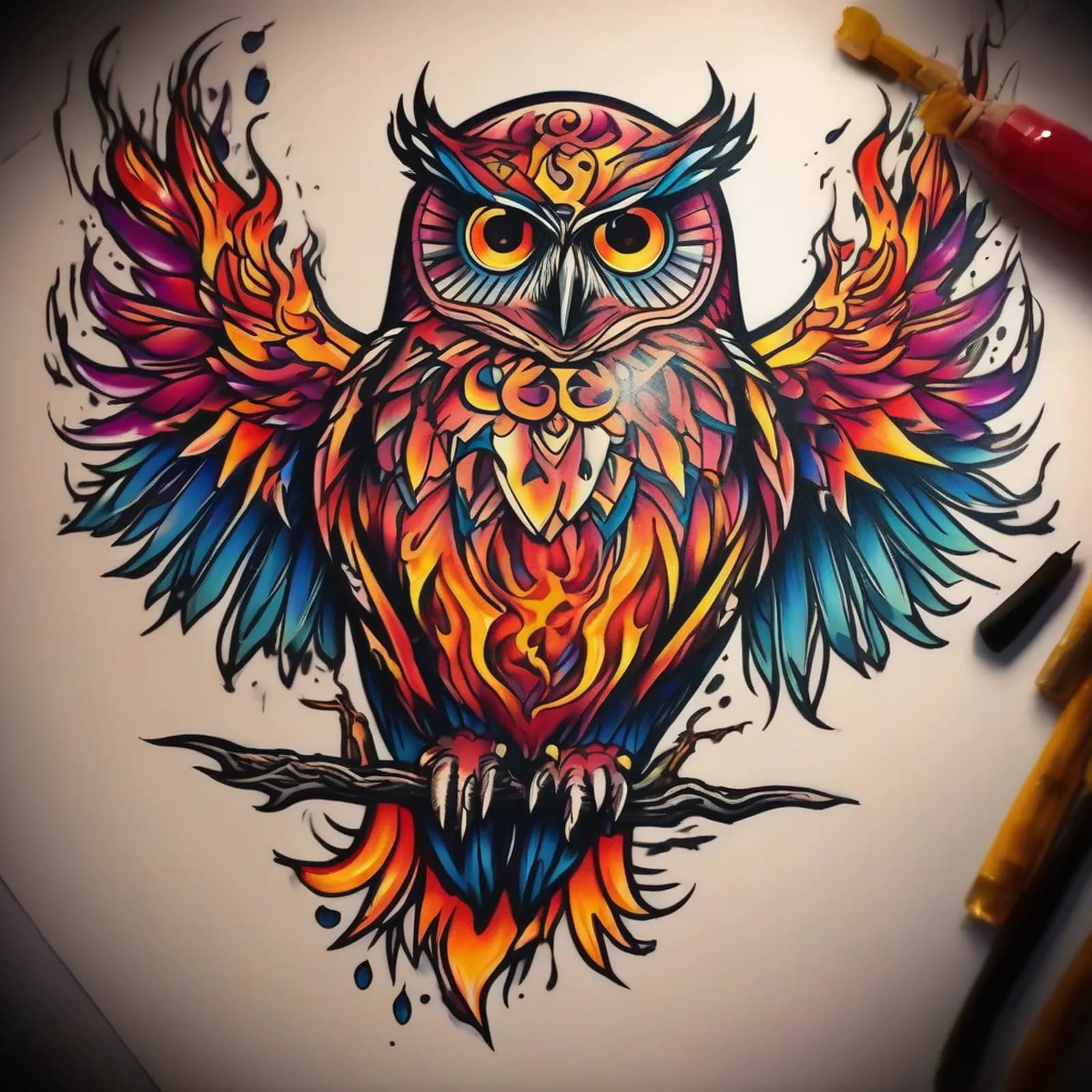
Digitally created design visual. Your tattoo is drawn and adapted to your body by the artist.
Owl Rising From Flames – Neo Traditional Shoulder Tattoo
Every piece is quoted individually — the price depends on size, detail and how many sessions it needs. Tell us what you want included and we come back with one all-inclusive figure.
About this design
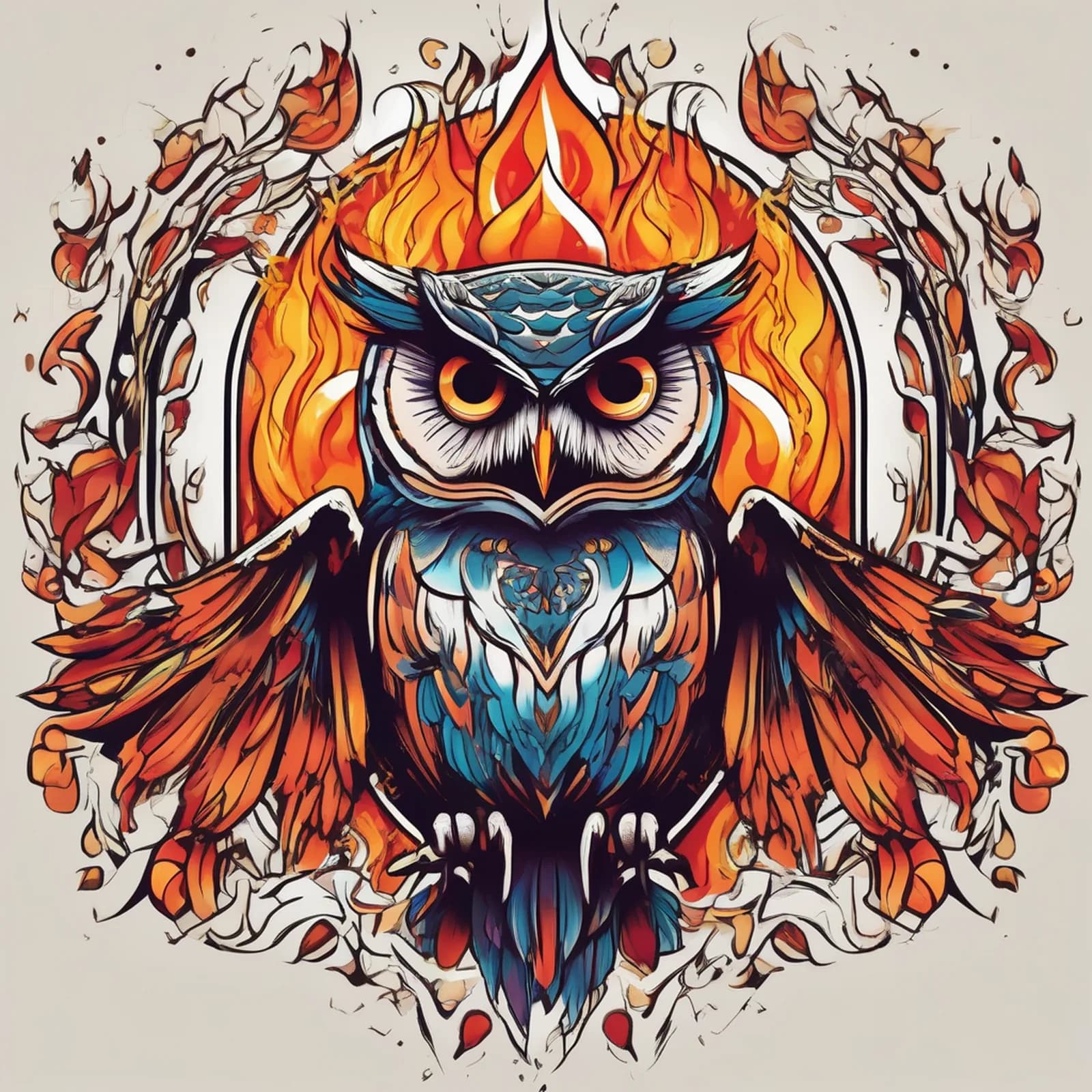
This flame owl tattoo captures a moment of rebirth—feathers ablaze, wings outstretched as if emerging from a consuming fire. The neo traditional style gives it bold lines, rich contrasts, and a timeless presence. Placed on the shoulder, it becomes a personal emblem of resilience, blending mythic weight with modern artistry. It’s not just a tattoo; it’s a declaration of transformation, visible and powerful. The flame base begins just above the shoulder blade, anchoring the design to the body’s natural curve, while the owl’s head tilts slightly upward, suggesting ascent through adversity.
What's in the drawing
The owl rises from a core of thick, swirling flames that taper into delicate embers at the base. Each feather is rendered with defined, tapering edges—some crisp, others blurred where flame licks their tips. The eyes are deep-set, shaded with a subtle halo of light, drawing the eye upward through the bird’s uplifted form. Negative space is used strategically around the wings to emphasize motion. The flames are not chaotic; they follow a controlled, spiral flow that anchors the piece to the shoulder’s natural curve. The central flame forms a subtle V-shape, mirroring the scapular bone, reinforcing the design’s integration with anatomy.
Meaning & symbolism
Owls symbolize wisdom, intuition, and transition across many cultures. In ancient Greek mythology, the owl was sacred to Athena, representing insight. In Norse tradition, owls were seen as omens of change and hidden knowledge. Flames, meanwhile, evoke purification, destruction, and renewal. Together, they suggest a journey through personal crisis toward clarity. The image of an owl emerging from fire speaks to resilience—rising not despite hardship, but because of it. This motif resonates with those who’ve faced transformation and seek a lasting symbol of that passage. The design draws from archetypal imagery, where fire is both threat and catalyst, and the owl is the guide through darkness.
Who this piece is for
This piece suits those with a strong sense of personal narrative—individuals who’ve experienced change and wish to mark it visibly. It’s ideal for those comfortable with a bold, semi-covering design on the shoulder. Not for first-timers seeking subtlety or those in professions requiring full coverage. It works well for both men and women who appreciate symbolic depth and striking visuals.
How it sits on the body
On the shoulder, the design follows the slope of the scapula, with the flame base resting just above the shoulder blade. As the arm lifts, the wings subtly shift, maintaining balance. The curve of the upper back allows the flames to flow naturally from the center outward. The placement offers a natural wrap, making it easy to wear in both sleeveless and long-sleeve clothing. The shoulder blade provides a stable anchor point, minimizing distortion over time. The design is slightly asymmetrical, with the left wing extending further, creating visual tension that resolves at the neck.
How the sessions work
Session 1 (3.5 hours): Complete outline and base shading of the owl and central flame structure. Focus on establishing proportions and flame flow. Session 2 (3.5 hours): Build depth in feather layers and ember textures, refine flame gradients, and begin detailing the eyes. Session 3 (3 hours): Finalize shading, correct any inconsistencies, clean up lines, and apply final highlights. The spacing between sessions allows for skin recovery and ensures precision in the final stage.
Getting it done on an Istanbul trip
With only three sessions and a healing period of 14 days, this design fits perfectly into a 4 nights trip in Istanbul. The city’s central location—accessible via IST or SAW—means short flights from most European cities, including London (~4h), Berlin (~3h), and Vienna (~2h30). Studios in Kadikoy and Beyoglu are within easy reach of the Bosphorus, offering a calm environment during healing. The design’s moderate size and session count allow for a seamless integration with travel plans, and the shoulder placement makes it easy to cover during flights without compromising recovery.
Aftercare for this piece
Keep the tattoo out of direct sun and avoid swimming for 14 days. Clean gently with fragrance-free soap and apply a thin layer of ointment twice daily. Avoid scratching or peeling. On the flight home, wear loose, soft clothing—preferably cotton—to prevent friction. Keep the area covered with a light scarf if needed. Avoid tight sleeves or straps that press on the shoulder. This reduces irritation and protects the healing skin during travel. Do not submerge the tattoo in water until fully healed.
Sizes, placements and variations
Smaller versions (15–20 cm) work well on the upper arm or chest. In black and grey, the flames take on a more somber tone. For contrast, pair with a subtle feather or moon motif on the opposite shoulder. A color version could introduce reds and golds in the flames, enhancing the fire theme. The design also pairs naturally with a phoenix or serpent motif for a larger back piece.
Frequently asked questions
How does a neo traditional flame owl tattoo age on the shoulder?
Neo traditional tattoos use bold lines and dense shading, which help maintain clarity over time. The shoulder’s consistent skin tone and minimal movement preserve the design’s sharpness. With proper care, the flames and feather details remain distinct for years.
How does the flame and feather composition work in this flame owl design?
The flames spiral from the owl’s base, creating a dynamic, upward flow. Feathers are layered with varied thickness—some crisp, others blurred at the tips where fire meets wing. This contrast enhances the illusion of motion and heat, making the owl appear to rise from the blaze.
How does the shoulder placement affect the visibility and movement of the flame owl tattoo?
The shoulder placement allows the tattoo to be visible in sleeveless tops while remaining discreet under long sleeves. When the arm moves, the wings shift subtly, maintaining balance. The curve of the scapula supports the flame’s spiral, ensuring the design flows with the body’s natural form.
What makes a flame owl tattoo in neo traditional style different from other styles?
Neo traditional style blends classic realism with bold lines and expressive shading. Unlike traditional tattoos, it uses more detail and variation in line weight. Unlike realism, it embraces stylization—here, flames are exaggerated for emotional impact, and feathers are rendered with artistic flair, not strict accuracy.
Can I swim or go to the beach during the healing phase of my flame owl tattoo?
No. Avoid pools, lakes, and the sea for 14 days. Water can introduce bacteria and disrupt healing. Keep the tattoo dry and protected. Once healed, you can resume normal activities, but always apply sunscreen to prevent fading.
What should I wear on the flight home after getting my flame owl tattoo?
Wear loose, soft clothing—preferably cotton—to avoid friction. Avoid tight sleeves or straps that press on the shoulder. Cover the area with a light shawl or scarf if needed. This reduces irritation and protects the healing skin during travel.