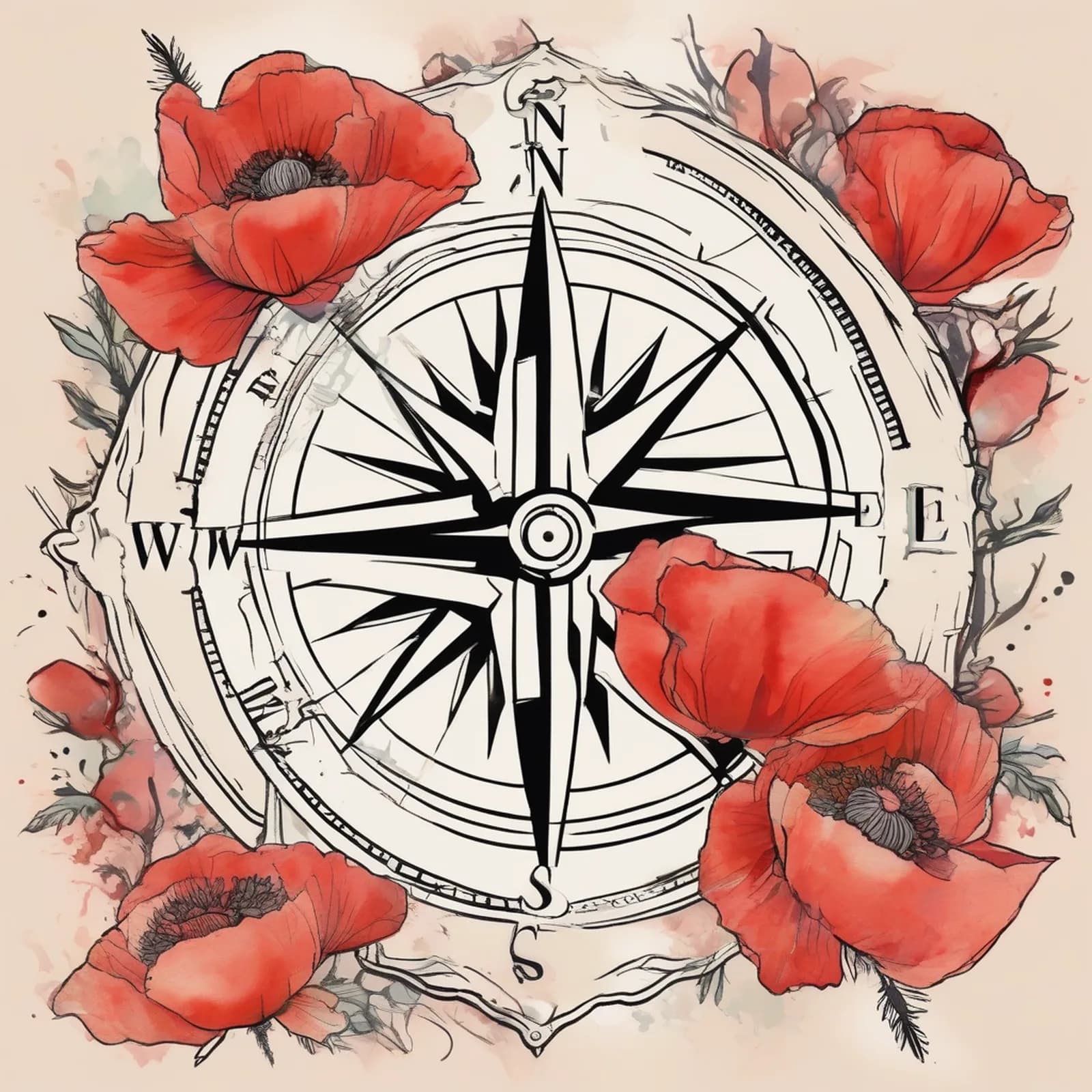
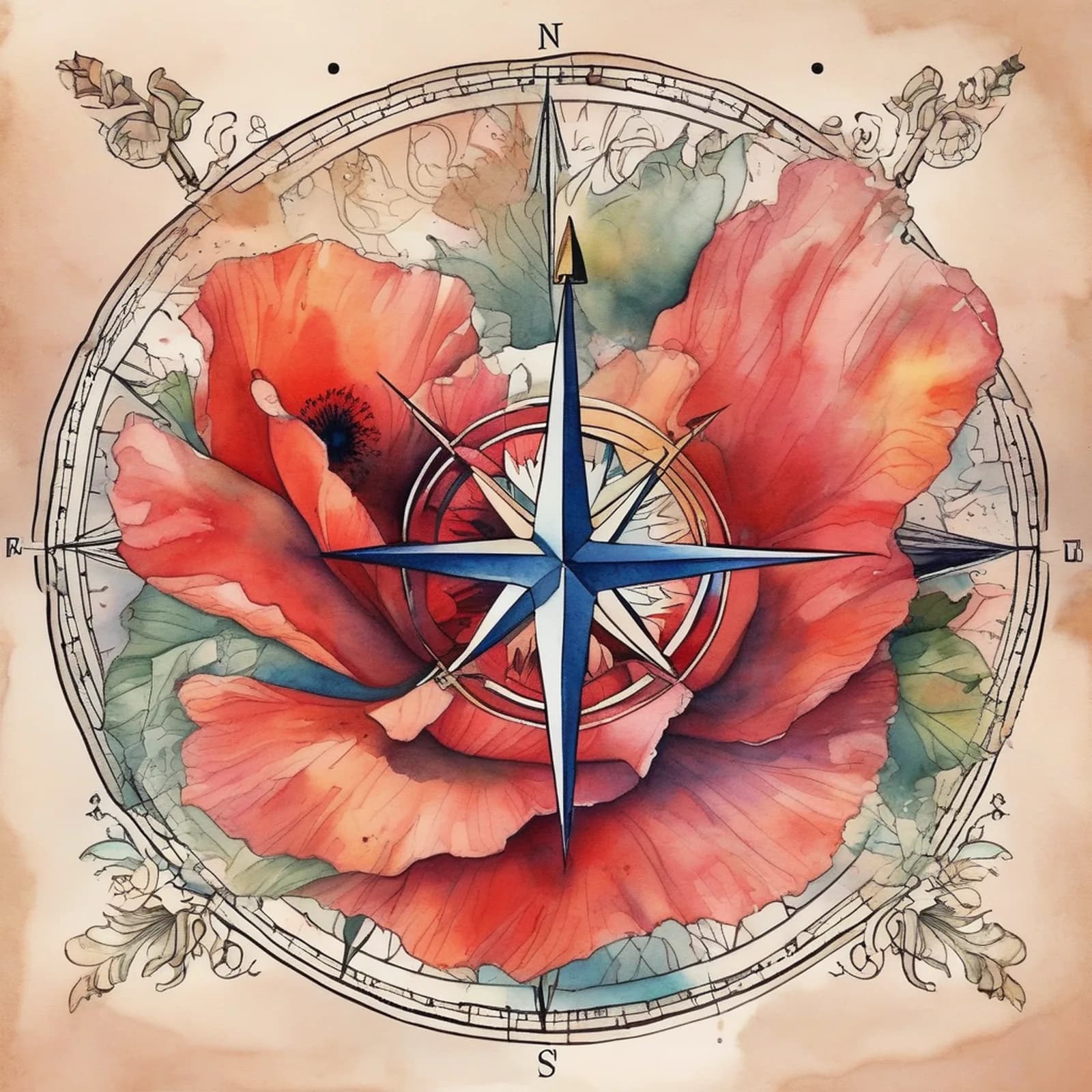
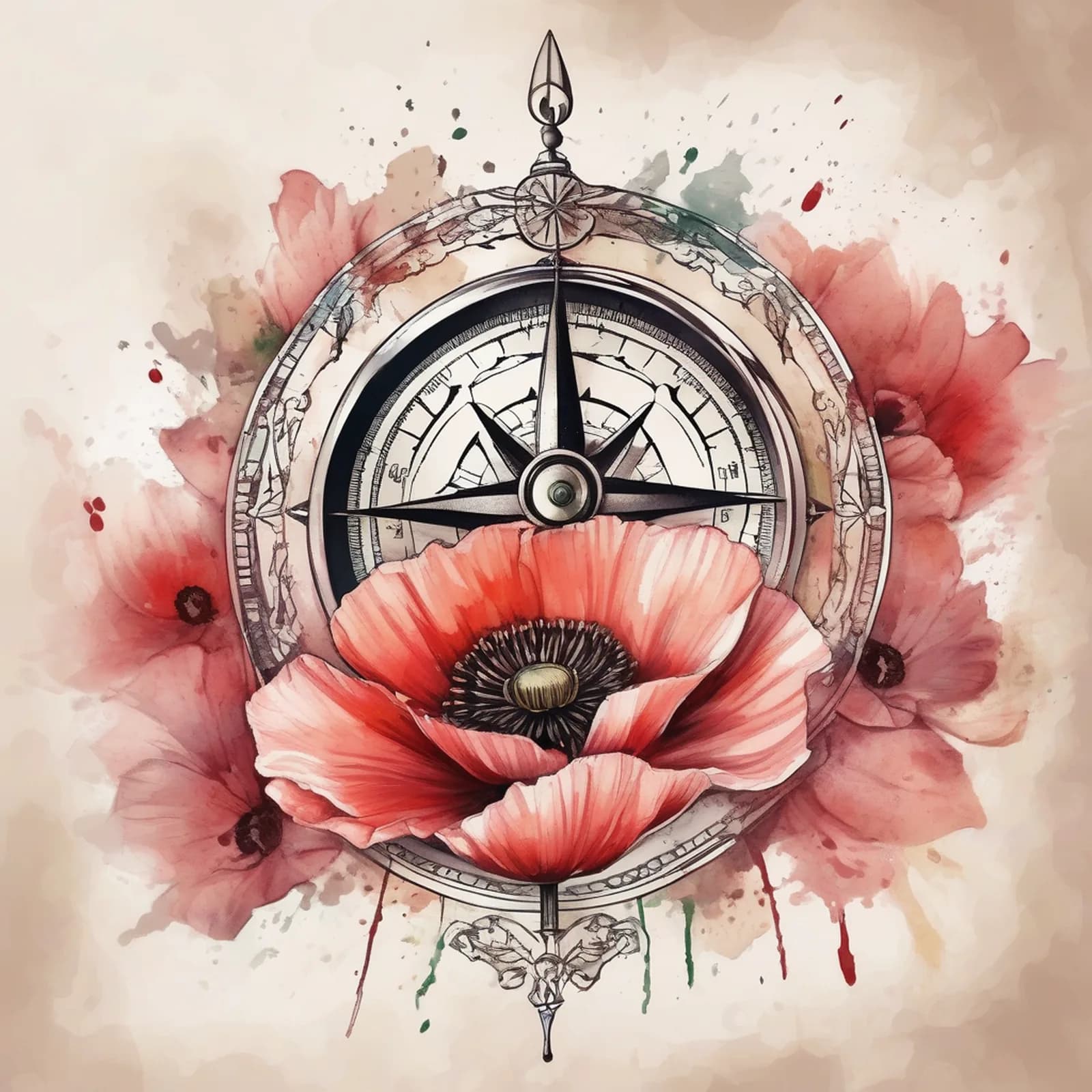
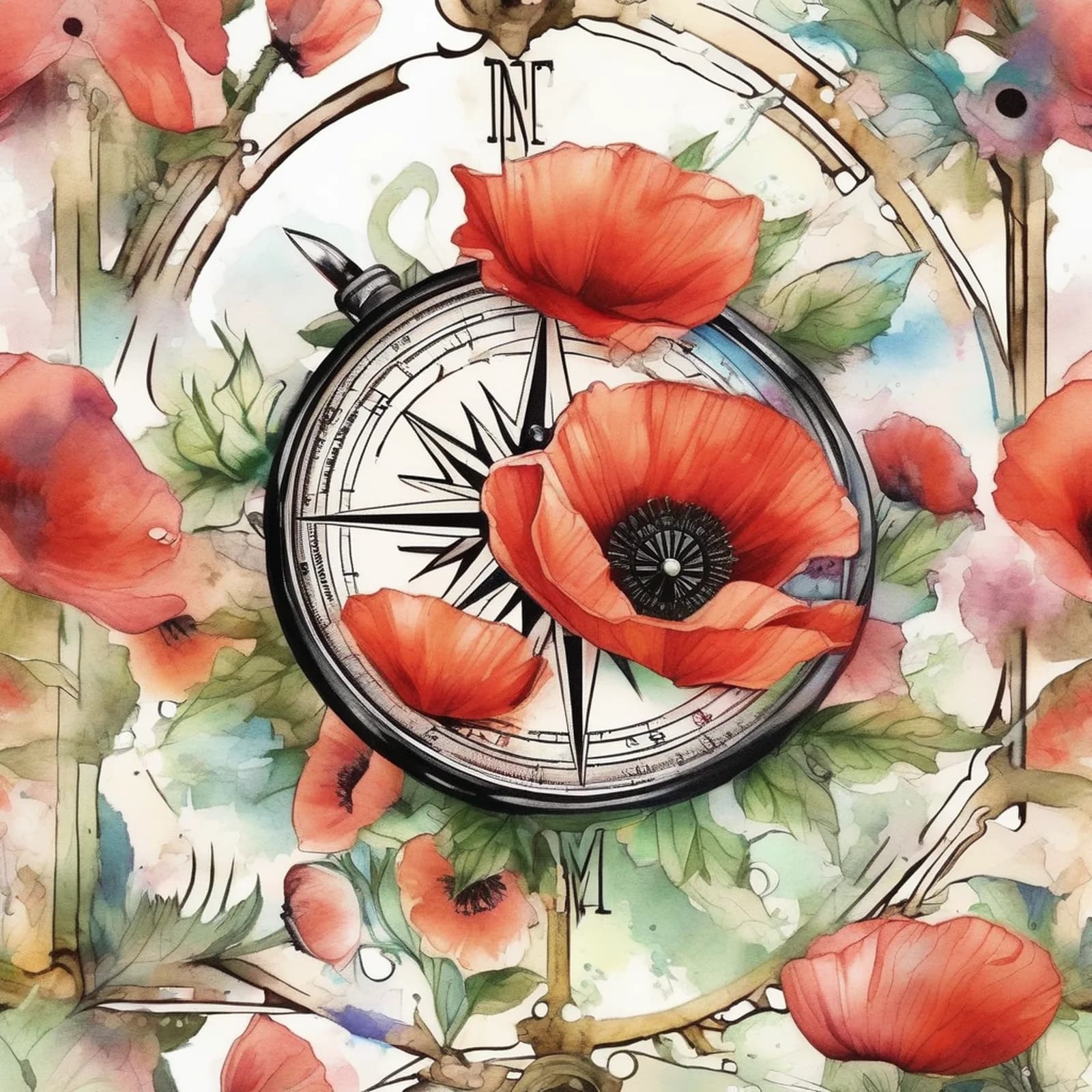
Digitally created design visual. Your tattoo is drawn and adapted to your body by the artist.
Compass and Poppy Watercolor Tattoo on the Shoulder
Every piece is quoted individually — the price depends on size, detail and how many sessions it needs. Tell us what you want included and we come back with one all-inclusive figure.
About this design
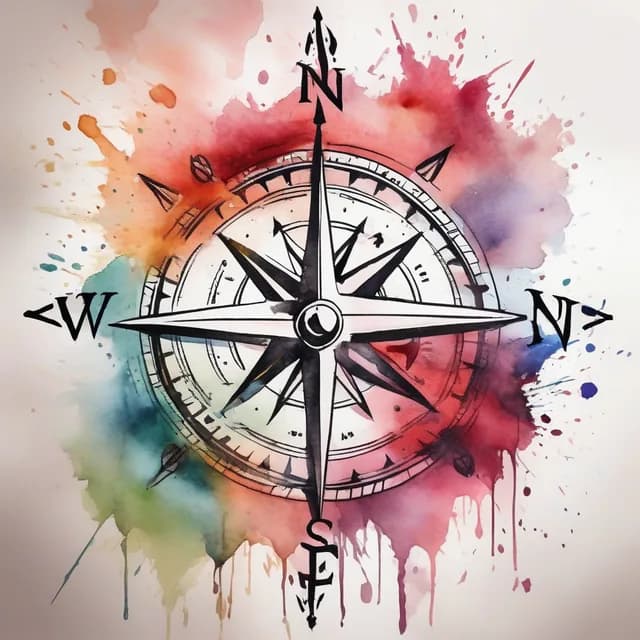
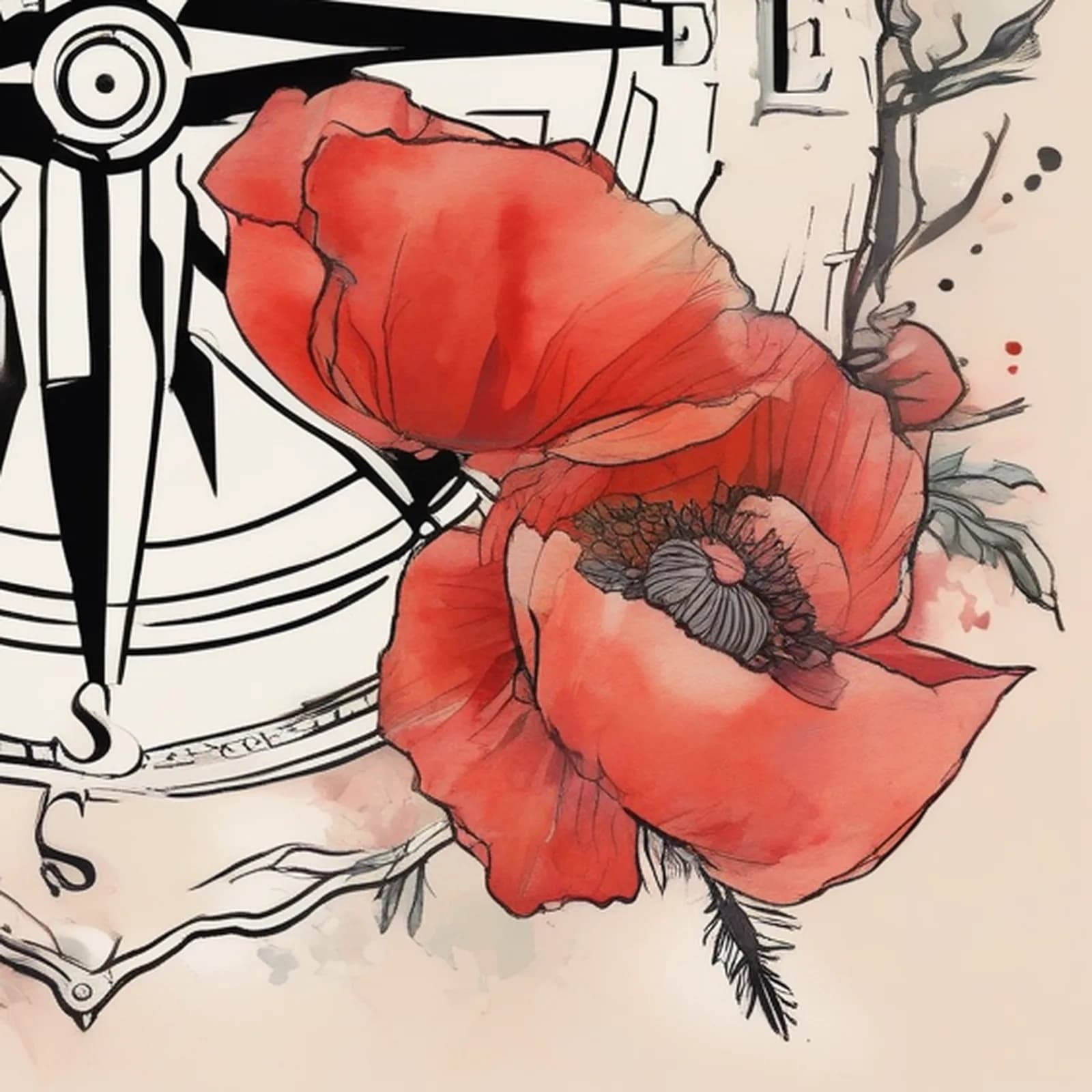
This watercolor compass and poppy tattoo blends navigation with quiet resilience. The poppy, rendered in soft, bleeding hues of crimson and deep maroon, rises from the center of a compass rose. Each petal dissolves into the ink’s wash, as if carried by wind. The design is anchored by a subtle, hand-drawn compass with fine, delicate lines that suggest direction without rigidity. It’s not a map, but a feeling — of movement, of choice, of beauty in transition.
What's in the drawing
The compass is centered at the base of the shoulder, its needle pointing slightly upward, aligned with the natural curve of the scapula. The rose-like poppy blooms from the center, its petals unfurling with uneven, organic edges — a hallmark of watercolor technique. Ink bleeds softly into the skin’s texture, especially in the reds and pinks, creating natural gradients. Negative space is used deliberately: the open area around the petals and between the compass arms lets the skin breathe, emphasizing the delicate balance between structure and freedom. The eye travels from the compass’s core, up through the poppy, then outward along the shoulder’s slope.
Meaning & symbolism
The poppy has deep roots in remembrance and resilience, particularly in Mediterranean and Anatolian cultures, where it blooms in spring after harsh winters. In Turkish tradition, it symbolizes both fragility and endurance. Paired with the compass, it becomes a personal manifesto: direction guided by memory, movement rooted in reflection. The watercolor style reinforces this duality — the permanence of the tattoo’s form contrasted with the temporary, fluid nature of the paint. It’s not about fixed paths, but about carrying meaning while still being open to change.
Who this piece is for
This piece suits those who value subtlety over boldness, and who seek a tattoo with layered meaning. It’s ideal for first-timers who want something meaningful but not overly visible. The shoulder placement keeps it private yet accessible — perfect for those in conservative workplaces or who prefer low-key visibility. It’s not for those seeking a large, dramatic statement or high-coverage design.
How it sits on the body
On the shoulder, the compass sits just below the collarbone, following the natural dip of the scapula. The poppy flows upward along the muscle’s curve, its petals aligning with the shoulder’s soft rise. When the arm is raised, the design shifts subtly — the poppy appears to reach, the compass remains grounded. The curve of the shoulder prevents distortion, and the tattoo remains balanced even during movement. The placement allows the ink to settle into the skin’s natural texture without tension, preserving the softness of the watercolor effect over time.
How the sessions work
The first session focuses on sketching the compass and laying down the foundational watercolor washes for the poppy. The second session refines the edges, adds depth to the petals, and completes the fine lines of the compass. Between sessions, the tattoo is protected with breathable bandages, and the artist provides healing guidance. Both sessions are spaced to allow gentle healing without interrupting the flow of the process.
Getting it done on an Istanbul trip
This 2-session piece fits perfectly into a 3 nights trip to Istanbul. With studios in Kadikoy and Galata, you’re close to both airports and the Bosphorus. The 14-day surface healing allows you to return home after your trip without risk. The shoulder is easy to cover on the flight home — loose clothing keeps it protected. Healing while exploring the city is simple: avoid direct sun, skip swimming, and keep the area clean. Istanbul’s rhythm supports a gentle recovery.
Aftercare for this piece
After the second session, the tattoo is wrapped in a breathable bandage for 24 hours. For the next 14 days, avoid direct sunlight and refrain from swimming in seas or pools. Keep the area clean with mild soap and apply a fragrance-free moisturizer twice daily. On your flight home, wear loose clothing to prevent friction. Avoid scratching or peeling — the skin will flake naturally. Full healing takes 12 weeks, but the watercolor effect will settle into soft, lasting vibrancy.
Sizes, placements and variations
Smaller versions (10–15 cm) work well on the upper arm or behind the ear, maintaining the poppy’s delicacy. Larger pieces (25+ cm) expand into full shoulder sleeves, allowing more space for additional symbolic elements like waves or constellations. For a bolder look, try a blackwatercolor hybrid with deeper lines. The poppy pairs beautifully with minimalist moon phases or small star motifs, creating a theme of time, memory, and quiet movement.
Frequently asked questions
What does a poppy flower symbolize in a compass tattoo design?
The poppy symbolizes remembrance, resilience, and the quiet strength found in fleeting beauty. In this design, it represents a journey guided by memory and emotional depth, not just physical direction. Its presence suggests that even in moments of fragility, there is purpose and continuity.
How does a shoulder compass tattoo interact with the body’s movement?
The shoulder’s natural curve supports the design’s flow. As the arm moves, the poppy appears to shift slightly, while the compass remains stable. The curve prevents distortion, and the tattoo maintains its balance and visual harmony during daily motion. The ink settles into the skin without tension, preserving the soft watercolor effect.
Why is a watercolor style ideal for a compass and poppy tattoo?
Watercolor captures the delicate, ephemeral nature of the poppy and the subtle guidance of the compass. The soft gradients, bleeding edges, and layered washes mirror the emotional depth of the design. It’s not about rigid lines, but about fluid meaning — a permanent mark with a temporary, poetic quality that evolves over time.
How does a watercolor compass and poppy tattoo age on the shoulder?
The watercolor effect softens gently over time, with the reds and pinks mellowing into deeper, richer tones. The shoulder’s natural movement prevents flatness, keeping the ink alive in texture. With proper care, the design retains its softness and emotional resonance, aging into a timeless, nuanced piece that feels both personal and enduring.
Can I swim or sunbathe during the healing period in Istanbul?
No. Avoid sea or pool swimming and direct sun exposure during the 14-day surface healing phase. The tattoo needs protection to prevent fading and infection. Cover it with loose clothing when outdoors. The shoulder is easy to shield, and the city’s climate allows for comfortable healing without overexposure.
How does the Istanbul trip support healing after a shoulder tattoo?
With 3 nights in Istanbul, you have time to heal while exploring. Studios are near Kadikoy and Galata, close to accommodations. The shoulder is easy to cover on flights, and you can follow healing guidelines without disruption. The city’s rhythm supports a gentle recovery, with easy access to clean, quiet spaces for rest.