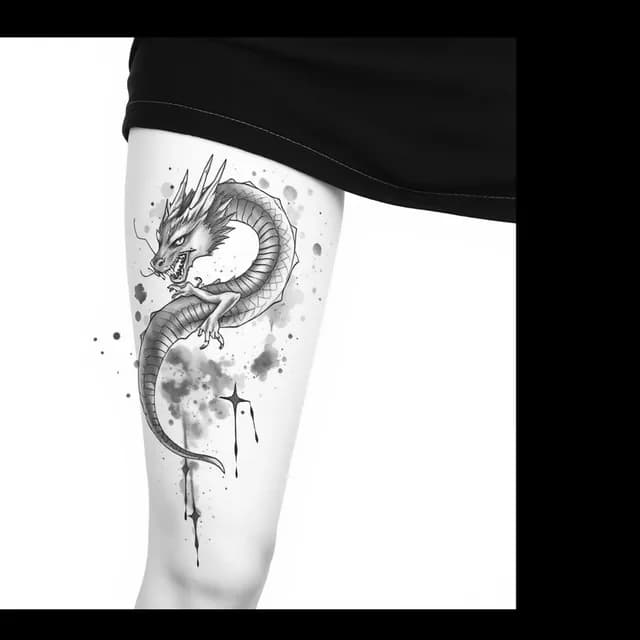
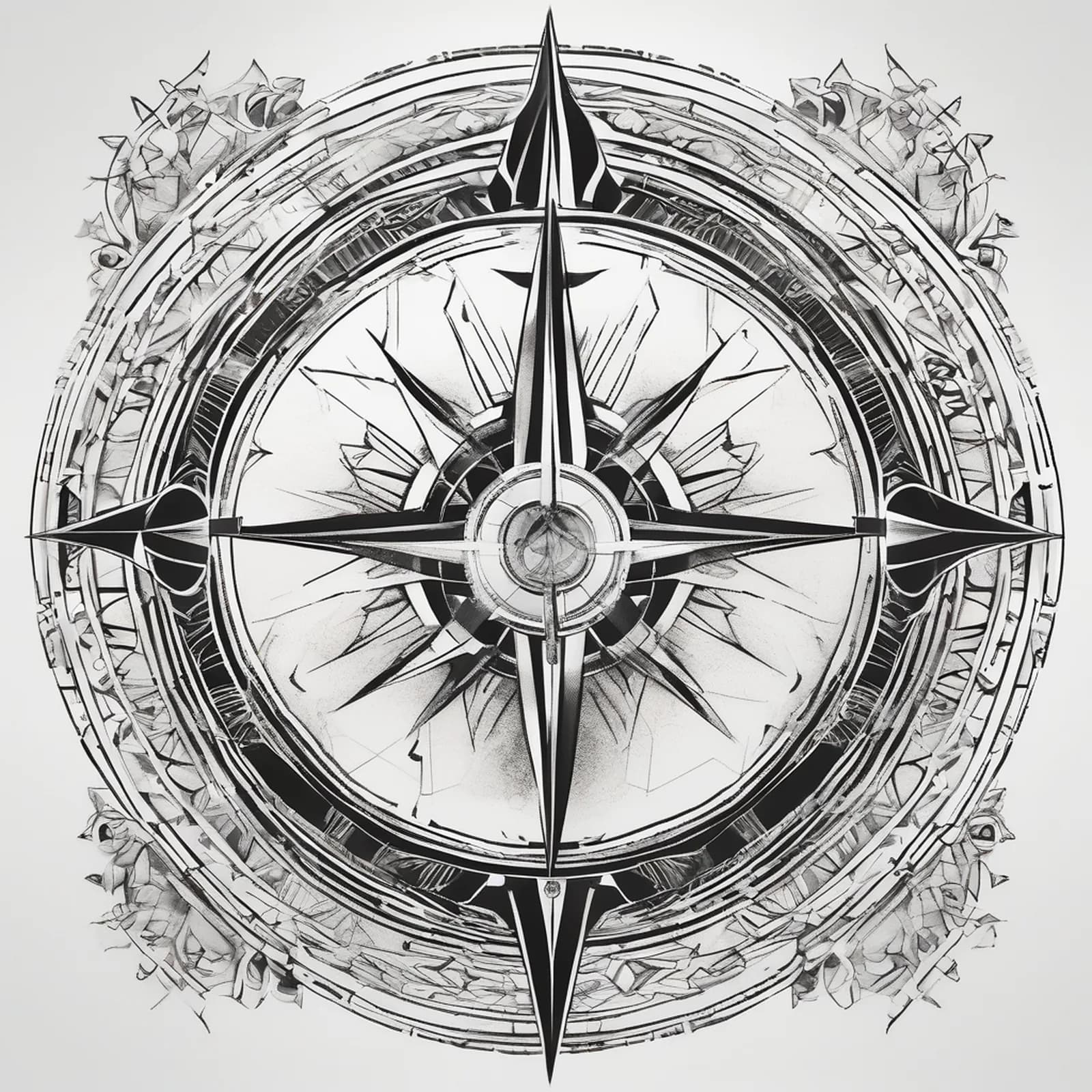
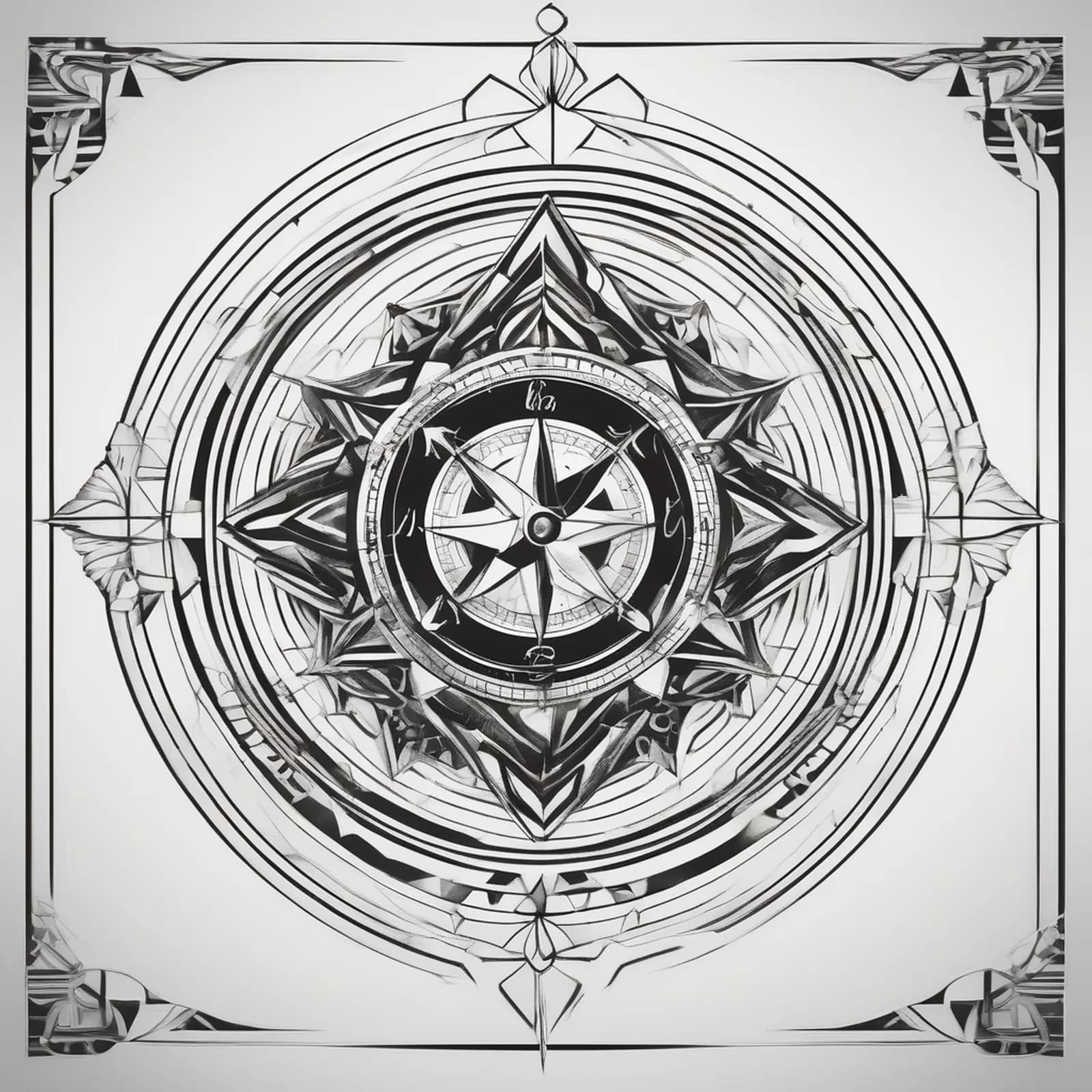
Digitally created design visual. Your tattoo is drawn and adapted to your body by the artist.
Art Deco Compass Tattoo on the Thigh
Every piece is quoted individually — the price depends on size, detail and how many sessions it needs. Tell us what you want included and we come back with one all-inclusive figure.
About this design
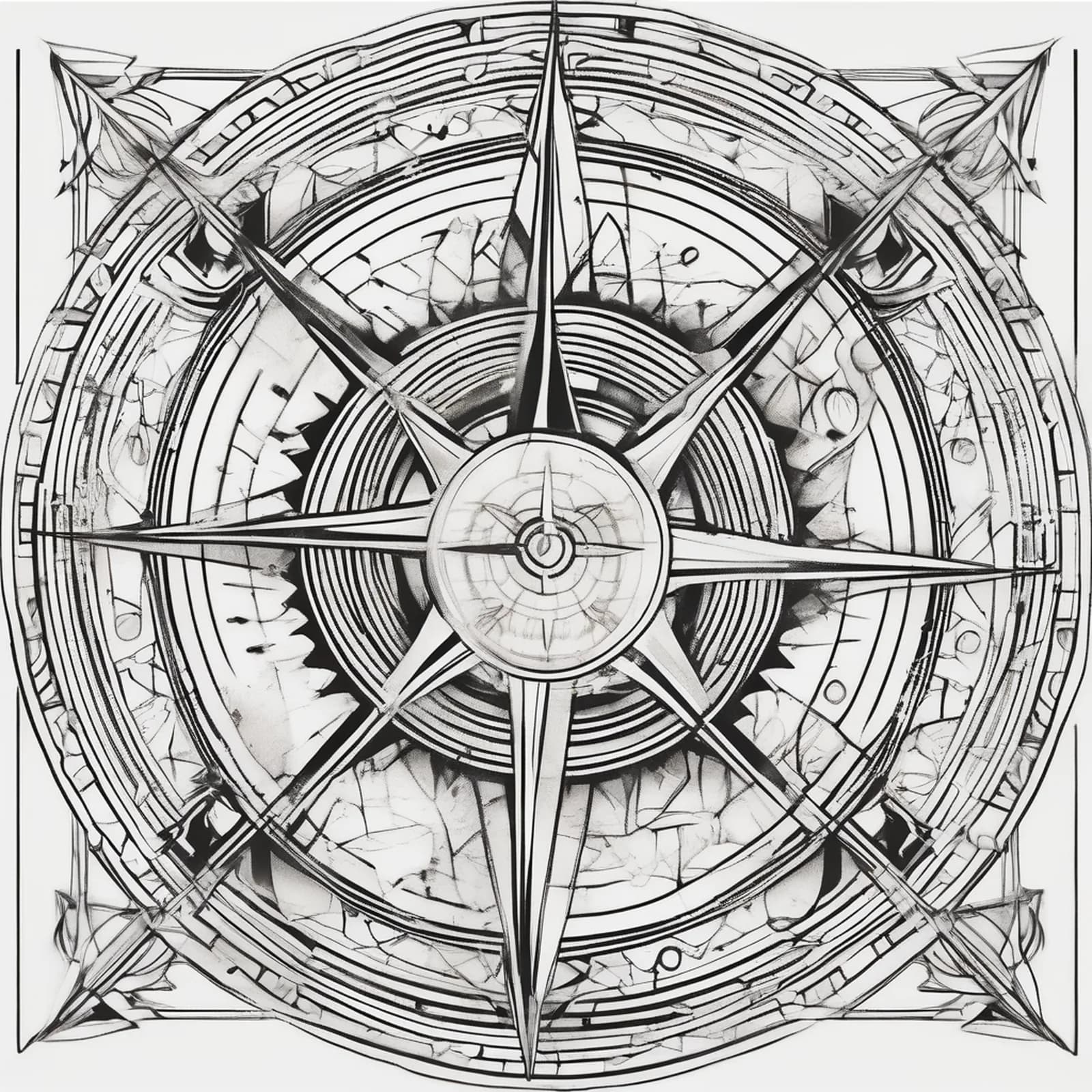
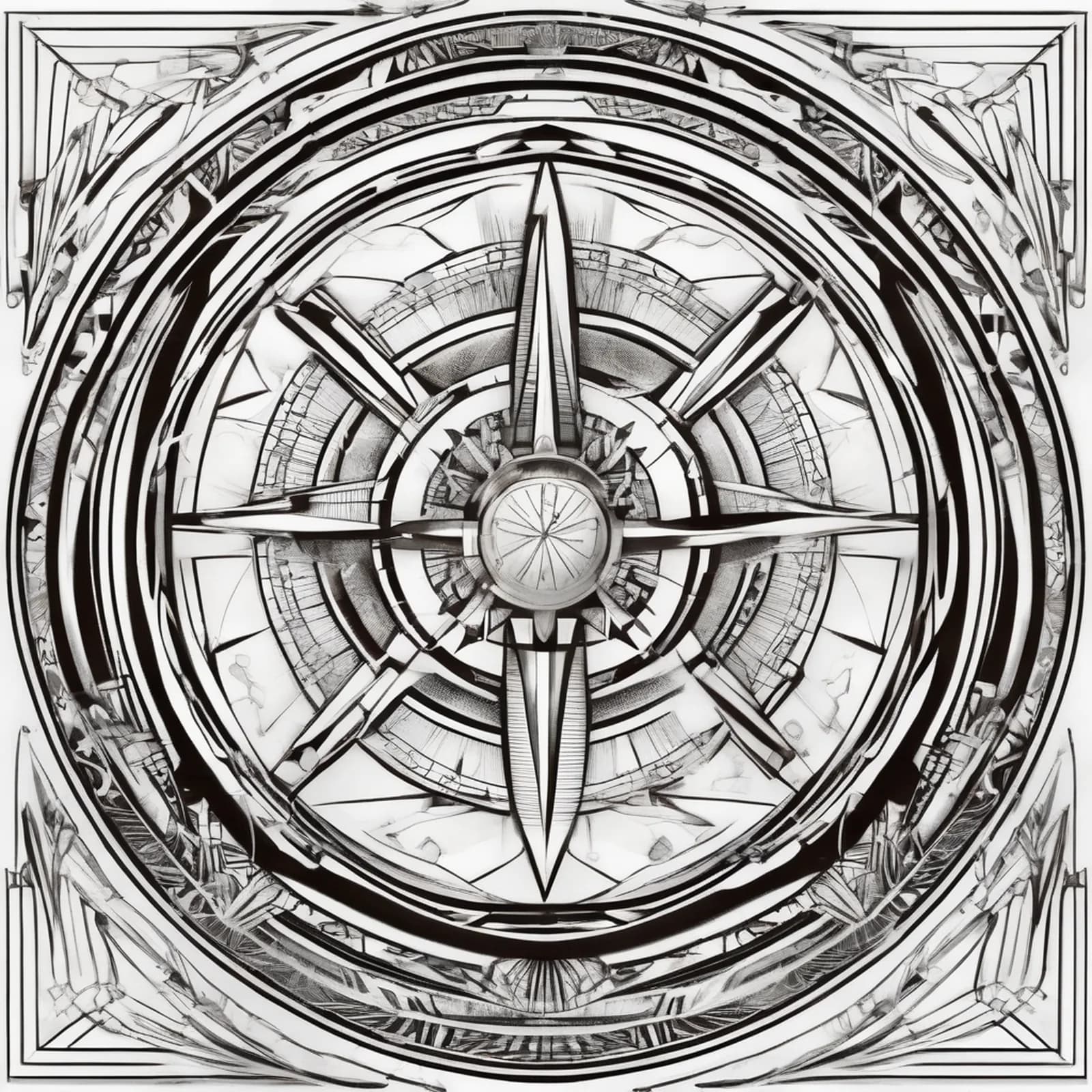
This Art Deco compass is not a symbol of direction alone—it’s a statement in precision. Geometric, layered, and anchored in symmetry, it unfolds like a map of intention. The stepped rays radiate outward with controlled force, each segment narrowing slightly like a staircase. Fan shapes frame the compass core, adding rhythm without clutter. Designed for the thigh, it holds both strength and elegance, a balance of form and function. The stepped ray compass structure ensures visual continuity, while the compass rose blackwork foundation gives it depth. This is Art Deco body art at its most deliberate—every line a choice, every angle a promise.
What's in the drawing
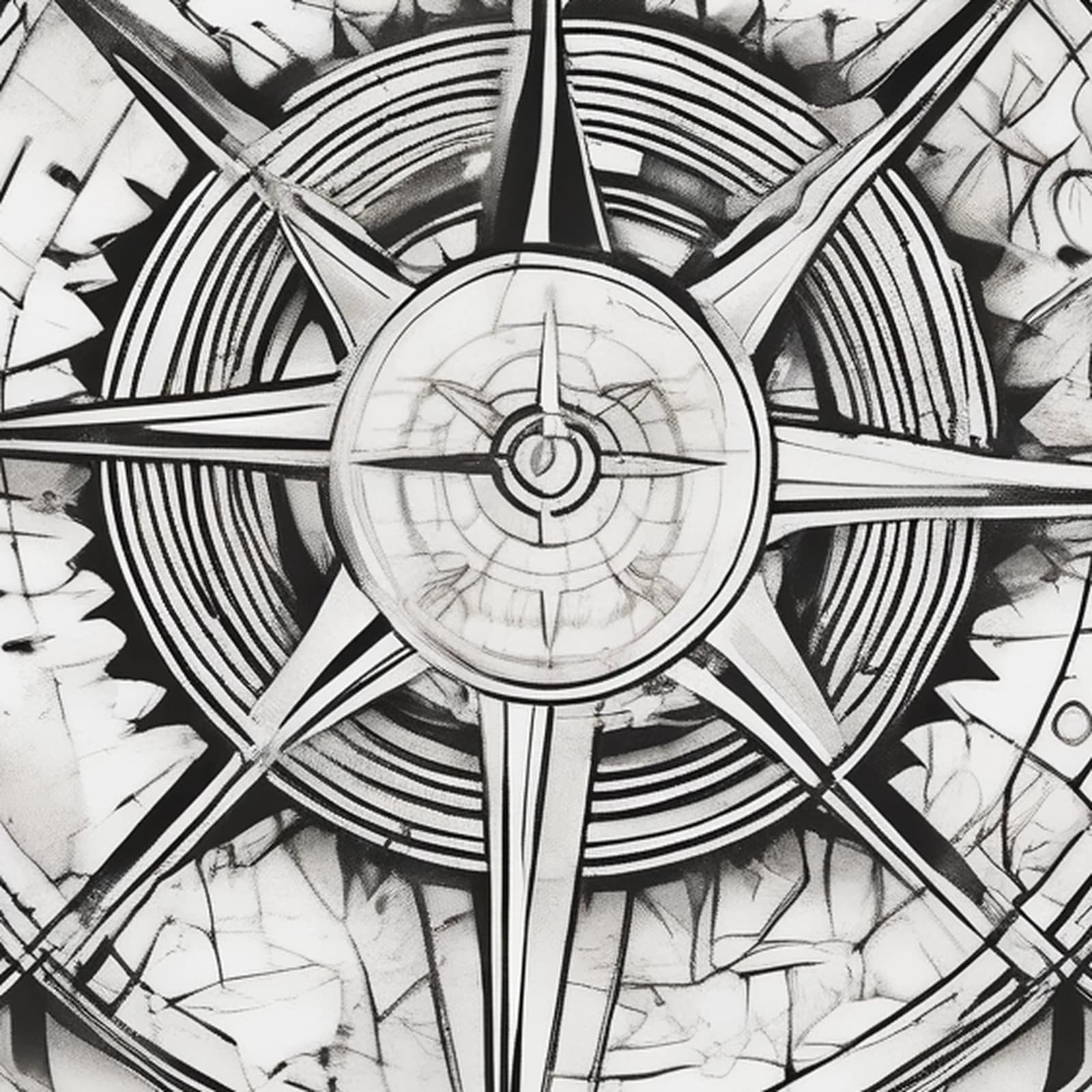
The compass center features a crisp, closed circle with a central dot, flanked by eight stepped rays that rise in parallel, each segment narrowing slightly like a staircase. Between the rays, fan shapes extend outward in a mirrored pattern—each fan composed of three overlapping arcs, forming a layered, fan-like structure. The lines are consistent in weight: thick enough to hold visual weight but precise, never heavy. Negative space is used strategically, especially between the fan shapes, creating breathing room within the geometry. The eye moves from the center outward, tracing the rays and then catching the fan patterns as a counterpoint. The entire piece is enclosed in a subtle, geometric border that reinforces its frame-like structure.
Meaning & symbolism
The compass has long symbolized navigation—both literal and metaphorical. In Art Deco design, it takes on a sense of order and modernity, reflecting the early 20th-century fascination with symmetry and progress. The stepped rays evoke architectural precision, reminiscent of skyscrapers or subway maps. The fan shapes, while decorative, echo the motifs found in Egyptian and Persian art, where radial patterns represent cosmic order. This design doesn’t claim one culture’s meaning but embraces the universal idea of finding one’s path through clarity and structure. It’s not about where you’re going, but how clearly you see the way.
Who this piece is for
This piece suits someone who values precision, order, and visual rhythm. It’s ideal for those drawn to geometric art or who appreciate historical design movements like Art Deco. It’s not for those seeking a subtle, minimalist mark—this is bold in form and presence. It works well for people comfortable with visible tattoos, whether in casual wear or at work, as the thigh is easily covered. It’s also not for first-timers seeking a quick, low-commitment piece—this is a considered, two-session work.
How it sits on the body
On the thigh, the compass follows the natural curve of the outer upper leg, where the muscle and bone create a gentle slope. The rays extend diagonally upward, aligning with the thigh’s natural angle. As you walk or sit, the design remains stable—no distortion, no stretching. The fan shapes wrap slightly around the outer edge, allowing the piece to flow with the limb’s movement. It doesn’t ride high on the hip, nor does it sit too low—perfectly centered for balance and visibility.
How the sessions work
Session one focuses on outlining and detailing the central compass, the stepped rays, and the first layer of fan shapes. The artist establishes symmetry and checks alignment. After a 24-hour rest, session two begins with shading the fan shapes and refining the inner lines. The final step is cleaning up the edges and applying a light protective coat. Total time: 5 hours over two sessions.
Getting it done on an Istanbul trip
With 3 nights in Istanbul, you can complete this two-session piece without disrupting your travel plans. Studios in Kadikoy and Beyoglu are just a short ferry ride or metro trip from the city center. The Bosphorus offers a calming view during breaks, and the city’s layout makes it easy to move between appointments and hotel stays. Healing starts immediately—no sea or pool exposure, and loose clothing during your flight home keeps the tattoo protected. The trip duration fits perfectly with the session schedule.
Aftercare for this piece
After the first session, keep the tattoo clean and dry for 14 days. Avoid direct sun, especially during the first week. Wear loose clothing on the flight home to prevent friction. No swimming in pools or the sea until fully healed, around 12 weeks. Apply a light, fragrance-free moisturizer twice daily after the first 48 hours. Avoid picking or peeling skin—let it flake naturally.
Sizes, placements and variations
On a smaller scale, the compass becomes more intricate, with tighter spacing between rays and fans. On the upper arm or back, it can be oriented vertically or rotated. In color, gold or deep navy ink enhances the Art Deco elegance. It pairs well with geometric mandalas or interlaced line patterns, especially when placed on the same limb. For a bolder look, a blackwork border can frame the piece.
Frequently asked questions
How does an Art Deco compass tattoo with stepped rays look on the thigh?
The stepped ray compass extends diagonally from the center, aligning with the thigh’s natural curve. Each step creates a rhythmic progression, guiding the eye outward. The fan shapes frame the outer edge, adding visual depth. The symmetrical compass tattoo structure ensures balance, while the geometric precision gives it a modern, architectural feel.
What makes a fan shape compass different from a traditional compass rose?
A fan shape compass uses layered arcs instead of radial lines, creating a softer, more decorative flow. It’s rooted in Art Deco design, where geometry meets elegance. The fan shapes add visual texture, making the piece feel more sculptural than functional. This is not a navigation tool—it’s Art Deco body art with rhythm and form.
How does a geometric compass tattoo age on the thigh?
The thigh’s stable skin and limited movement help preserve the sharp lines of a geometric tattoo. Over time, the ink settles evenly, and the symmetry remains intact. With proper care, the design retains its clarity for decades. The stepped ray compass structure resists distortion, and the fan shapes maintain their shape even with natural skin shifts.
Is a blackwork Art Deco compass suitable for a first tattoo?
This piece is not ideal for a first tattoo due to its size, geometric complexity, and two-session commitment. It requires precise alignment and a high tolerance for moderate pain. First-timers may benefit from simpler, smaller designs to learn the healing process and manage expectations. A symmetrical compass tattoo like this demands confidence in the outcome and the journey.
Can I swim in the sea during the healing period?
No. Avoid swimming in the sea, pools, or hot tubs until the tattoo is fully healed—around 12 weeks. Water exposure can introduce bacteria and delay healing, risking infection or ink loss. Even brief immersion during the first 14 days can compromise the surface layer. Protect the tattoo from all water sources until it’s completely closed and no longer sensitive.
How do I protect the tattoo during my flight home?
Wear loose, breathable clothing over the area. Avoid tight pants or compression. Keep the tattoo out of direct sun and don’t touch it. Apply a light layer of ointment before the flight to prevent dryness. Use a travel blanket or towel to cover the area if needed. The thigh is less exposed than other areas, but friction and dry air can still affect healing.