


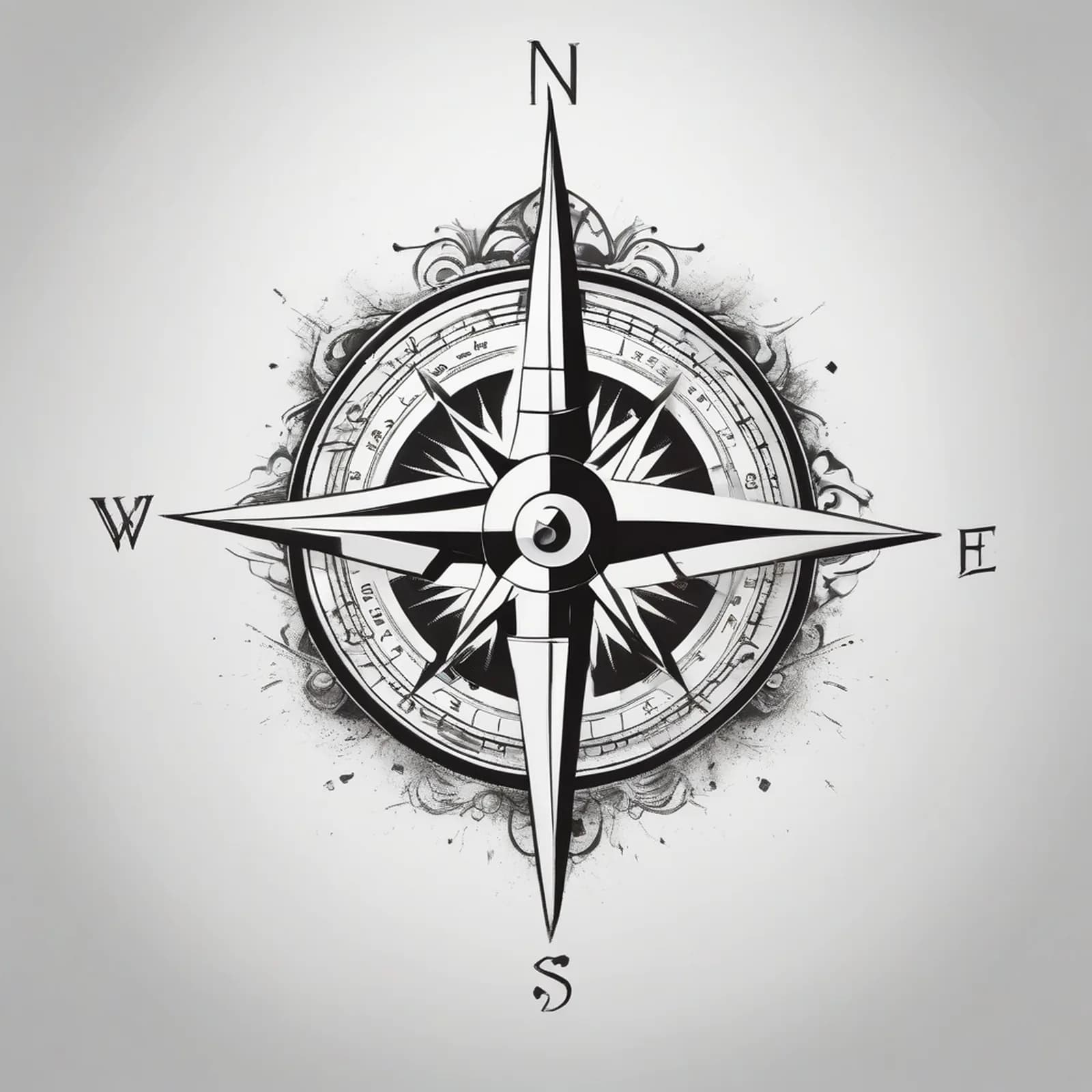
Digitally created design visual. Your tattoo is drawn and adapted to your body by the artist.
Fine Line Compass Tattoo on the Collarbone
Every piece is quoted individually — the price depends on size, detail and how many sessions it needs. Tell us what you want included and we come back with one all-inclusive figure.
About this design
This compass tattoo is a quiet declaration of direction—drawn in delicate, continuous fine line on the collarbone. It’s not a map, but a moment: a personal north, etched where the neck meets the chest. The placement makes it visible only when you choose to reveal it, a secret you carry close. Designed for clarity and intention, it’s not about scale but significance. For someone who values precision, meaning, and the elegance of subtlety, this is more than ink—it’s a gesture of self-trust.
What's in the drawing
The compass is drawn in continuous fine line, with no breaks in the outer ring. The central needle is slightly thicker than the rim, creating a subtle hierarchy. The points are marked with tiny dots—no exaggerated glyphs—keeping the design minimal. The north point is aligned to face upward, drawing the eye toward the clavicle’s natural curve. Negative space is used deliberately: the space between the needle and the rim is just wide enough to let light pass through the line, giving it a fragile, almost suspended quality. The line weight remains consistent across the circle, with only slight thickening at the needle's base.
Meaning & symbolism
The compass has long served as a symbol of navigation—both literal and metaphorical. In maritime history, it was a tool of survival, guiding ships across vast, uncharted waters. For many, it represents internal direction: a personal compass through life’s uncertainties. In modern contexts, it’s embraced as a symbol of resilience and self-guidance. While not tied to any specific cultural tradition, its use in personal adornment reflects a universal need for clarity. In the context of the collarbone, a place of both exposure and concealment, the compass becomes a private anchor—a reminder of where you’re going, even when no one else sees it.
Who this piece is for
This piece is ideal for someone who values minimalism, precision, and quiet symbolism. It’s not for those seeking bold statements or large coverage. It works well for first-timers who want something meaningful but not overwhelming. The placement is discreet—ideal for work environments where visible tattoos might be frowned upon. It suits those who appreciate fine line work and understand that beauty lies in restraint. It’s not for someone seeking high coverage, bold imagery, or frequent changes in design.
How it sits on the body
The collarbone is a naturally curved bone that rises slightly at the center and tapers toward the shoulders. The compass sits at the apex, where the clavicle forms a gentle arc. The needle points upward, following the natural slope of the bone. When you move your arm or turn your head, the tattoo shifts subtly but remains legible. The design wraps around the natural contour, avoiding tension points. It doesn’t stretch or distort during movement, making it ideal for a small, static piece that maintains its form over time.
How the sessions work
This piece is completed in one session, lasting two hours. The first hour is spent outlining the compass with precision, ensuring symmetry and alignment. The second hour focuses on refining the needle and finalizing the fine line. No breaks are needed during the session. The artist will pause only to check the placement and ensure the line remains consistent. There is no need for follow-up sessions—this design is stable and fully resolved in a single visit.
Getting it done on an Istanbul trip
The collarbone is one of the most sensitive areas to tattoo, and its healing is best supported by a calm, low-stress environment. In Istanbul, you’ll spend 3 nights in a quiet hotel near Kadikoy, where studios are known for fine line precision. The trip includes flights and accommodation, so you won’t need to rush back. The healing process begins immediately, and with no sea or pool access during the 14-day surface healing, your stay offers the perfect quiet space. The city’s walkable layout means you can move gently, avoiding strain on the area while staying close to the studio for any minor check-ins.
Aftercare for this piece
Keep the tattoo covered with loose clothing during your flight home—no direct sun or tight fabrics. Avoid touching it with unwashed hands. Do not submerge in water—no swimming, baths, or saunas—for 14 days. The area will be slightly sensitive, so avoid heavy layering or friction. Use a thin layer of fragrance-free ointment twice daily during the first week. The full healing process takes 12 weeks, but the surface will feel smooth and settled after two weeks. The fine line will settle into the skin, becoming softer but still sharp.
Sizes, placements and variations
The same compass design can be adapted to larger sizes (15–20 cm) on the sternum or upper back, where the line can expand with more detail. In blackwork, it gains a bolder, more geometric presence. With a single color—like deep blue or warm gold—it can reflect seasonal or personal meaning. It pairs well with a small constellation or a name in fine script along the clavicle. On the opposite side, a matching compass in reverse can create a balanced, symmetrical look. The fine line version remains elegant in all placements.
Frequently asked questions
How does a fine line compass tattoo age on the collarbone?
Fine line tattoos on the collarbone retain clarity over time because the area moves less than limbs or joints. The skin here is relatively stable, and the thin lines settle without blurring. With proper care, the compass will remain sharp and legible for years.
Can a compass tattoo on the collarbone be covered by clothing?
Yes. The collarbone is naturally covered by most tops, blouses, and scarves. The fine line design is subtle, so it won’t show through light fabrics. It’s ideal for those who want a personal symbol that remains private unless they choose to reveal it.
How does a blackwork compass rose age on the forearm?
Blackwork compasses on the forearm may show slight fading or shadowing over time due to sun exposure and friction from sleeves. However, the bold lines help maintain shape. Regular touch-ups are not needed if kept out of direct sun and protected during healing.
What does a minimalist compass tattoo symbolize?
A minimalist compass tattoo represents personal direction, self-trust, and clarity. It’s not about navigation in space, but in life. The simplicity reflects a focus on intention—choosing your path without needing to explain it to others.
Can I swim or go to the beach during healing in Istanbul?
No. You must avoid swimming in the sea or pools during the first 14 days. The saltwater and chlorine can irritate the fresh tattoo. Stick to gentle walks and indoor activities. The city’s cool, shaded streets are perfect for low-impact movement.
Is flying home safe after a collarbone tattoo session?
Yes, as long as you wear loose clothing and avoid tight collars. Keep the area clean and covered. Avoid heavy luggage or straining the arm. The flight itself won’t harm the tattoo, but direct sun exposure should be avoided during travel.