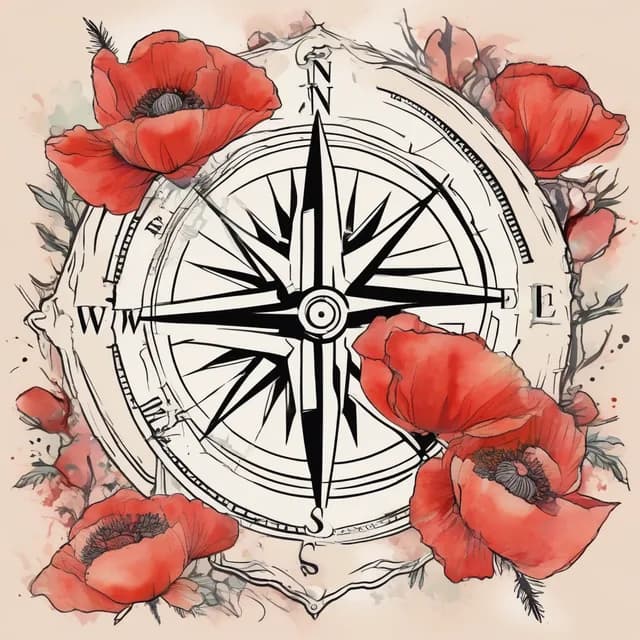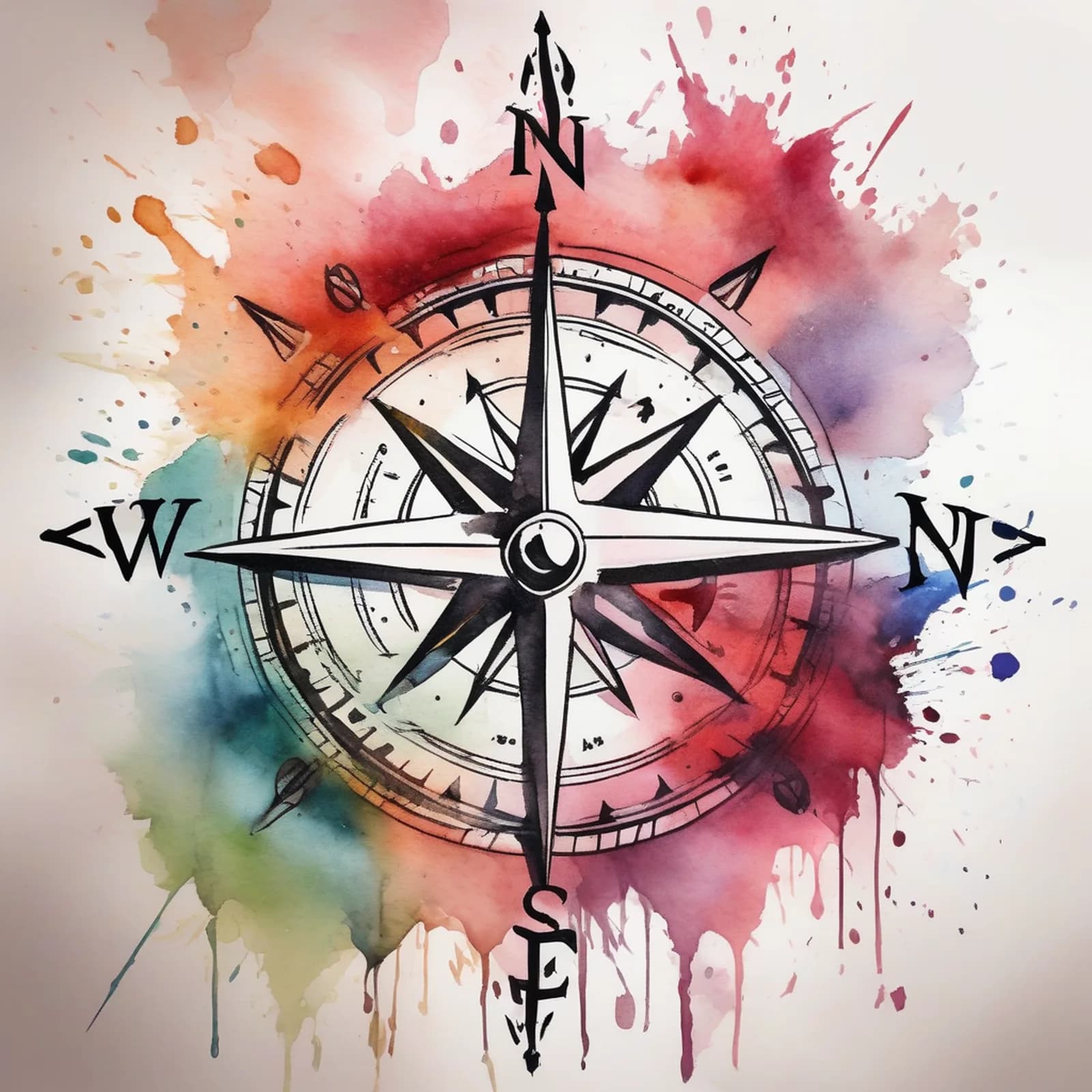
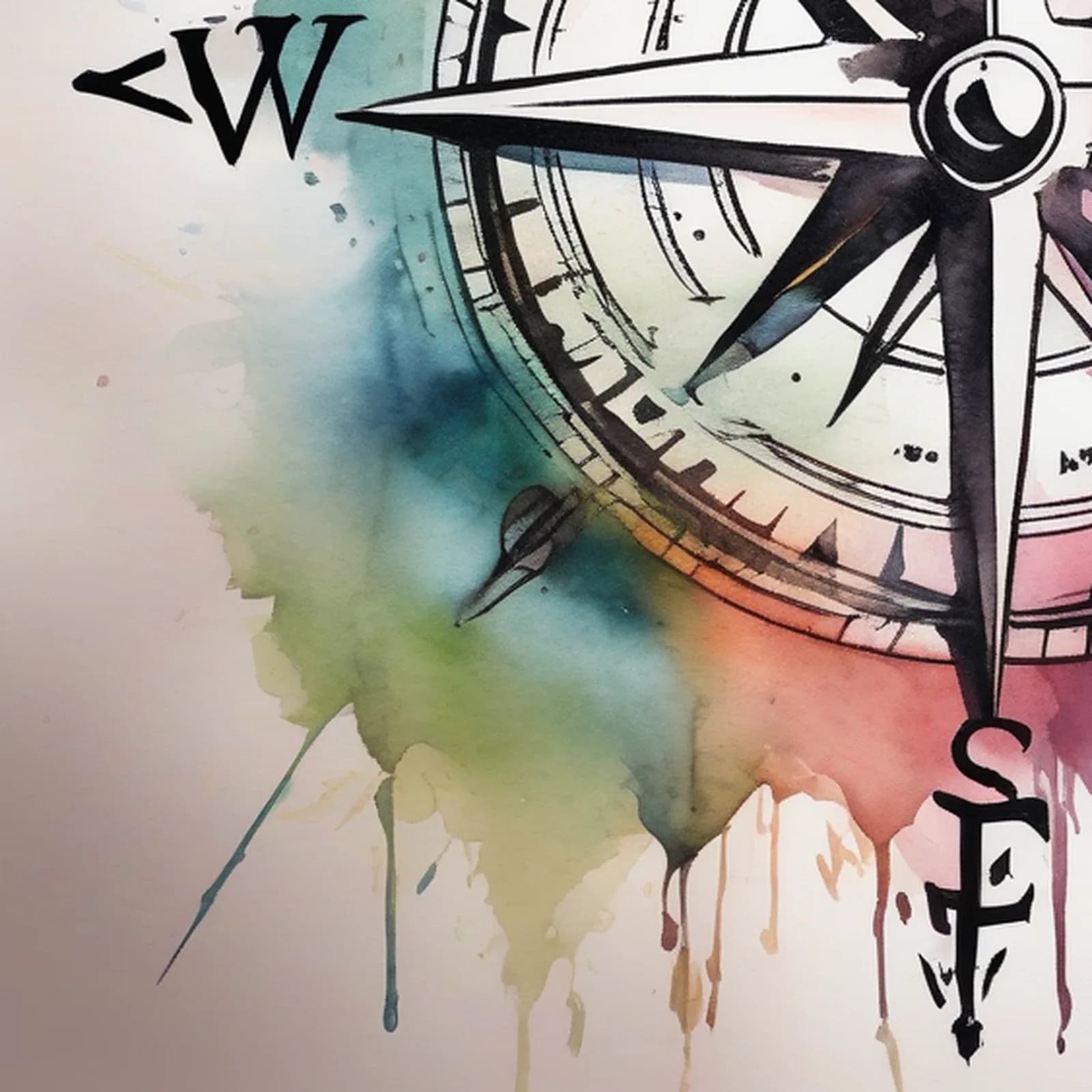
Digitally created design visual. Your tattoo is drawn and adapted to your body by the artist.
Watercolor Compass Tattoo on the Shoulder
Every piece is quoted individually — the price depends on size, detail and how many sessions it needs. Tell us what you want included and we come back with one all-inclusive figure.
About this design
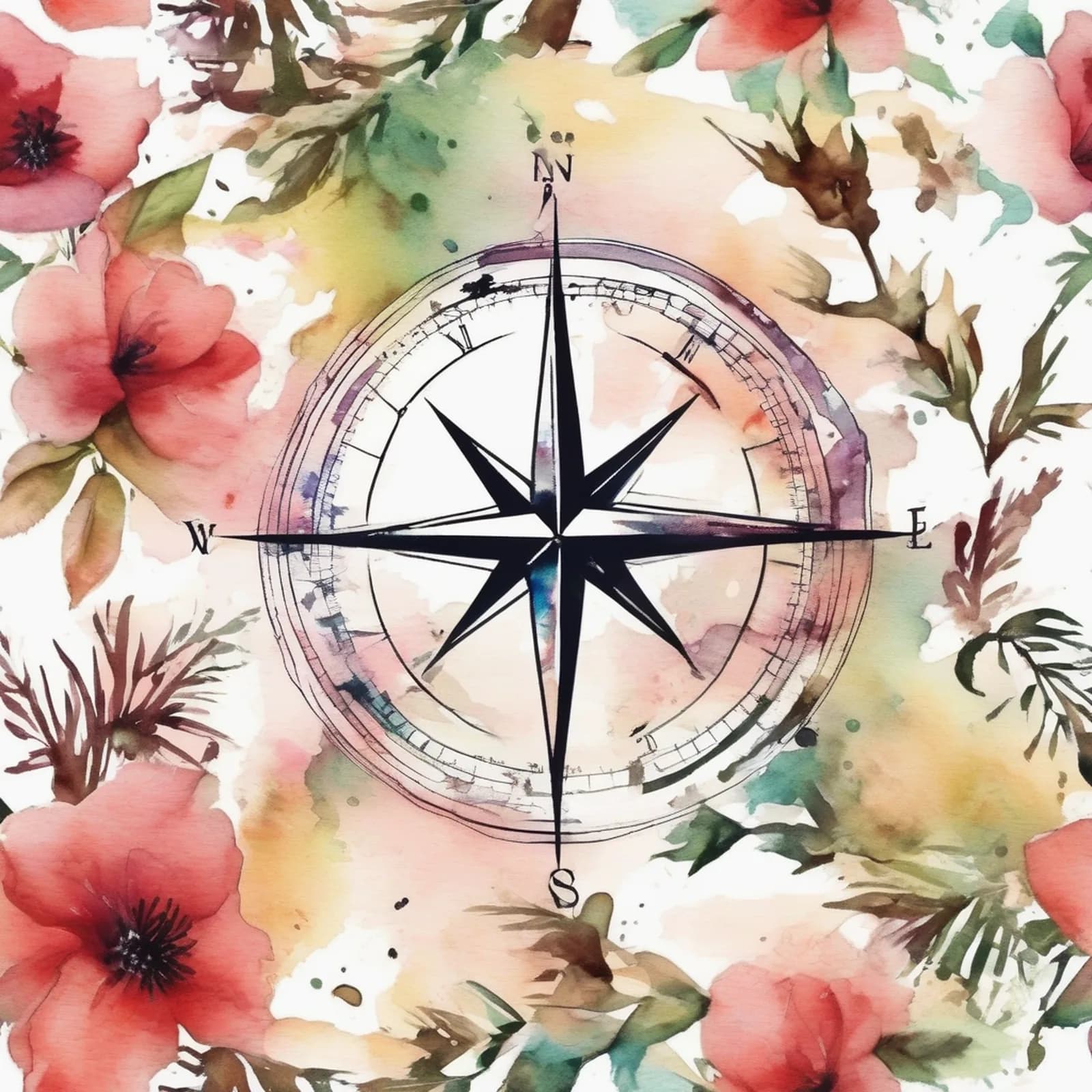
This watercolor compass is not a map—it’s a moment. Paint bleed edges dissolve the lines between direction and drift, turning the compass into a fluid statement of journey and intention. Set on the shoulder, it rests just below the collarbone, where movement meets stillness. The design uses soft gradients and translucent washes, making it feel like ink spilled across skin rather than drawn. It’s a piece that reads as both delicate and purposeful, perfect for those who value meaning over permanence.
What's in the drawing
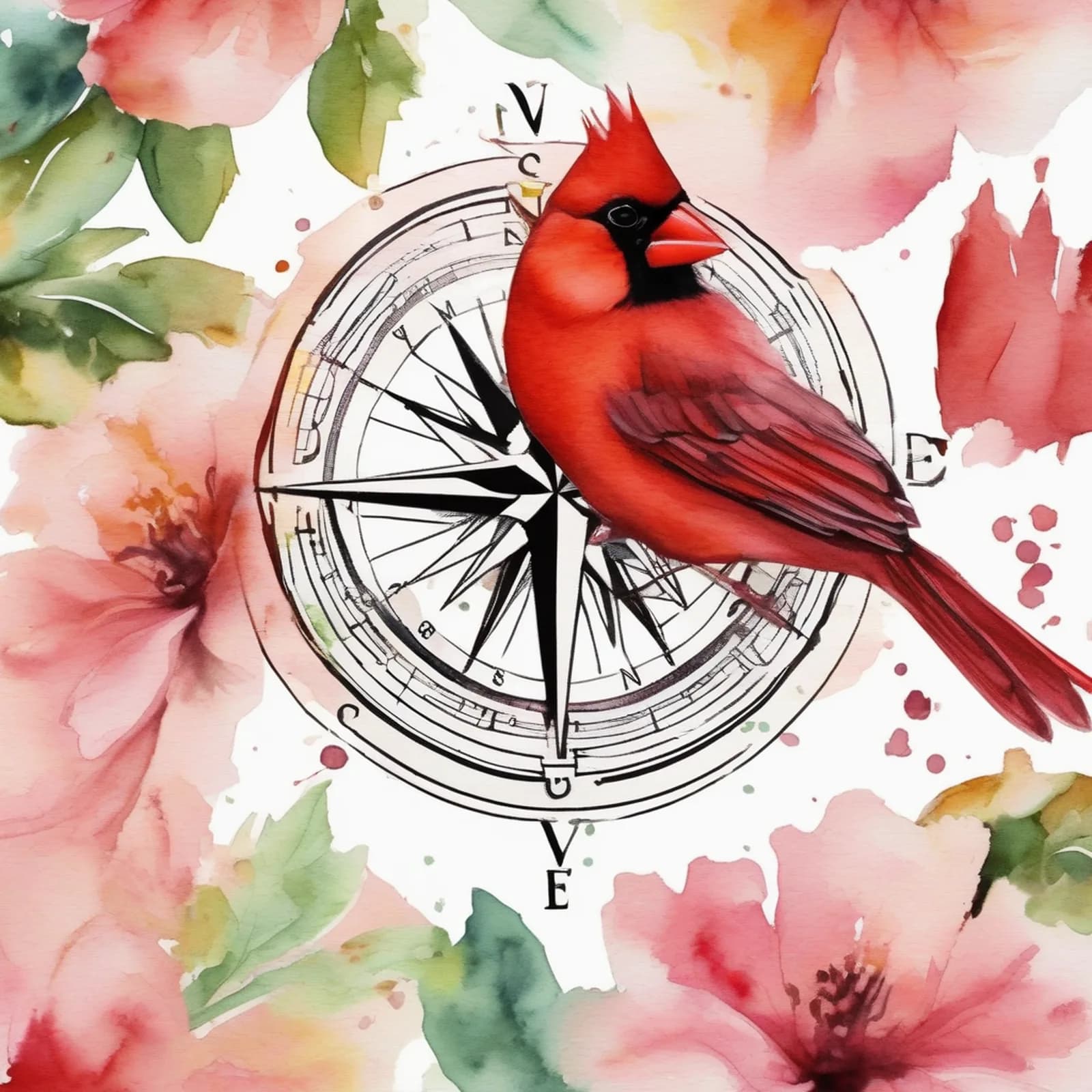
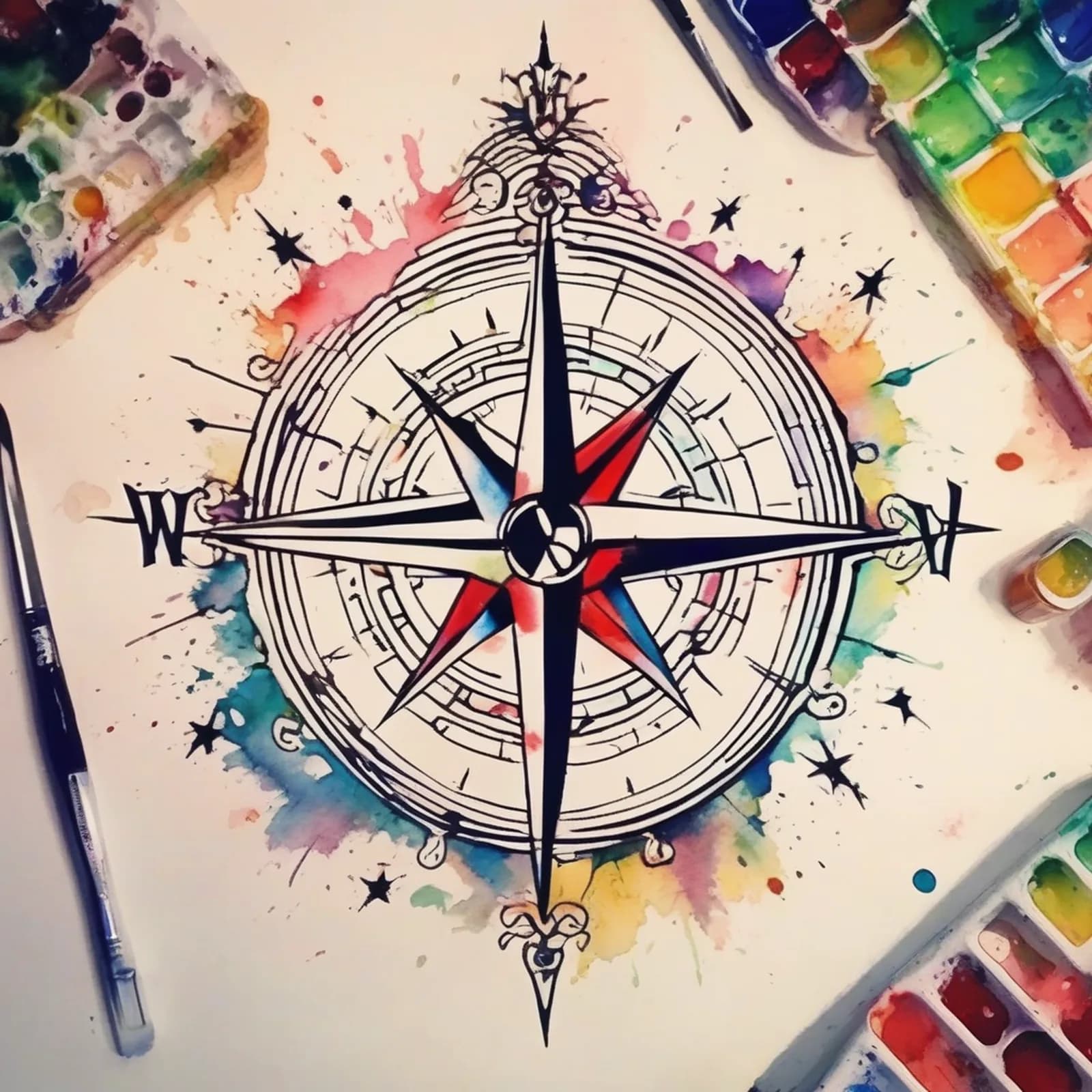
The compass center features a bold, minimalist needle in deep indigo, anchored at the north point with a single dot. From there, the needle extends into a watercolor wash that bleeds outward in soft, feathered strokes—cobalt fading to pale lavender, then to cream. The outer ring is rendered in thin, uneven lines, suggesting weathered brass, but with paint that lifts and spreads like ink on wet paper. Negative space is used intentionally: the voids between the petals of the compass arms create breathing room, letting the eye drift across the surface. The bleed isn’t random—each stroke is controlled, yet alive with chance.
Meaning & symbolism
Compasses symbolize direction, choice, and the search for purpose. In maritime cultures, they were tools of navigation through uncharted waters. The watercolor style adds a layer of impermanence—like a memory of a journey rather than a fixed point. The paint bleed evokes the unpredictability of travel: how plans shift, how paths change. This isn’t a map of where you’re going, but a record of where you’ve been and how you’ve changed. It’s not about certainty, but about movement with intention.
Who this piece is for
This piece suits those who value artistry over boldness—a first tattoo or a second, but not a cover-up. It’s ideal for someone who wants a meaningful design that doesn’t shout. It’s visible at work if sleeves are worn, but discreet enough to cover with a light shirt. Not for those seeking sharp lines or high contrast—this is for the dreamers, the travelers, the ones who think in metaphors.
How it sits on the body
On the shoulder, the compass follows the curve of the deltoid muscle. The upper edge rests just below the collarbone, where the skin is taut and smooth. As the arm lifts, the design flows with the motion—no stretching, no distortion. The bleed edges sit naturally in the soft dip between shoulder and upper arm, where movement is gentle. The piece wraps slightly around the shoulder’s edge, creating a subtle frame without overwhelming the space.
How the sessions work
Session one focuses on the center: the needle, the ring, and the initial paint bleed. The artist builds the watercolor layers with light pressure, ensuring even saturation. Between sessions, the skin is monitored—no sun, no friction. Session two completes the outer washes, sharpens the bleed edges where needed, and adds final texture to the ring. The two sessions allow the skin to rest and recover, reducing trauma while maintaining fluidity.
Getting it done on an Istanbul trip
You’ll spend 3 nights in Istanbul—just enough time to heal while exploring. Studios in Kadikoy and Galata are within walking distance of your hotel, so you can return after sessions without long commutes. The city’s mild climate and easy access from Europe mean you can fly in, get tattooed, and return home with a fresh, protected tattoo. No sea or pool swimming during healing, but the Bosphorus views are safe to enjoy from a distance.
Aftercare for this piece
Apply a thin layer of fragrance-free ointment twice daily for the first 14 days. Avoid direct sun, especially during midday hours, and keep the area covered with loose cotton fabric on flights. Do not submerge in water—no swimming, baths, or saunas. The paint bleed will flake slightly during healing; this is normal and should not be picked. After 14 days, switch to a moisturizing cream to support long-term skin health and color retention.
Sizes, placements and variations
In smaller sizes, the compass becomes more intimate, with tighter bleed lines and bolder center details. On the upper arm, it flows with the limb’s curve. In blackwatercolor, it gains contrast while keeping the soft edge. It pairs well with a small constellation or a single seagull in the upper corner, symbolizing journey and destination. For a more personal touch, a date or word can be added in a fluid script at the base.
Frequently asked questions
How does a watercolor compass rose tattoo differ from a traditional compass design?
A watercolor compass rose uses soft, translucent layers and intentional paint bleed, creating a sense of movement and impermanence. Unlike rigid, outlined compasses, it feels like a memory or a moment frozen in ink—fluid, expressive, and less about precision than emotion and journey.
What makes a shoulder compass tattoo with paint bleed unique compared to other placements?
The shoulder’s smooth, slightly curved surface enhances the fluidity of paint bleed. Unlike bony or creased areas, it allows the ink to spread naturally without distortion. The design remains visible yet subtle, and the motion of the arm gently animates the edges, making it feel alive with every movement.
How does the compass watercolor style maintain its integrity over time?
With proper aftercare, the watercolor effect retains its softness. The paint bleed doesn’t disappear—it evolves. Over time, the colors may soften slightly, but the organic edges and layered washes remain, giving the tattoo a timeless, weathered elegance that feels more personal than polished.
Can a travel tattoo watercolor design like this be done in multiple sessions without losing cohesion?
Yes. The artist plans each session with continuity in mind. The first session establishes the core structure and initial bleed; the second refines the gradients and edges. The skin’s healing phase ensures the second session builds on the first without disruption, preserving the design’s flow and cohesion.
Is it safe to travel home after a shoulder watercolor tattoo in Istanbul?
Yes, if you follow aftercare. Keep the tattoo covered with loose, breathable clothing during flights. Avoid sun exposure and water contact. The shoulder is low-friction, so it’s ideal for travel. Healing begins immediately, and the 14-day surface recovery allows for safe travel home.
How does the Istanbul all-inclusive package support the healing process for this design?
The package includes a hotel near Kadikoy or Galata studios, minimizing travel after sessions. You can rest in a quiet, climate-controlled space, avoid sun exposure, and wear loose clothing. No need to rush to a clinic—your healing is supported by proximity, comfort, and a relaxed schedule.