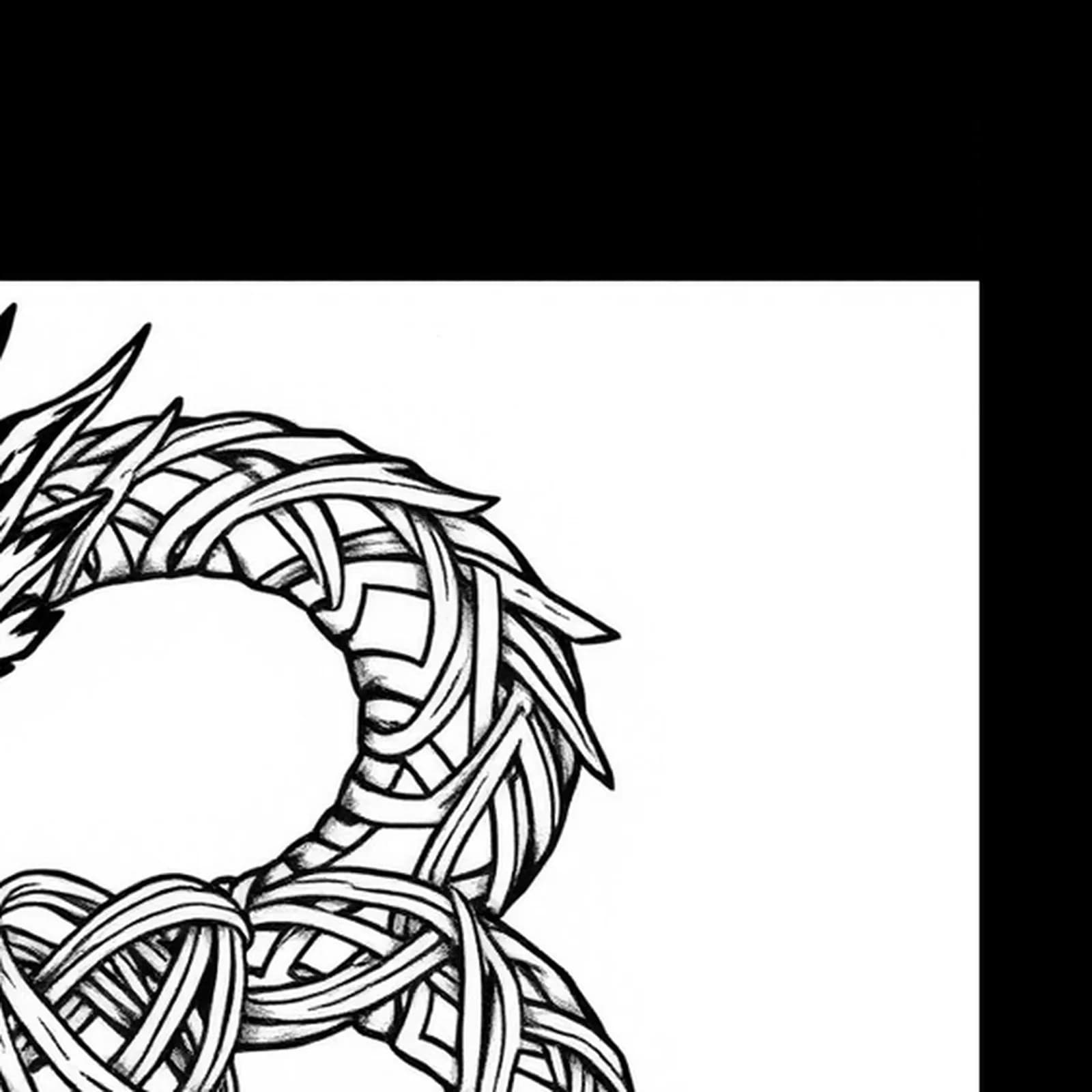
Digitally created design visual. Your tattoo is drawn and adapted to your body by the artist.
Celtic Knotwork Dragon Tattoo for the Forearm
Every piece is quoted individually — the price depends on size, detail and how many sessions it needs. Tell us what you want included and we come back with one all-inclusive figure.
About this design
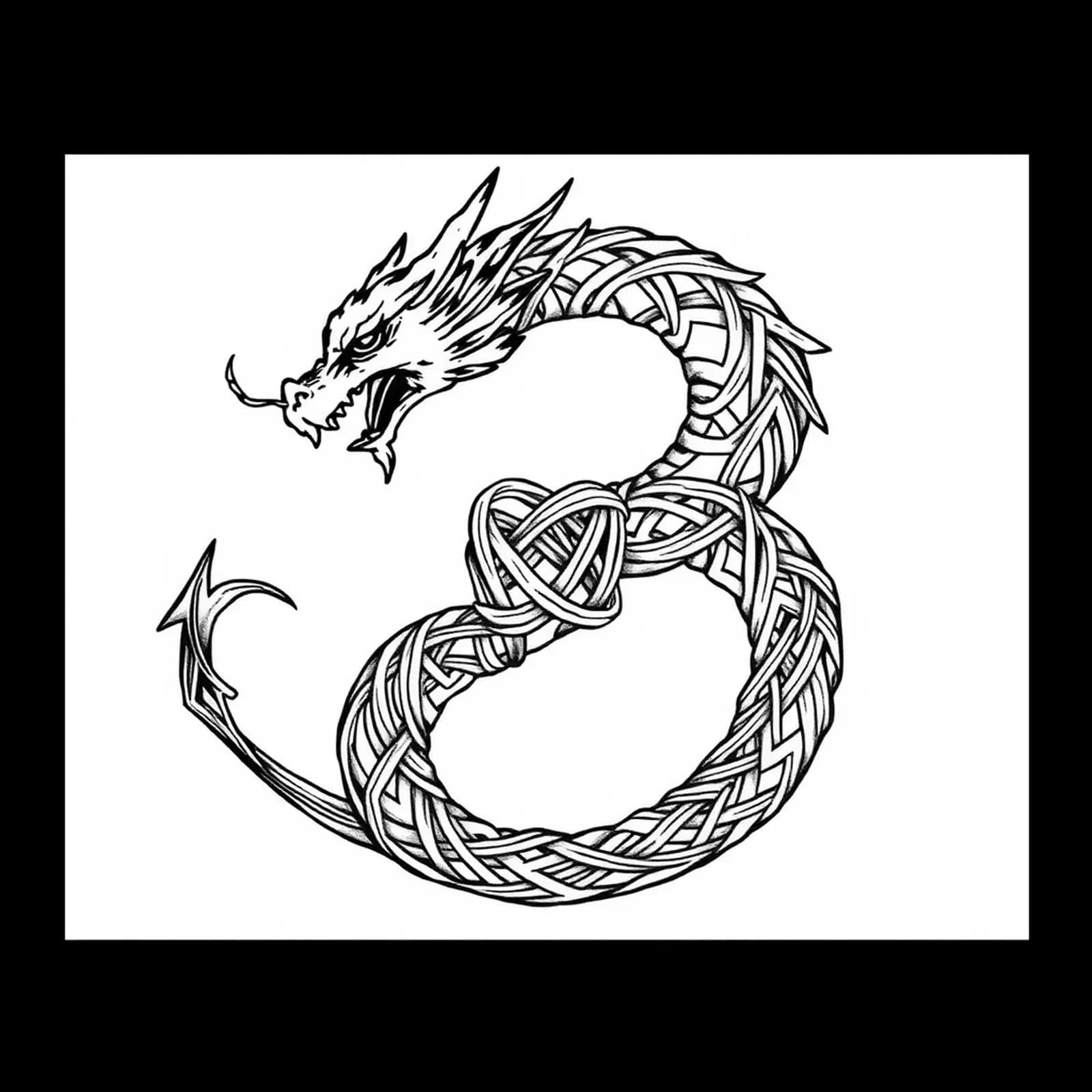
This Celtic knotwork dragon is a living weave of ancient symbolism and intricate line art. Designed to wrap around the forearm, it blends the serpentine flow of knotwork with the powerful presence of a dragon. Each loop and twist is intentional, forming a continuous, unbroken path that speaks to eternity and resilience. The design respects traditional Celtic motifs while standing as a bold, modern statement on the arm. The dragon’s head emerges from a dense knotwork cluster, its eyes defined by tight, interlocking spirals, while the tail dissolves into a single, flowing line that ends near the wrist.
What's in the drawing
The dragon’s body is constructed from a single, continuous line that begins at the base of the wrist, spirals upward through the forearm, and forms the head’s crown. The wings are created by layered knotwork loops, each intersecting the next without breaking the flow. The tail curls back into the base, completing the cycle. The line weight is thickest at the spine and head joints, tapering to fine detail in the tail and wingtips. Negative space is used strategically to emphasize the dragon’s form, with open areas between the knots allowing the eye to rest. The entire piece reads as one unified, unbroken narrative, with no gaps or interruptions.
Meaning & symbolism
Celtic knotwork symbolizes eternity and interconnectedness, with no beginning or end. In this design, the dragon is not a conqueror but a guardian of ancient wisdom, drawn from Irish and Scottish manuscript traditions. The unbroken line reflects the idea that life, legacy, and spirit endure through time. The dragon’s head, formed by a tight spiral, echoes the Celtic symbol for the sun or spiritual awakening. The knotwork itself is rooted in the illuminated manuscripts of monasteries, where such designs were believed to protect sacred texts. This tattoo honors that tradition while serving as a personal emblem of resilience and continuity.
Who this piece is for
This tattoo suits those who value deep symbolism and intricate craftsmanship. It’s ideal for someone with a first tattoo or a seasoned collector seeking a piece that tells a story. The forearm placement offers visibility for personal pride, but it can be easily covered with sleeves or long sleeves at work. It’s not for those seeking a bold, large-scale statement or a minimalist design.
How it sits on the body
On the forearm, the design follows the natural curve of the arm, wrapping from the outer side toward the inner crease. The dragon’s spine aligns with the radius bone, creating a dynamic flow when the arm bends. The knotwork expands slightly at the wrist, where it tapers into the skin’s natural texture. As the arm moves, the lines shift subtly, keeping the design active and alive. The placement avoids high-friction zones like the elbow, ensuring the tattoo remains crisp during daily movement.
How the sessions work
Session 1 begins with a precise sketch and outlines the base knotwork and the dragon’s spine, head, and initial wing structure. The artist works slowly to ensure alignment and continuity. After a 48-hour rest, Session 2 completes the fine details: the wingtips, tail curl, and subtle shading in the eye spirals. Between sessions, the area is kept clean and protected with a breathable bandage. The second session is scheduled to allow the skin to recover from initial inflammation while maintaining the integrity of the design.
Getting it done on an Istanbul trip
With just two sessions, this forearm piece fits perfectly into a 3 nights in Istanbul trip. Studios in Kadikoy and Beyoglu offer dedicated time for intricate work, and the city’s central location makes travel easy—direct flights from Europe take under 4 hours. The healing period of 14 days aligns with a short stay, and the trip includes accommodations and flights, so you’re not paying extra for the tattoo experience. The Bosphorus location offers a peaceful backdrop during recovery, and the city’s walkable districts make it easy to move around without strain.
Aftercare for this piece
Keep the tattoo covered with loose, breathable clothing during your flight home. Avoid direct sun, sea, and pools during healing. Apply a thin layer of ointment twice daily for the first 14 days. After that, switch to a fragrance-free moisturizer. Avoid scratching or picking, even if it itches. The forearm heals well due to less friction than other areas. Wear long sleeves for the first week to protect the fresh ink from sun and accidental rubs.
Sizes, placements and variations
In a smaller size, the knotwork tightens and the dragon becomes more symbolic than detailed. On the upper arm or shoulder, it gains more space to expand into a full sleeve. In black and grey, the contrast enhances the depth. It pairs well with Celtic spiral motifs or a single knotwork band on the opposite arm for balance. A subtle green or blue wash in the wingtips can add depth without breaking the traditional aesthetic.
Frequently asked questions
How does a Celtic knotwork dragon look on the forearm?
The dragon’s body flows along the arm’s curve, with knotwork forming its spine and wings. The design wraps around the forearm, following the bone’s natural line. The continuous lines create a sense of movement, even when the arm is still. The head emerges from a dense knot cluster, and the tail curls back into the base, completing the eternal loop.
What makes a Celtic dragon tattoo different from other dragon designs?
Celtic dragons are not fire-breathing beasts but symbolic guardians. Their form is based on knotwork—interlaced lines with no beginning or end. This design reflects eternity and spiritual wisdom, rooted in ancient Irish and Scottish art traditions. The dragon is not a conqueror but a keeper of ancient secrets, woven into the fabric of the knot.
How does a blackwork Celtic dragon age on the forearm?
The bold lines of blackwork hold up well on the forearm, which is less exposed to sun and friction than the hands or feet. The knotwork remains sharp, and the dragon’s form stays clear over time, especially with proper aftercare. The forearm’s consistent skin texture helps preserve the design’s integrity for decades.
Can a Celtic knot dragon tattoo be done in color?
Yes, but this design is traditionally black. Color can be added to the eyes or wing tips for subtle contrast, but the core knotwork remains black to preserve the ancient aesthetic. Any color should be minimal to maintain authenticity. A faint green or blue wash in the wingtips can enhance depth without disrupting the traditional style.
Is it safe to fly home after getting a Celtic dragon tattoo in Istanbul?
Yes, as long as you follow aftercare. Cover the tattoo with loose clothing during the flight. Avoid direct sun and swimming during healing. The forearm is low-friction, making travel easier than with tattoos on hands or feet. Wear long sleeves for the first week to protect the fresh ink from sun and accidental rubs. Keep the area clean and dry.
How long does a Celtic dragon tattoo take to heal in Istanbul?
Surface healing takes 14 days. Keep it out of direct sun and avoid pools or sea. Wear loose sleeves on your flight home. The forearm heals well due to less friction than other areas. Full healing takes 12 weeks, but most discomfort fades within two weeks. Avoid picking or scratching, even if it itches. Apply ointment twice daily for the first two weeks.