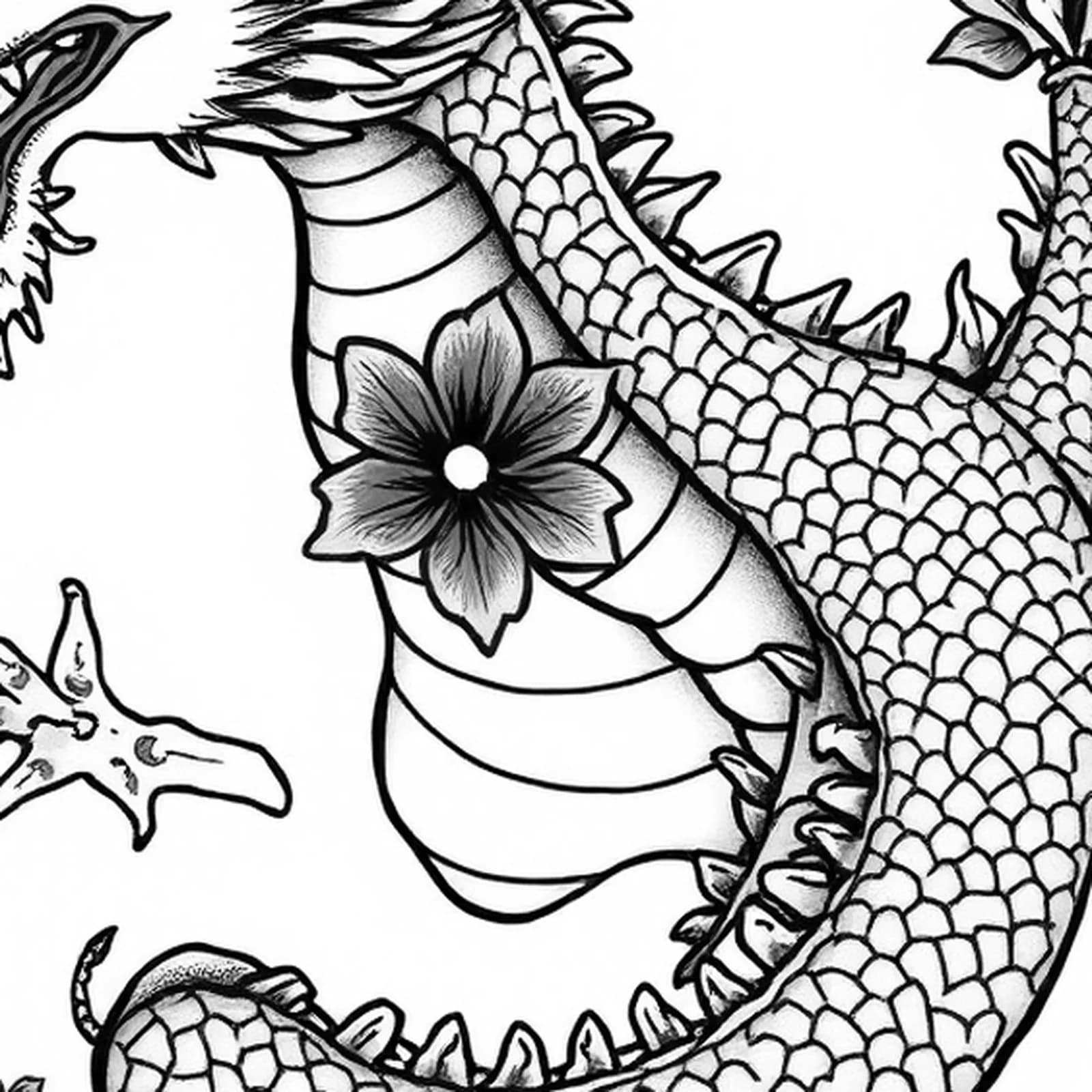
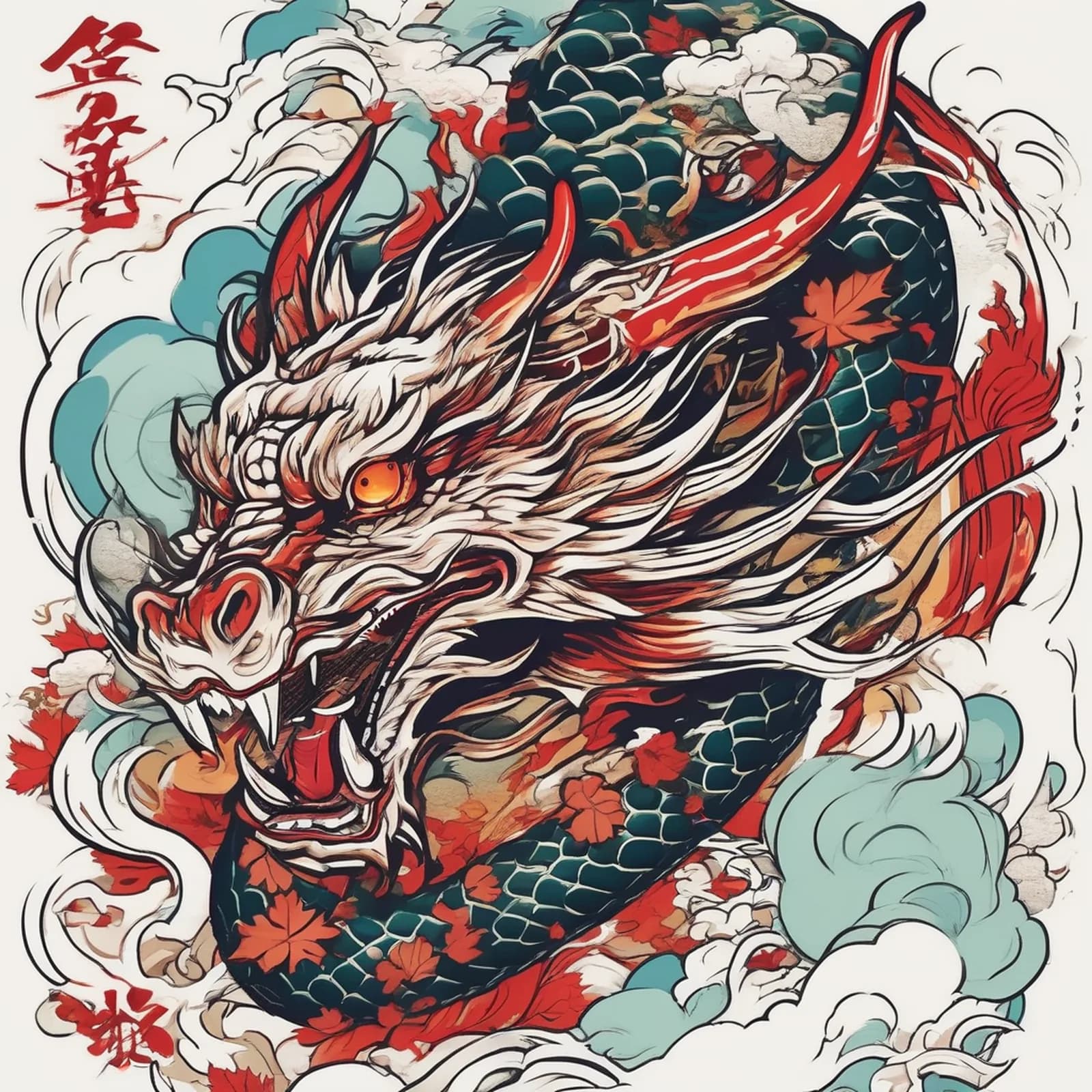
Digitally created design visual. Your tattoo is drawn and adapted to your body by the artist.
Irezumi Dragon Thigh Tattoo in Istanbul
Every piece is quoted individually — the price depends on size, detail and how many sessions it needs. Tell us what you want included and we come back with one all-inclusive figure.
About this design
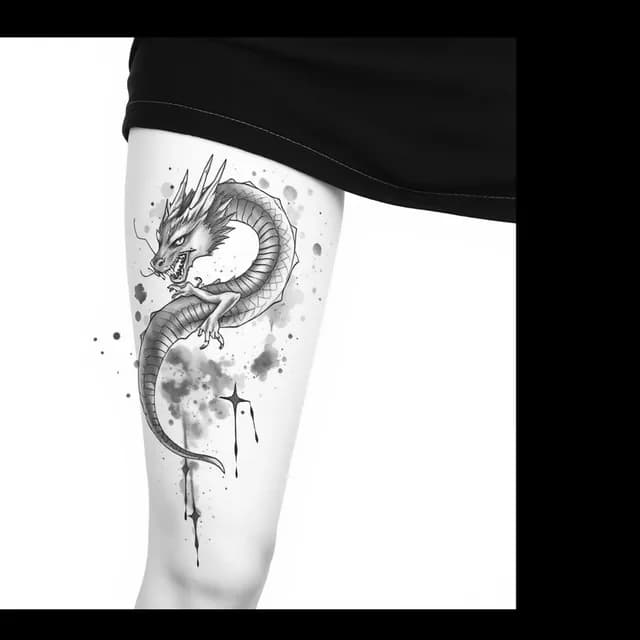
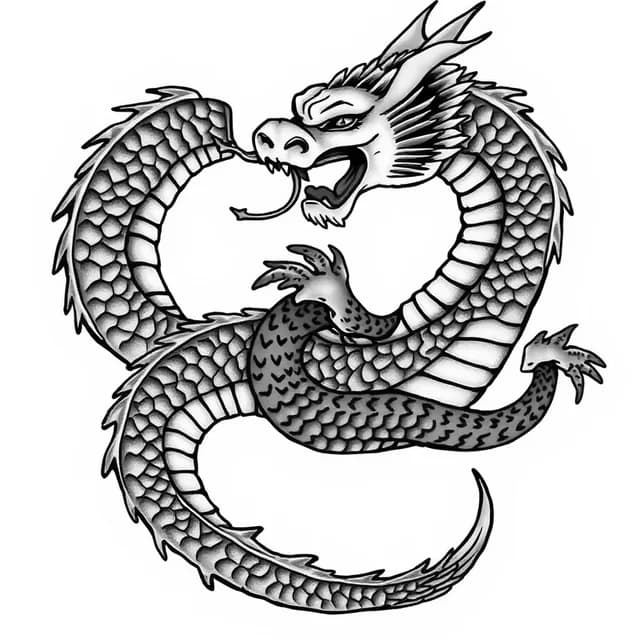
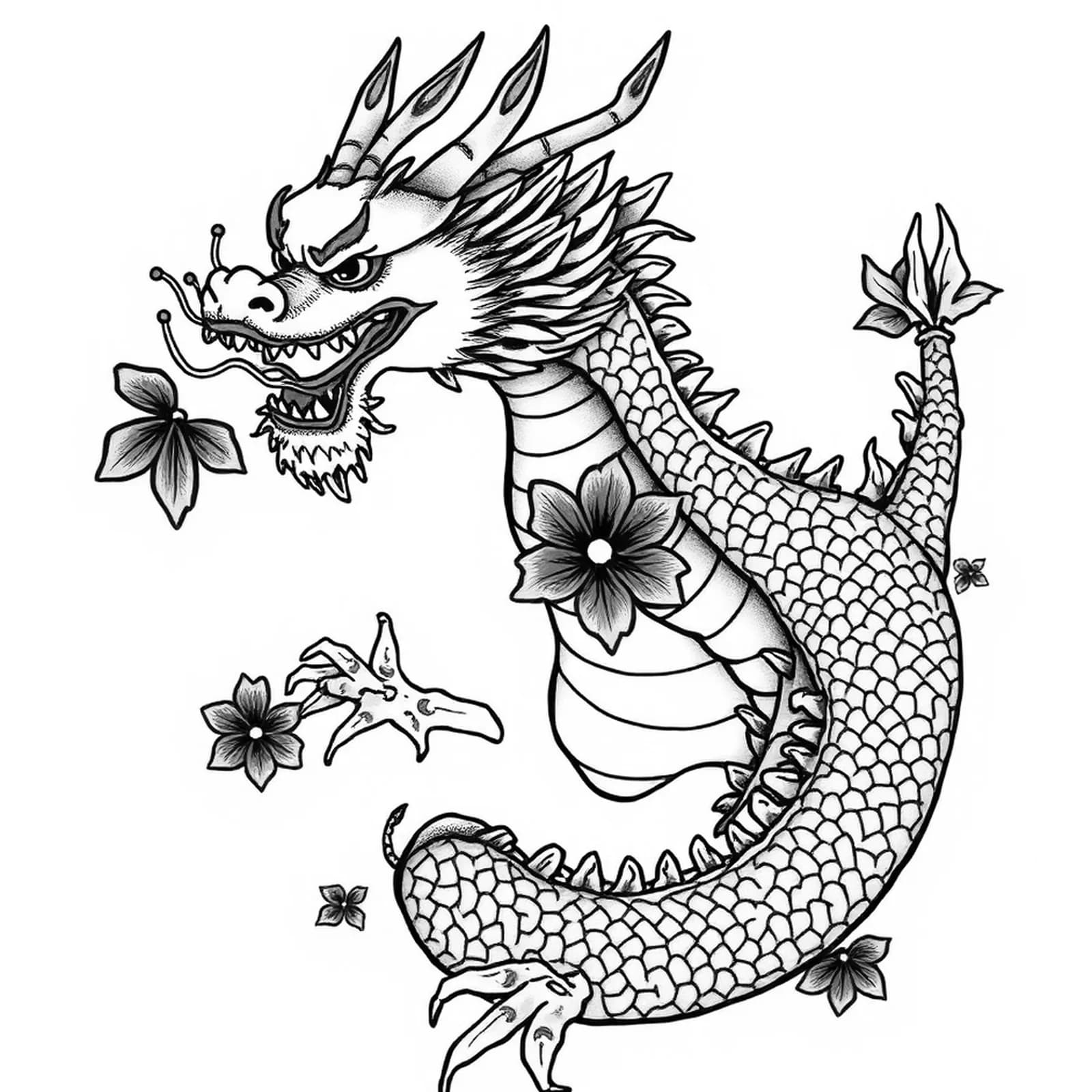
This irezumi dragon thigh tattoo is a bold narrative in ink, carved across 25–40 cm of skin with deliberate precision. The dragon winds from the outer thigh toward the hip, its sinuous form echoing the ancient art of Japanese body painting. Its scales are rendered in fine, controlled lines, while the wind bars behind it suggest motion and power. The maple leaf motif emerges subtly near the tail, grounding the piece in seasonal symbolism. This isn’t just a tattoo—it’s a cultural statement, worn close to the body, visible only when chosen.
What's in the drawing
The dragon’s body follows the natural curve of the thigh, its spine aligned with the femur’s gentle arc. It begins at the outer mid-thigh, coiling upward with a slight lift at the shoulder. The head faces forward, eyes sharp, jaw set in tension. Scales are defined with consistent line weight—neither too thick nor too thin—creating rhythm without visual clutter. Wind bars flow behind the body in staggered, parallel lines, suggesting wind resistance and motion. A single maple leaf, rendered in fine detail, curls from the dragon’s tail, its veins and edge sharp but delicate. Negative space is used intentionally between the wind bars and the dragon’s flank, allowing the skin to breathe and the lines to stand out.
Meaning & symbolism
In Japanese tradition, the dragon is a symbol of strength, wisdom, and protection, often associated with the elements and imperial authority. Unlike Western depictions, this irezumi dragon is not a beast of destruction but a guardian, embodying balance and transformation. The wind bars represent the breath of the world—forces beyond human control, yet harnessed through discipline. The maple leaf, especially in autumn, signifies resilience and change. Together, the design reflects a journey through personal growth, where power is not used recklessly but guided by wisdom. The placement on the thigh—close to the body, yet visible—mirrors the idea of inner strength made visible through commitment.
Who this piece is for
This piece suits someone who values deep symbolism, appreciates traditional craftsmanship, and is comfortable with visible, meaningful art. It’s ideal for those who’ve already committed to body art and seek a significant, long-term statement. It works well for people in roles where visible tattoos are accepted, especially in creative or expressive industries. It’s not recommended for first-timers, as the size and detail require patience and understanding of care. Those seeking subtle or temporary designs may find it too bold.
How it sits on the body
The thigh is a naturally curved canvas that follows the body’s motion. The dragon’s path aligns with the natural contour of the outer thigh, allowing the form to flow with movement. As the leg bends, the dragon’s body remains intact—its curve adapting to the joint without distortion. The head sits slightly higher, drawing attention when standing. The design wraps around the thigh’s outer edge, so loose clothing during healing is essential. The placement also allows for a clean, unbroken flow from hip to knee, minimizing tension on the skin during recovery.
How the sessions work
The 3-session plan spreads over 4 nights in Istanbul. Session 1 (3 hours) focuses on outlining the dragon’s form, wind bars, and maple leaf—establishing structure. Session 2 (3.5 hours) builds depth with shading and layering, emphasizing the dragon’s musculature and the wind bars’ texture. Session 3 (3.5 hours) refines details, adds final line work, and adjusts contrast. Each session includes a 24-hour rest period, allowing the skin to stabilize. The total time is 10 hours, spaced to minimize strain and ensure precision.
Getting it done on an Istanbul trip
With only three sessions over 4 nights in Istanbul, the city’s proximity and efficient tattoo infrastructure make this journey seamless. Studios in Kadikoy and Beyoglu offer dedicated healing support, and direct flights from major European cities take under 4 hours. The Bosphorus divide adds a symbolic layer—this tattoo, born from Japanese tradition, is crafted in a city that bridges continents. Healing is manageable: avoid swimming, sun, and tight clothing on the flight home. The short trip length fits perfectly with the session plan, allowing recovery without extended delay.
Aftercare for this piece
After the final session, keep the tattoo covered with loose, breathable fabric during your flight home. Avoid direct sunlight and submerging in water—no pools, seas, or baths—for 14 days. Use a fragrance-free, gentle ointment twice daily. The area may feel tight or itchy during the first week; resist scratching. After 14 days, the surface is healed, but full healing takes 12 weeks. Avoid prolonged sun exposure during this time. The thigh’s movement means the tattoo will stretch slightly—this is normal and part of its natural evolution.
Sizes, placements and variations
This design scales well from 25 to 40 cm, with the wind bars and maple leaf adjusting proportionally. On the calf or back, the dragon would shift direction and orientation. In color, it could incorporate deep indigo, rust, and gold for a more vivid, traditional look. It pairs powerfully with a phoenix or koi fish on the opposite thigh. For a more intimate version, the maple leaf can be isolated as a smaller, standalone piece. The wind bar motif can be extended into a sleeve or wrapped around the leg for a full-body effect.
Frequently asked questions
How does an irezumi dragon tattoo age on the thigh?
Irezumi dragons age well on the thigh due to the skin’s stability and the consistent curve of the limb. The line work holds firm, and the shading maintains depth over time. Avoiding sun exposure and following aftercare ensures the tattoo retains its clarity for decades.
What does the maple leaf symbolize in a Japanese dragon thigh tattoo?
The maple leaf represents resilience, change, and the passage of time. In this context, it ties the dragon’s power to natural cycles, suggesting that strength evolves with experience. It’s a subtle nod to autumn’s beauty and the quiet strength of enduring through change.
How does the wind bar motif enhance a traditional Japanese dragon tattoo?
Wind bars suggest motion, resistance, and the breath of the world. In irezumi art, they frame the dragon, emphasizing its dynamic presence. They add rhythm and depth, guiding the eye through the composition and reinforcing the idea of the dragon as a force of nature.
Why is a thigh placement ideal for a large irezumi dragon?
The thigh offers ample space, a natural curve that follows the body’s form, and moderate movement. It allows the dragon to flow with the leg’s motion without distortion. The placement is also visible yet can be covered easily, making it practical for diverse lifestyles.
Can I swim or go to the beach during the healing period?
No. Avoid swimming in pools, seas, or hot tubs for at least 14 days. Water exposure can cause infection, fading, or scarring. Keep the tattoo clean, dry, and protected from direct sun during the initial healing phase.
How do I travel home after my third session in Istanbul?
Wear loose, breathable clothing to cover the tattoo. Avoid tight fabrics that may rub the area. Keep the tattoo out of direct sun and do not submerge it in water. Use a light ointment and follow aftercare instructions. The healing process continues during your flight and after arrival.