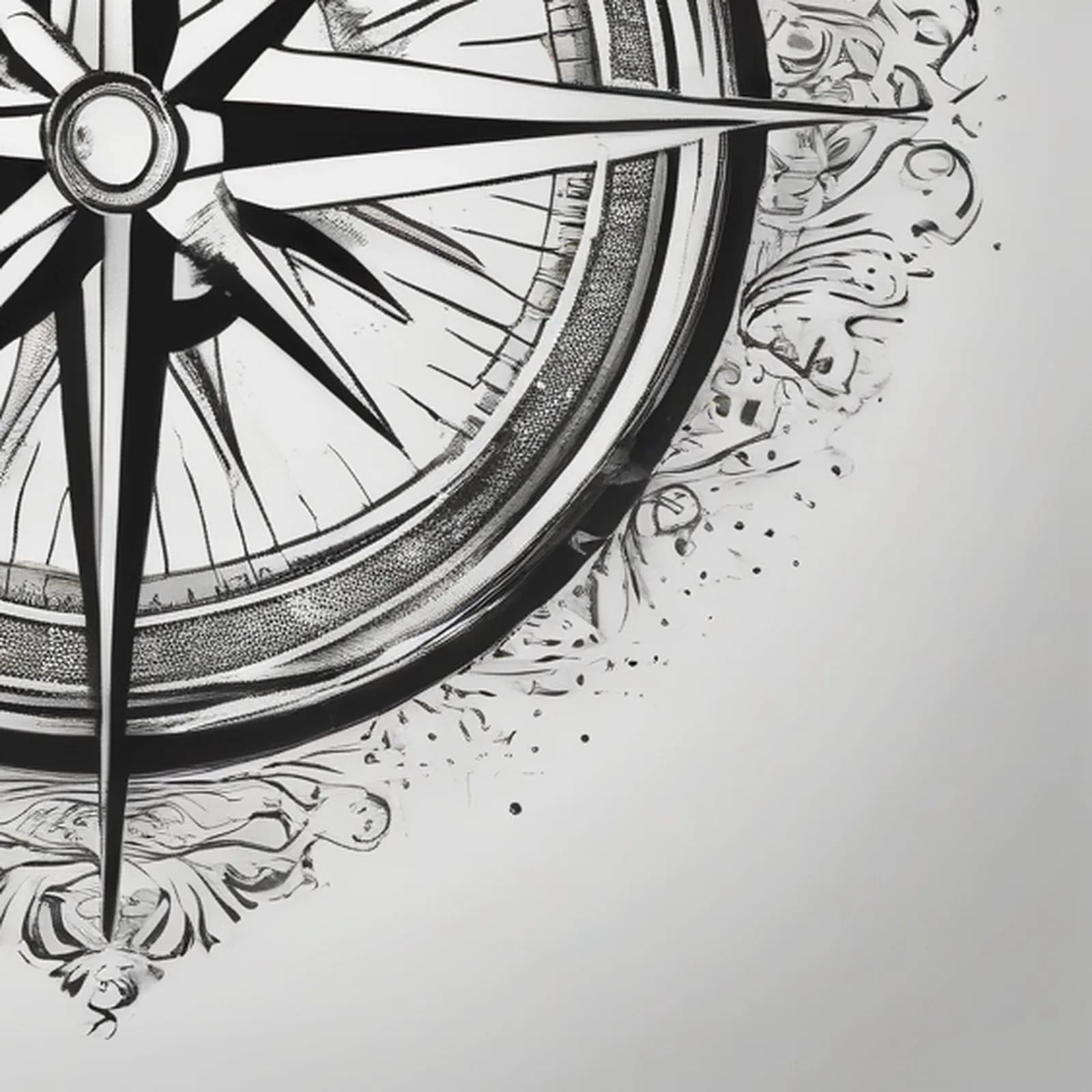
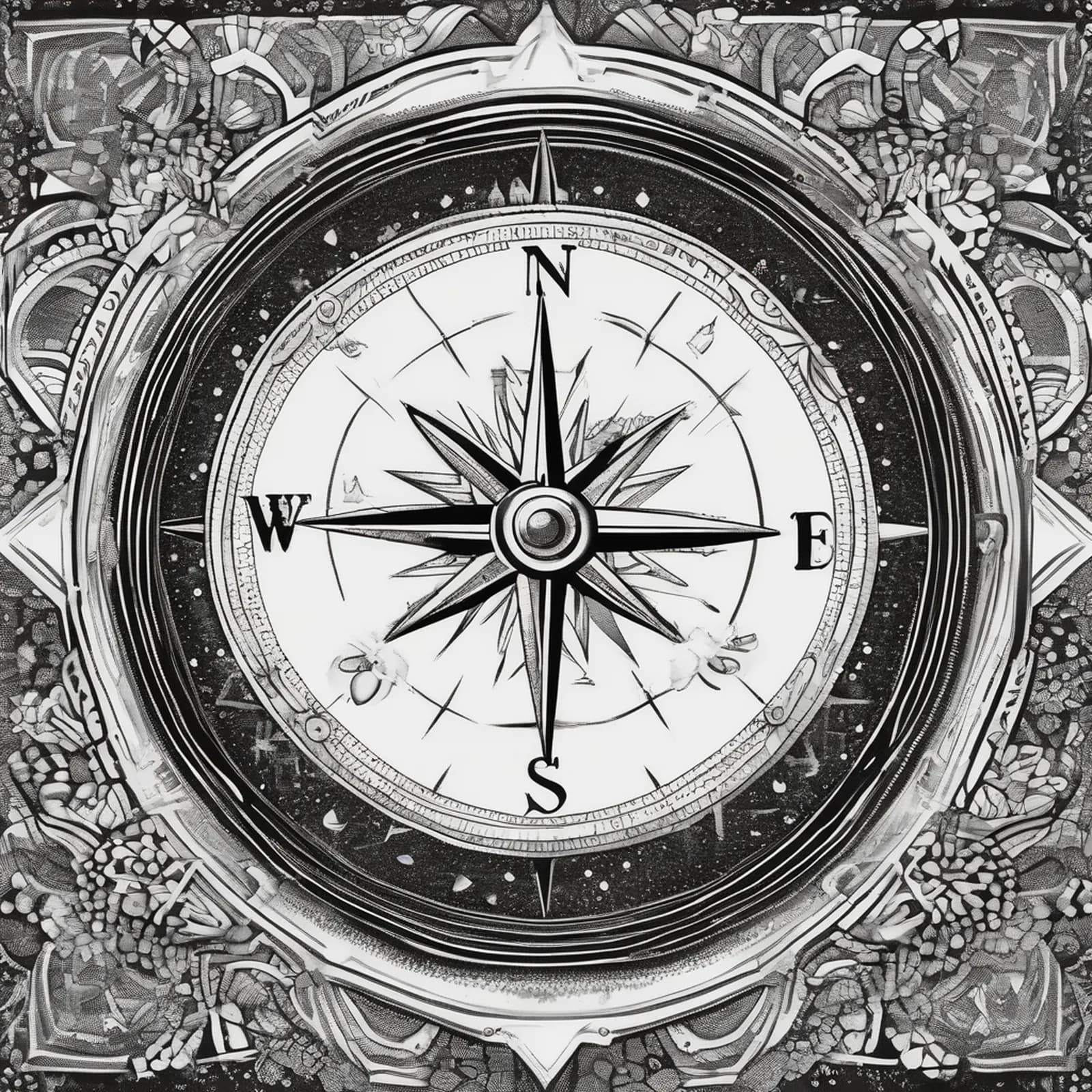
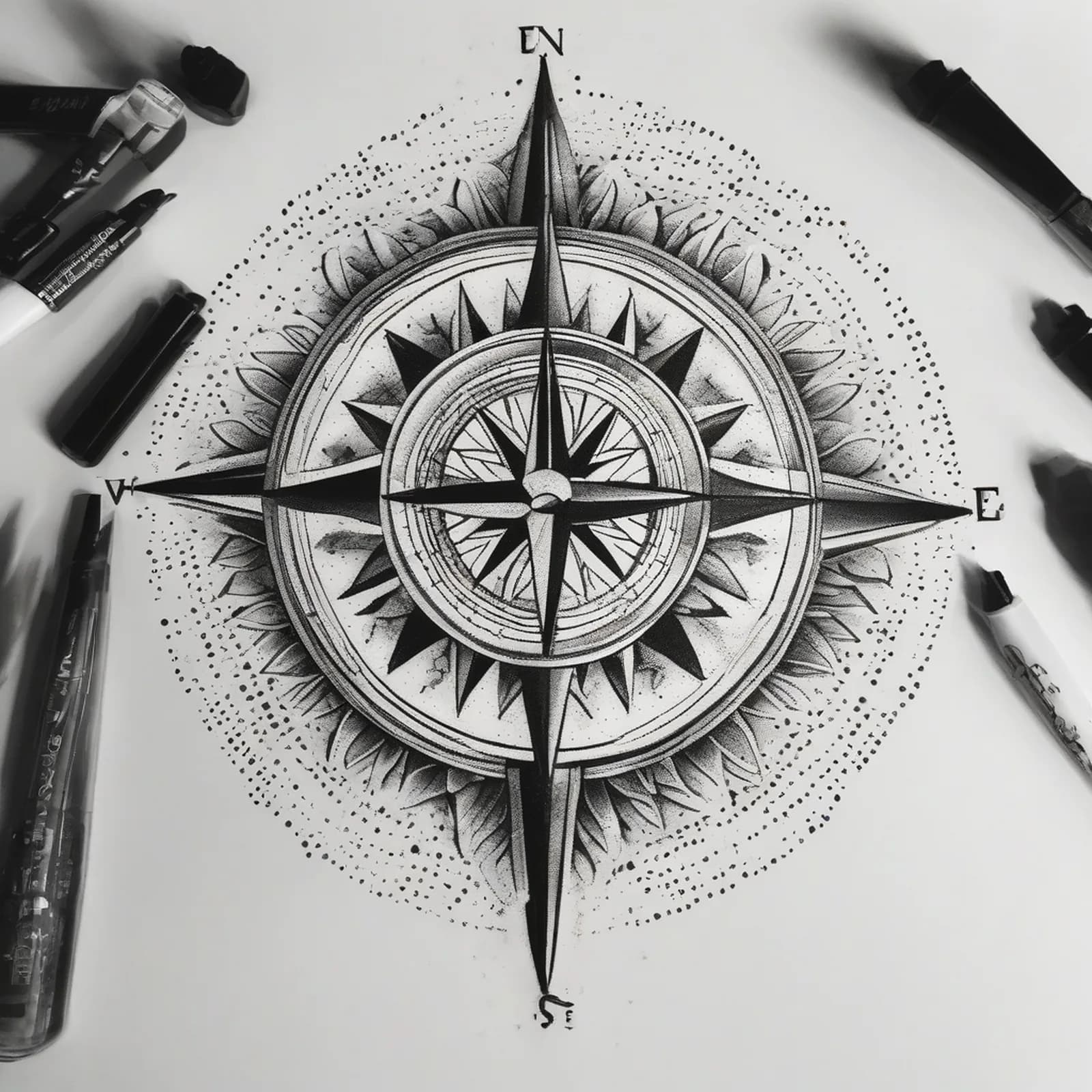
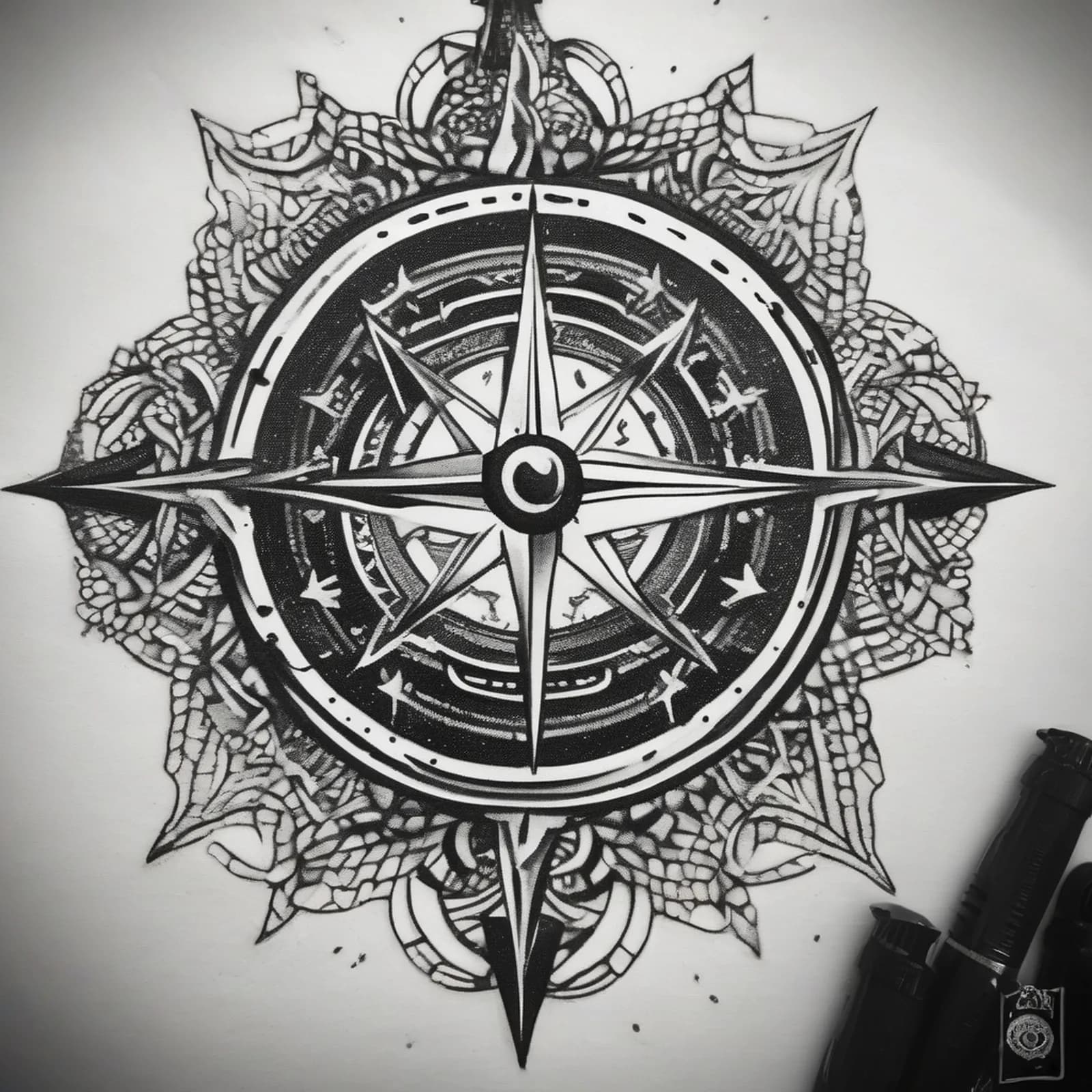
Digitally created design visual. Your tattoo is drawn and adapted to your body by the artist.
Dotwork Compass Tattoo on the Calf
Every piece is quoted individually — the price depends on size, detail and how many sessions it needs. Tell us what you want included and we come back with one all-inclusive figure.
About this design
A dotwork compass on the calf is more than a symbol—it’s a deliberate, meditative statement. Each dot is placed with intention, creating a dense, tactile surface that reads as both ancient and contemporary. This design thrives on precision, where negative space and shading work in balance to guide the eye through the four cardinal points. The calf’s smooth curve offers a natural canvas, making the compass feel grounded and intentional. It’s ideal for those drawn to minimalism with depth, where every mark matters.
What's in the drawing
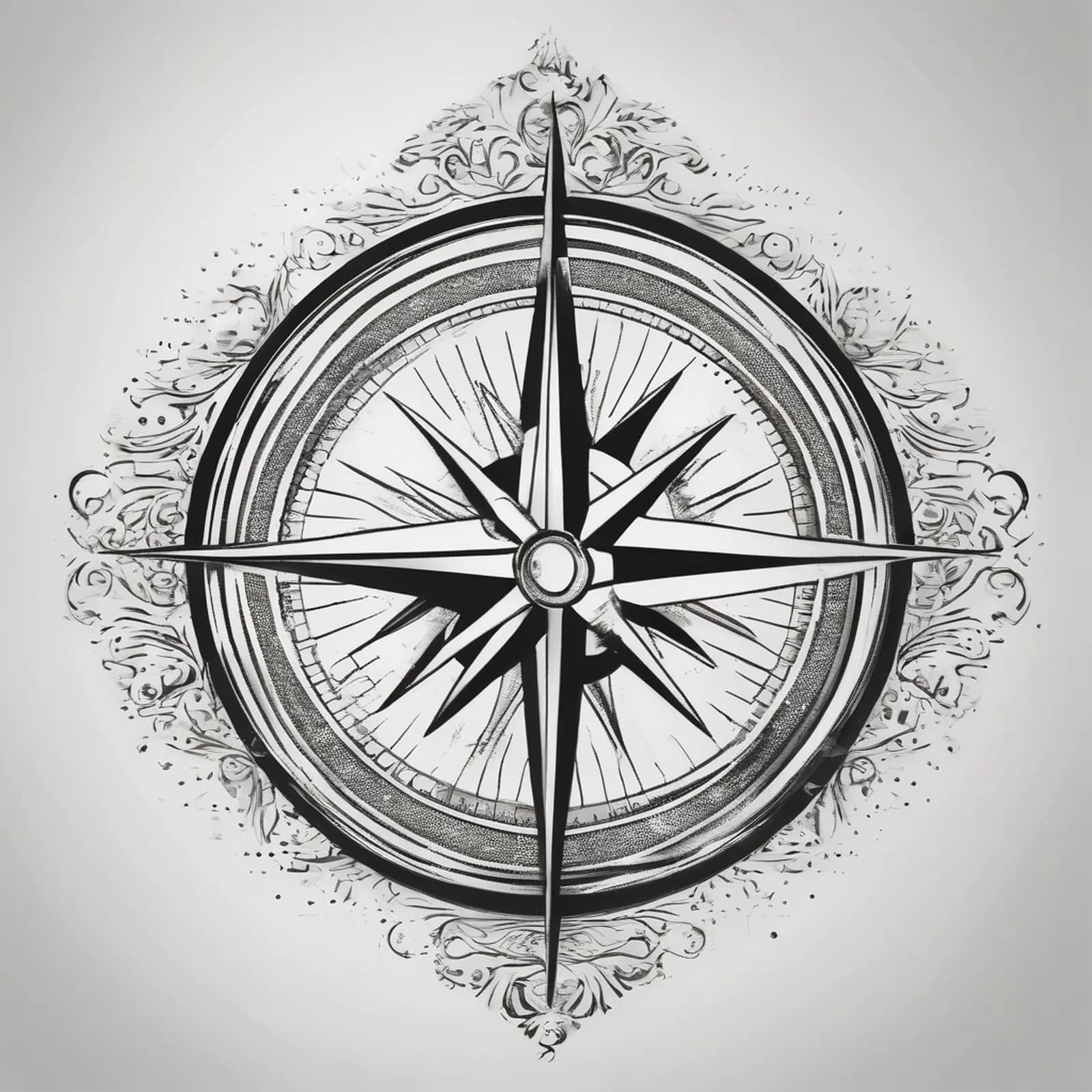
The compass is rendered in dense dotwork, using stippling to create smooth gradients from black to deep shadow. The outer ring is a continuous line of tightly packed dots, forming a clean boundary. The central hub contains a small, intricate dot cluster that serves as the pivot point. The four cardinal points—North, South, East, West—are marked with slightly bolder dot clusters, each subtly angled to suggest direction. The spacing between lines is consistent, creating a rhythmic flow. The eye moves from the center outward, then traces the ring, emphasizing balance and focus.
Meaning & symbolism
The compass has long symbolized navigation, both literal and metaphorical. In maritime cultures, especially in European and Polynesian traditions, it represented guidance through unknown waters. The dotwork style adds a layer of modern minimalism, suggesting introspection and personal direction. Unlike a traditional compass with bold lines, this stippled version evokes stillness—a moment of pause before setting course. It’s not about external guidance but about internal clarity, making it meaningful for those in transition or seeking purpose. The design’s symmetry reflects the idea of equilibrium, while the dotwork texture mirrors the patience required to find one’s way through life’s uncertainties. In some Indigenous Polynesian navigational traditions, the stars and cardinal directions were memorized through patterned tattoos, making this motif a subtle nod to ancestral knowledge.
Who this piece is for
This piece suits those who appreciate precision, symbolism, and quiet confidence. It’s not ideal for first-timers seeking bold visibility, nor for those who prefer highly detailed, colorful work. It works well for professionals with dress code restrictions—loose pants or long skirts easily cover it. It’s also perfect for people who value subtlety and depth over spectacle, and who are willing to invest time in a multi-session process.
How it sits on the body
On the calf, the compass follows the natural curve of the lower leg, where the skin stretches slightly during movement. The ring wraps around the outer edge, allowing the design to sit comfortably against the muscle. As the leg bends, the inner side of the calf remains slightly taut, so the design maintains its shape. The center remains stable, anchored by the bony prominence of the tibia, which helps define the hub’s position. The flow is uninterrupted, making it feel like a permanent map of self-direction.
How the sessions work
Over three sessions, the work progresses in layers. Session one focuses on outlining the compass ring and placing the central hub with precision. Session two builds the stippled shading across the outer ring and cardinal points, layering dots to achieve depth. Session three completes the final detailing, especially on the North and South points, and ensures evenness across the entire piece. Each session includes a 48-hour rest period to allow the skin to recover before further work.
Getting it done on an Istanbul trip
With three sessions totaling ten hours, this piece fits perfectly into a 4 nights trip to Istanbul. Studios in Kadikoy and Beyoglu offer a calm, professional environment with easy access from both IST and SAW airports. The city’s blend of European and Asian energy mirrors the compass’s dual nature—balanced, in motion, and grounded. You can rest in the studio between sessions, then explore the Bosphorus or take a quiet walk in Galata, making the healing process part of the journey.
Aftercare for this piece
Keep the calf covered during flights—loose clothing is essential. Avoid direct sun and water exposure for 14 days; no swimming in pools or seas. Apply a thin layer of fragrance-free ointment twice daily. Avoid scratching or picking. The skin may feel tight and flaky during the first two weeks. Once healed, the tattoo will settle into a soft, matte finish with deep contrast.
Sizes, placements and variations
Smaller versions (15–20 cm) work well on the ankle or upper arm. Larger ones (40+ cm) suit the thigh or back. In blackwork, it pairs with celestial motifs like constellations or hourglasses. A monochrome ink version adds subtle depth, while a single-color dotwork approach enhances its meditative quality. It also complements a subtle nautical map or a minimalist timeline on the opposite leg.
Frequently asked questions
How does a dotwork compass tattoo age on the calf?
The calf’s skin remains relatively stable, with less stretching than the arm or shoulder. Dotwork ages well here due to consistent tension and minimal sun exposure. The stippled shading retains contrast, and the design’s balance prevents distortion over time.
What makes a stippled compass different from a line-based compass tattoo?
Stippling creates a soft, textured surface that reflects light differently. It feels more tactile and less rigid than bold lines. The shading is gradual, giving depth without harsh edges, making it ideal for minimalist and meditative designs.
Is a dotwork compass on the calf suitable for a first tattoo?
It’s not ideal for a first tattoo due to the multi-session commitment and moderate pain level. However, if you’re ready for a meaningful, long-term piece, the calf’s healing curve makes it a strong candidate—especially with proper care.
How does dotwork on the calf handle movement and muscle flexing?
The calf’s surface stretches slightly when walking or bending, but the dotwork’s even density prevents distortion. The design follows the leg’s natural curve, and the central hub remains stable. Movement doesn’t disrupt the balance or flow of the compass.
Can I swim or fly home after getting a dotwork compass on my calf?
No swimming in pools or seas during the 14-day surface healing phase. On flights, keep the area covered with loose clothing. Avoid direct sun exposure. The tattoo will be safe to travel with after the initial healing, but protect it until fully healed.
Why choose Istanbul for a dotwork compass tattoo instead of home?
The all-inclusive package offers significant savings compared to western Europe. With studios in Kadikoy and Beyoglu, and direct flights from major European cities, you can complete the three sessions in just 4 nights while enjoying the city’s unique blend of cultures and calm.