Digitally created design visual. Your tattoo is drawn and adapted to your body by the artist.
Biomechanical Dragon Arm Tattoo – Istanbul Full Sleeve
Every piece is quoted individually — the price depends on size, detail and how many sessions it needs. Tell us what you want included and we come back with one all-inclusive figure.
About this design
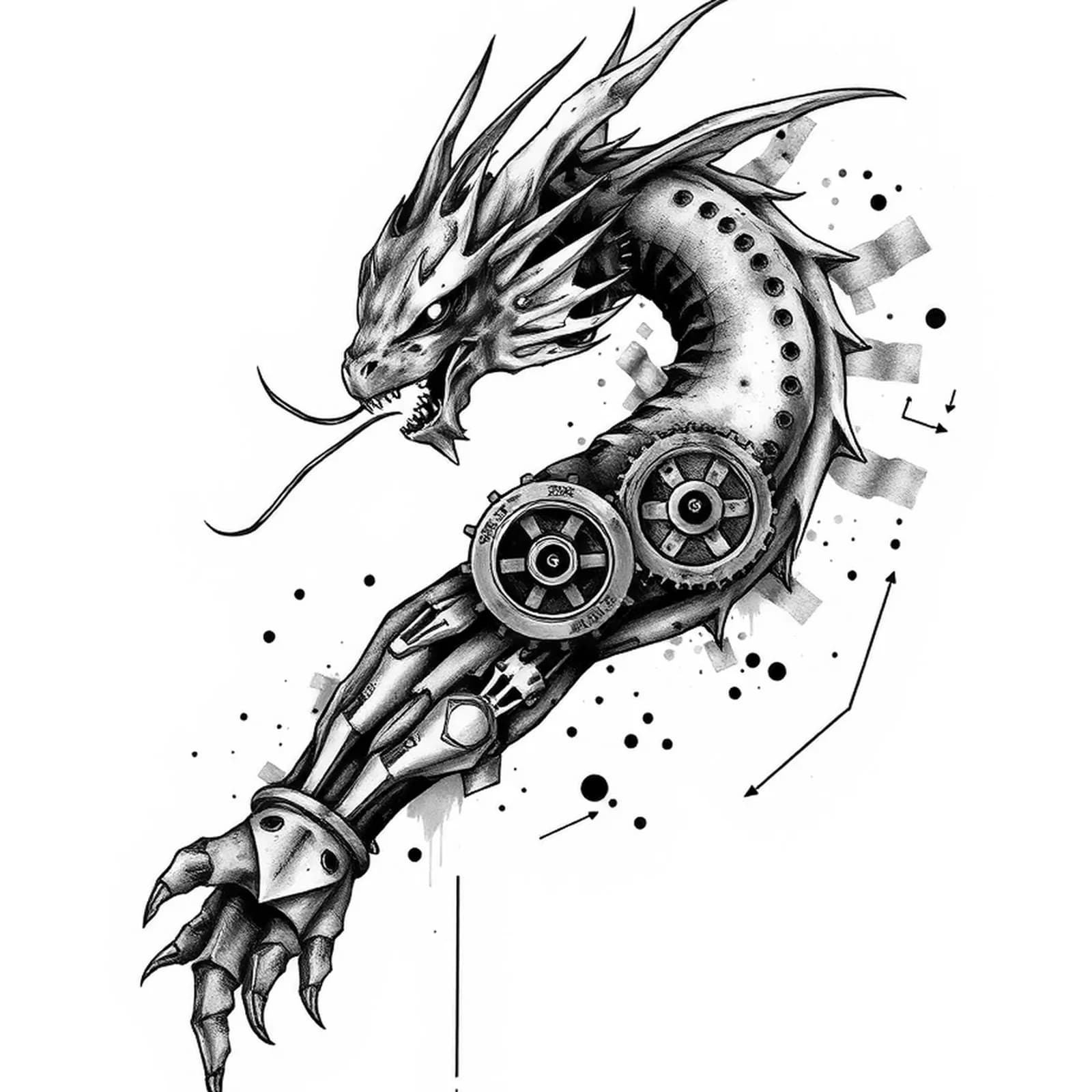
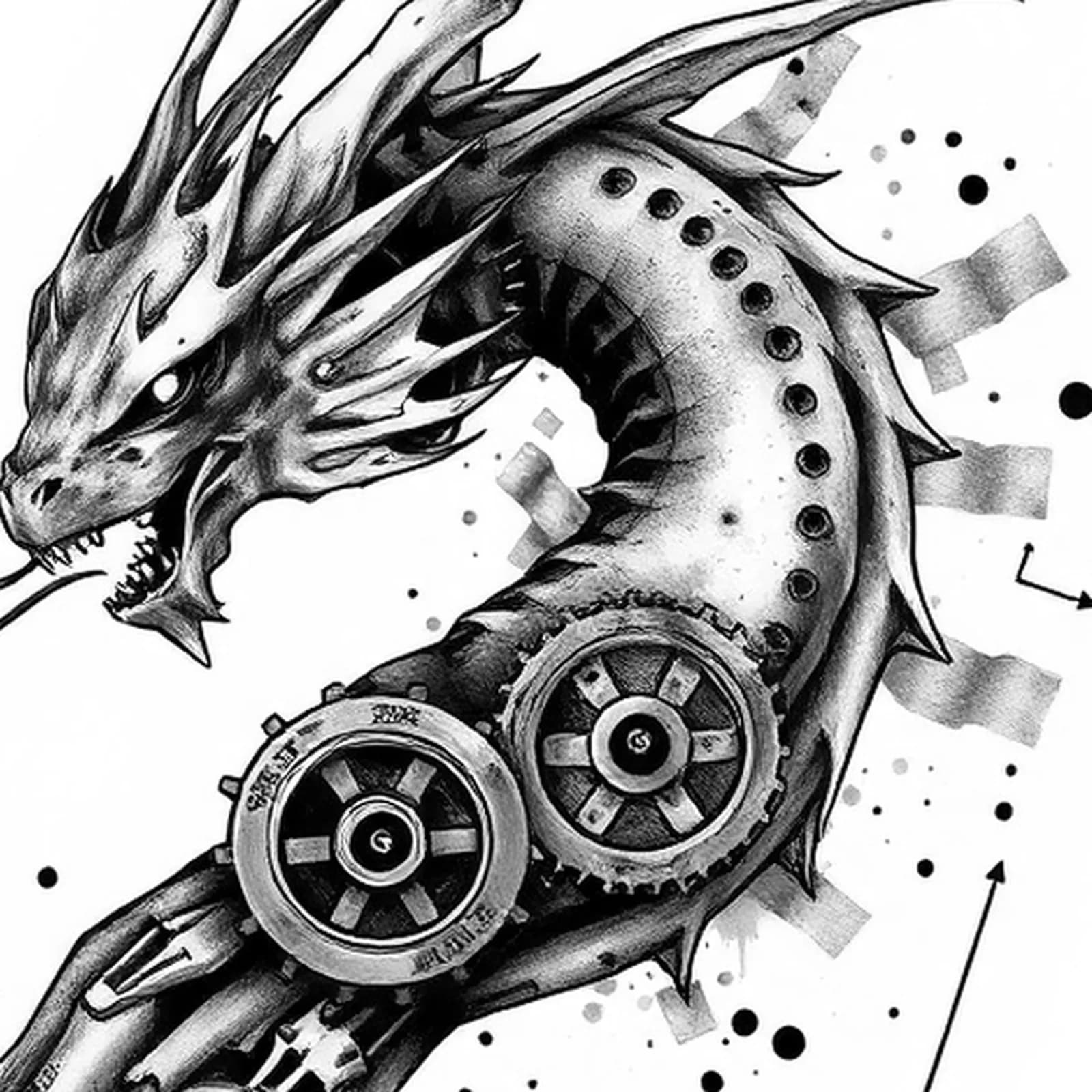
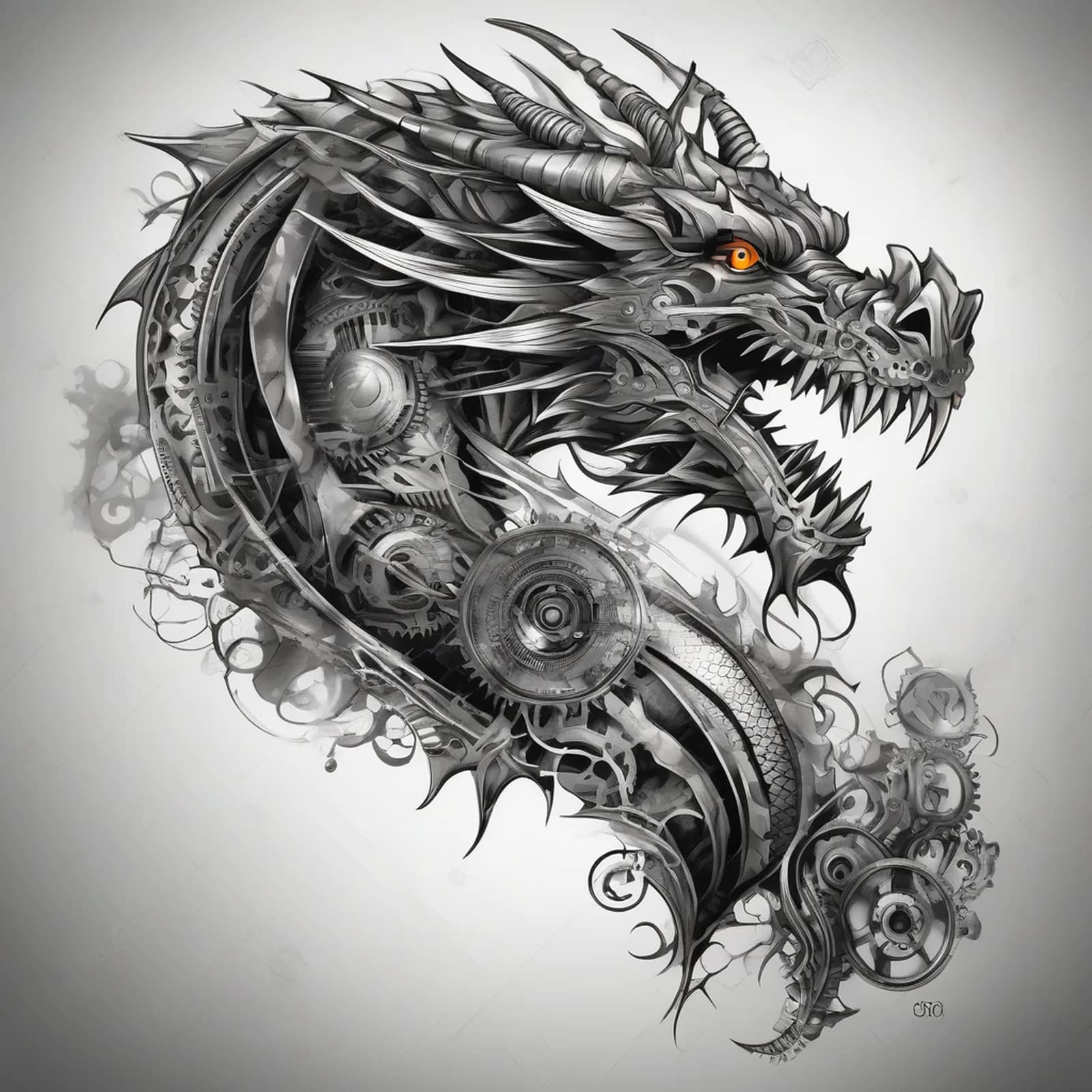
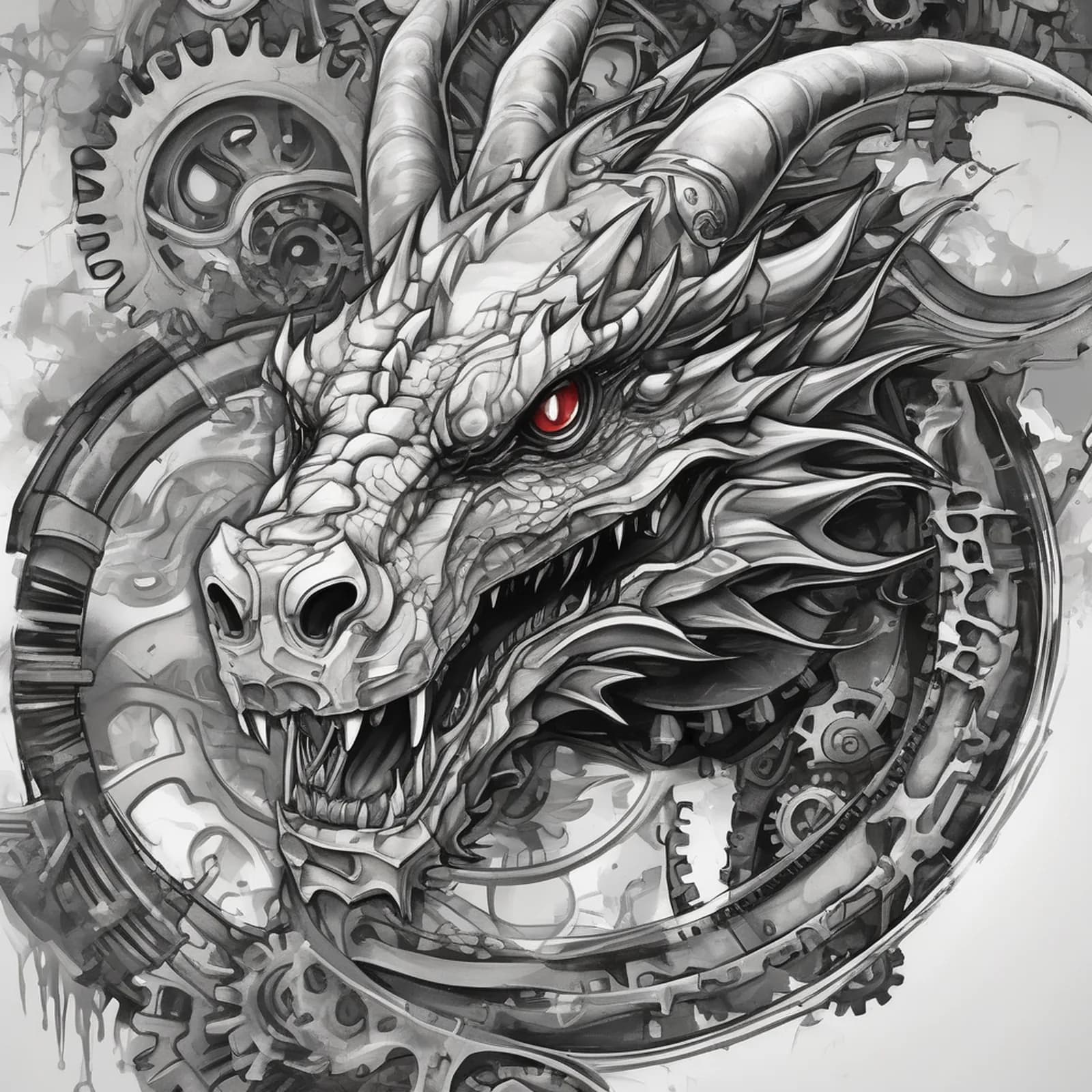
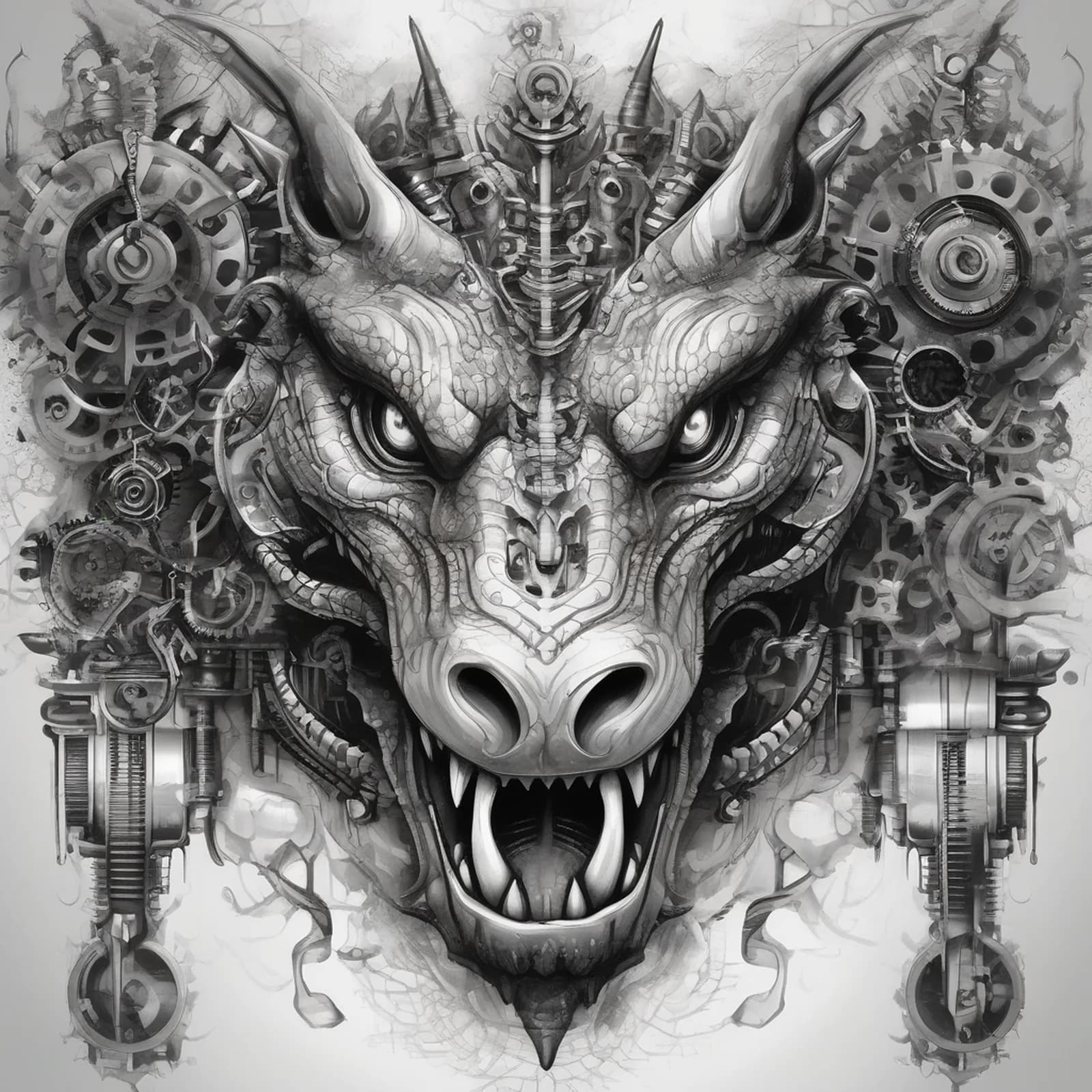
This biomechanical dragon arm tattoo begins at the shoulder with a spine of interlocking brass gears, each tooth precisely etched to mimic real mechanical joints. The head emerges from the bicep, jaw formed from segmented steel plates that pivot at the hinge point of the elbow. Wings stretch across the forearm as articulated hydraulic panels, their gaps revealing faint circuit lines beneath. The design doesn’t just cover the arm—it animates it, using negative space and line weight to suggest motion, with the dragon’s tail curling into the wrist like a coiled piston. It’s a fusion of organic form and industrial precision, built to move with the body.
What's in the drawing
The dragon’s spine runs along the upper arm, composed of interlocking gears that shift in scale from large central cogs near the shoulder to smaller, tighter rings at the elbow. The head emerges from the bicep, jaw formed from articulated metal plates, eyes hollow with glowing circuit lines. Wings stretch across the forearm, not as feathers but as segmented, hydraulically moving panels. Shading transitions from deep black in the gear shadows to faint silver highlights on exposed rods. Negative space is used to suggest motion—gaps between links, the breath of air between moving parts—guiding the eye along the arm’s natural flow.
Meaning & symbolism
While dragons in European and East Asian mythos represent power, wisdom, or destruction, this biomechanical interpretation redefines them as remnants of a lost industrial age—creatures of forgotten machinery. The fusion of dragon and gear symbolizes the tension between nature and technology, the body as a vessel of both biology and engineering. It’s not a literal cultural reference but a modern allegory: evolution through mechanical transformation, the idea that strength can be both organic and constructed. The gear motifs echo industrial revolution ideals, where progress was measured in cogs and pistons, not just ideas. This design reflects a contemporary fascination with automation and the human-machine interface.
Who this piece is for
This piece suits someone comfortable with bold, intricate art and willing to commit to five sessions. It’s not for first-timers seeking subtle work. The full sleeve demands visibility and a high tolerance for moderate pain. It’s ideal for those in creative, tech, or artistic fields where bold self-expression is welcomed. Not recommended for those with strict dress codes or who avoid visible tattoos at work.
How it sits on the body
The design follows the arm’s natural contours: the dragon’s spine aligns with the humerus, the wing panels wrap the forearm. As the arm bends, the segmented parts shift, creating the illusion of mechanical motion. The shoulder joint becomes the dragon’s neck pivot point, and the elbow acts as the hinge between wing and torso. The piece wraps seamlessly, using muscle folds and bone structure as natural boundaries.
How the sessions work
Session 1: Shoulder and upper arm spine—establishing the gear spine and head base. Session 2: Forearm wings and lower arm joints—adding moving parts and structural detail. Session 3: Refinement of facial mechanics and shading across the arm. Session 4: Deepening shadows and adding final silver highlights. Session 5: Touch-ups and blending, ensuring consistency across the full sleeve. Each session includes a 3-day rest for tissue recovery.
Getting it done on an Istanbul trip
With five sessions and a healing period of 12 weeks, this piece fits perfectly into a 7 nights trip to Istanbul. Studios in Kadikoy and Beyoglu offer dedicated spaces with consistent climate control and hygiene, ideal for multi-session work. The city’s proximity to Europe—flights from London, Paris, or Berlin take under 4 hours—means you can begin the process and return home without disruption. No sea or pool contact during healing, and loose clothing over the arm ensures comfort on your flight home.
Aftercare for this piece
For the first 14 days, keep the tattoo out of direct sun and avoid swimming. Use a fragrance-free ointment twice daily and cover with breathable, loose fabric. On your flight home, wear a long-sleeve shirt and avoid tight sleeves. Avoid rubbing or scratching. After 14 days, switch to a light moisturizer. Full healing takes 12 weeks—during this time, avoid prolonged sun exposure and heavy friction on the arm.
Sizes, placements and variations
Smaller versions (40 cm) can be adapted to a half-sleeve or upper arm focus, reducing session count. For a different look, consider a monochrome version with deeper contrasts or a metallic ink finish. This design pairs well with a biomechanical serpent on the back or a cybernetic phoenix on the chest. The gear motifs also work with a mechanical tree or a circuit-board skull as companion pieces.
Frequently asked questions
How does a biomechanical dragon arm tattoo integrate with muscle movement?
The design follows the arm’s natural anatomy—gears align with the humerus, wing panels wrap the forearm. As the arm bends, the segmented parts shift, creating the illusion of mechanical motion. The structure is built to move with the body, not against it.
What makes a biomechanical dragon different from a traditional dragon tattoo?
A biomechanical dragon replaces organic forms with mechanical ones—scales become metal plates, wings are hydraulic panels, and the spine is made of interlocking gears. It’s a fusion of myth and machinery, symbolizing evolution through technology.
How does the gear motif enhance the biomechanical dragon design?
Gears are not just decorative; they serve as structural elements, forming the spine and joints. Their interlocking nature suggests movement, continuity, and the idea of a living machine. They also create visual rhythm across the sleeve.
Can a biomechanical dragon sleeve be done in color?
Yes—color can enhance the effect with electric blues, deep reds, or metallic silver highlights. But the core design relies on contrast and line work. Color is optional and best used sparingly to accentuate key mechanical parts.
Is it safe to fly home after a full sleeve tattoo session in Istanbul?
Yes, if you follow aftercare. Wear loose clothing, avoid tight sleeves, and keep the tattoo covered. No swimming or sun exposure during healing. The first 14 days are critical—after that, flying is safe with proper protection.
Why choose Istanbul for a 5-session biomechanical dragon tattoo?
Istanbul’s studios in Kadikoy and Beyoglu specialize in complex, multi-session work. The city’s proximity to Europe means short flights, and the all-inclusive package saves up to 70% compared to western Europe. The climate is stable, and studios are equipped for long sessions.